Top Articles

Ai-Assisted Custom Skull Implant Designing

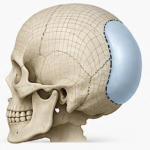
AI-assisted custom skull implant design is best understood as a collaborative workflow in which artificial intelligence accelerates engineering tasks while the surgeon remains responsible for the aesthetic goals, anatomical planning, and final implant design. AI is a design assistant—not an autonomous implant designer. A typical workflow consists of the following steps: 1. High-Resolution CT Scan Read More…
Recovery Timeline after Custom Skull Implant Surgery

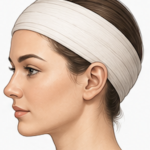
Recovery after placement of a custom skull implant is generally easier than many patients anticipate because the procedure involves the scalp and skull rather than muscles or joints. While swelling and scalp tightness are expected, pain is usually modest and most patients are able to resume routine activities within two weeks. The First 24–48 Hours Read More…

The Aesthetic Basis of Female Crown of the Skull Augmentations

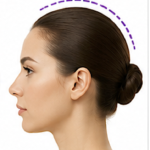
Augmentation of the crown of the skull is one of the most common requests among female skull reshaping patients. A prominent crown of the skull has long been recognized as an important head shape element as seen by many hairstyles over the years. This raises the question as to.why do women value a high crown Read More…

Custom Implant for Female Crown of Skull Augmentation Case Example

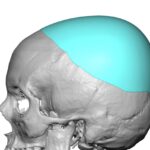
A custom crown-of-the-skull implant is designed to increase the height and smooth the contour of the upper central skull (vertex) while maintaining a natural feminine head shape. Unlike implants that widen the sides of the head or augment the back of the skull, a crown implant selectively builds the highest point of the skull to Read More…

Female Head Widening Implants Case Example and Design Guidlelines

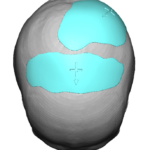
Female head widening implants are designed to increase the bitemporal width (side-to-side dimension) of the skull in women whose heads appear disproportionately narrow. The goal is not to create a masculine appearance, but rather to produce a smoother, more balanced, and naturally oval cranial shape. The most common indications include: Congenitally narrow head shape with Read More…

The Use of Custom Solid Silicone Implants For Aesthetic Skull Augmentations

For aesthetic skull augmentation, custom solid silicone implants are generally the preferred material because they best satisfy the requirements of cosmetic cranial contouring: precise shape, smooth contours, long-term stability, and the ability to be safely revised if necessary. While materials such as PEEK, porous polyethylene (Medpor), PMMA, and titanium all have specific reconstructive indications, they Read More…

Small Custom Implants for Minor Skull Contouring Case Example

Small custom skull implants are a niche application of cranial augmentation used to correct localized contour irregularities rather than significantly enlarge the skull. They are ideal for patients who have subtle asymmetries, depressions, or flat spots that are noticeable in certain lighting or with short hair but do not require a large implant. Common indications Read More…

Subcostal Subtotal Rib Prominence Reductions in a Male Case Example

Prominent lower ribs that project outward beneath the breast crease or upper abdominal area, can be treated by rib shaving (rib contouring) to reduce their flared appearance. When rib shaving may help Rib contouring is most effective when: The lower costal margin (typically ribs 8–10) is excessively prominent. The flare is due to actual rib Read More…

Custom Secondary Occipital Skull Extension Implant Case Example

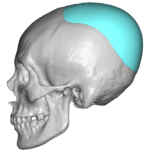
A custom back-of-the-head skull implant (occipital skull implant) is a patient-specific implant designed to increase the projection, width, or symmetry of the posterior skull. It is commonly used for: Flat back of the head (occipital flattening) Congenital skull shape deficiencies Asymmetric occipital skull contours Secondary correction after previous cranioplasty procedures Design Process Obtain a high-resolution Read More…

Top Articles