
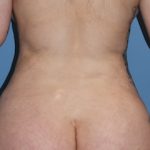
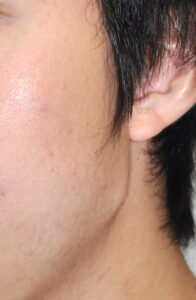
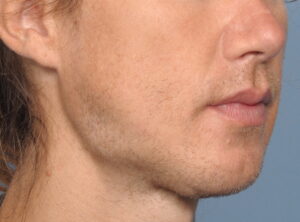
 Masseteric muscle dehiscence after jaw angle implant surgery is more common than is ackowkedged and rarely discussed in the medical literature. But it can create several problems: implant exposure due to lack of adequate full muscle coverage, a step off or soft tissue contour deformity over the gonial angle, an abnormally high muscle bul when chewing or clenching and, in rare cases, chronic discomfort.
Management depends on the timing, severity, and associated implant issues.
Acute/Early Dehiscence (<6 weeks)
This usually results from:
- Excessive subperiosteal dissection
- Thin masseteric attachment left on the mandible
- Muscle tearing during implant placement
- Large implant size creating excessive tension
Treatment
- Rarely seen early due to tissue swelling, often not apparent until after three months
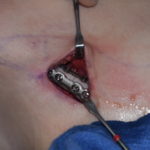
- Reattach the masseter to the lateral mandibular cortex using:
- Drill holes through the mandible and nonabsorbable sutures
- Suture anchors
- Periosteal advancement techniques
- Irrigate thoroughly and verify implant stability.
- Temporary soft diet for 4–6 weeks.
If the implant is stable and symptoms are minor, observation may be reasonable becausescarring and implant encapsulation may camouflage it enough to be acceptable.
Chronic Dehiscence (> 6 months)
Patients typically present with:
- Palpable implant margins
- Soft tissue thinning over the angle
- Jaw angle asymmetry
- high muscle bulge during chewing
Treatment
1. Muscle Reattachment
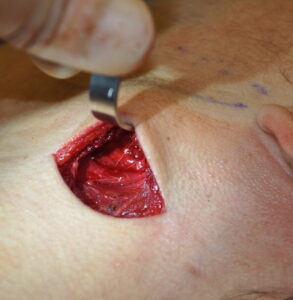
Not a high rate of success due to muscle contracture/fibrosis:
- Through an external incision (transcutaneous approach)
- Elevate scar tissue.
- Mobilize the masseter.
- Secure it using:
- Mandibular drill holes
- Titanium microplates
- Suture anchors
This is no effective intraoral technique.
2. Capsular Augmentation
When muscle cannot be mobilized adequately:
- Thick or stacked acellular dermal matrix (AlloDerm-type materials) can be applied over the implant intraorally to thicken the capsule
- Only effective in minor implant exposures
3. Implant Revision/Removal
Indicated when:
- Implant is oversized.
- Unhappy with implant position
Options:
- Reduce implant size.
- Implant repositioning
4. Implant Removal
Indicated when:
- Unhappy with implant effect
- Willing to loss implant effect for muscle contour imptrovement.
After healing, delayed reaugmentation can be considered.
Important Technical Considerations
For jaw angle implants preservation of the continiuity of the periosteum around the inferior border to preserve masseter muscle coverage of the inplant is critical. Many dehiscence problems occur when the implant extends too far posteriorrly or inferiorly, creating tension on the muscle closure.
Prognosis
- Partial dehiscence without infection often scars down and becomes asymptomatic.
- Complete muscle detachment with implant reveal requires operative repair.
- Muscle respositioning over the iunplant is often not successful.
- Long-standing dehiscence results in irreversible muscle fibrosis, making direct reattachment impossible with soft tissue augmentation of the contour deformity as the only effective option.
Dr. Barry Eppley
Plastic Surgeon