
 Mouth widening surgery is usually called lateral commissuroplasty (or oral commissuroplasty). It is a procedure that enlarges the horizontal width of the mouth by moving the corners of the mouth outward. It can be performed for either:
- Functional reasons (microstomia, scarring from burns or trauma, congenital conditions)
- Cosmetic reasons in patients who feel their mouth is disproportionately narrow
How it is done
The surgeon makes incisions at the location of the desired new corners of the mouth and advances the existing mouth corner mucosal lip tissues into the arrow-shaped defect left by the excision to complete the creation of the expanded new oral commissures (mouth corners). A small amount of muscle is usually removed to help achieve the widening and lower the risk of relapse.
How much widening is possible?
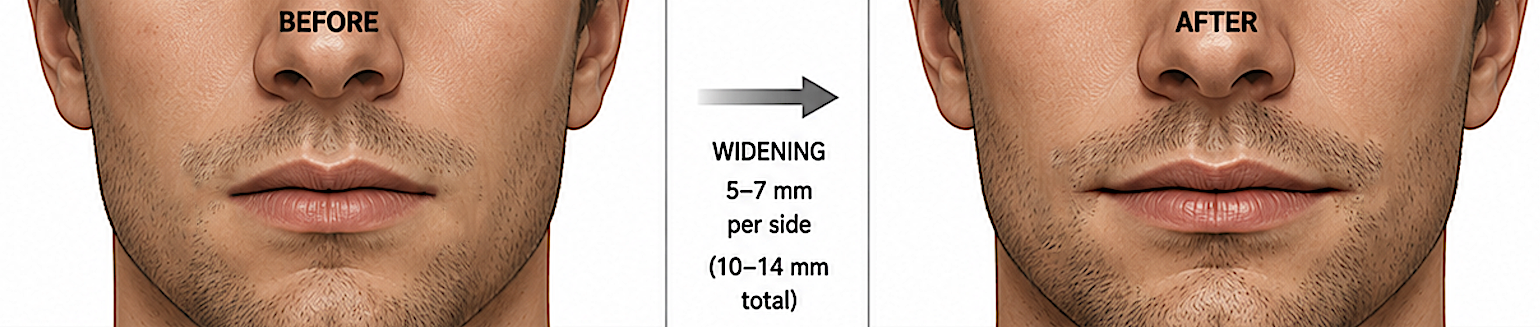
The amount of safe widening is limited. Cosmetic mouth widening typically achieves about 5–7 mm per side (10–14 mm total increase in width) while maintaining a natural appearance and acceptable scar burden.
Benefits
- Wider mouth appearance
- Improved facial balance in selected patients
- Improved oral opening in patients with true microstomia
Risks
- Visible scars at the mouth corners
- Asymmetry
- Relapse or loss of some widening over time
- Distortion of the mouth corner shape
- Need for scar revision surgery
Recovery
- Swelling and tightness are common for the first few weeks.
- Most patients return to normal oral activities within 1–2 weeks.
- Scar maturation continues for several months.
Case Study
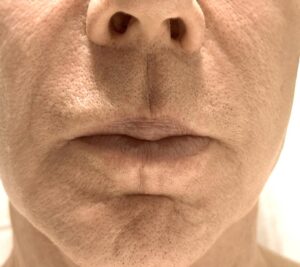
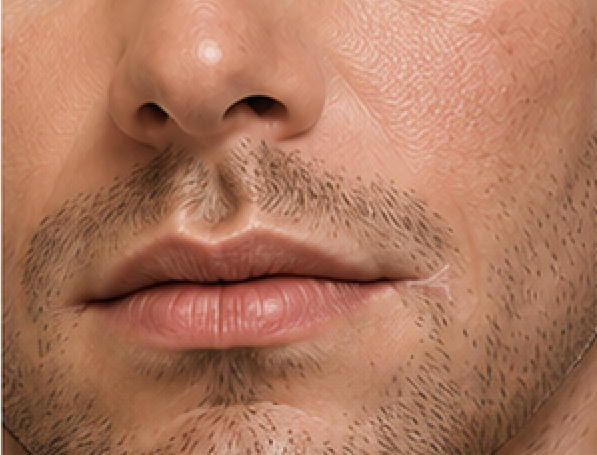
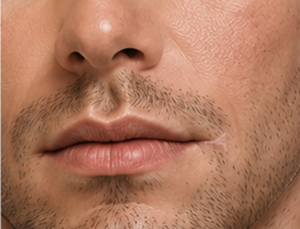
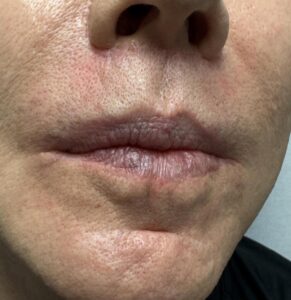 This male had large upper and lower lip vermilion fullness but a long upper lip and a relatively short mouth width. He underwent a combined subnasal lip lift with mouth widening using my classic arrow technique. His six month result showed an increased mouth corner to corner distance.
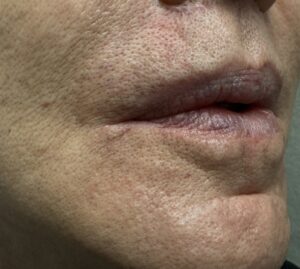
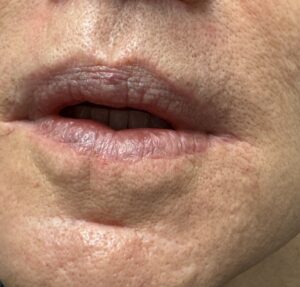 The scar appearance was very acceptable and consistent with a typical result for men with scar lines that were essentially non-detectable.
Discussion
The scars from mouth widening surgery (lateral commissuroplasty) are the main tradeoff of the procedure.
Where are the scars?
The scars are located at the corners of the mouth (oral commissures) where the new mouth corner is created. They typically extend a few millimeters beyond the original commissure into the adjacent cheek skin.
What do they look like?
Early (0–3 months)
- Red or pink
- Slightly raised
- Noticeable when talking or smiling
- Can appear as a small linear scar extending from the mouth corner
Intermediate (3–6 months)
- Flatten and soften
- Color fades from red to pink
- Blend better with surrounding skin
Long-term (6–12+ months)
- Usually become thin white lines
- Often visible on close inspection
- Less noticeable at conversational distance
- May be partially hidden within the natural crease at the mouth corner
Factors affecting scar quality
Better scars:
- Thicker skin
- Male beard skin
- Modest widening efforts (5–7 mm per side)
- Non-smokers
More noticeable scars:
- Large amounts of widening (> 7mms)
- Darker or highly reactive skin types
- Tension on the closure
- Poorly designed commissure reconstruction
The challenge
Unlike many facial scars, commissure scars sit at a high-motion area. Every smile, conversation, and meal moves the scar. The Because of this, it is difficult to make them completely invisible.
Male Lip Scars
But men have a unique advantage over women for any type of vermilion-cutaneous scar in that they have beard skin. The hair follicles make a significant cellular contribution towards skin healing. In addition either have facial hair which obscures any scar lines
Potential adverse results:
- Round or blunted commissure
- Visible white scar radiating from the corner
- Slight downward pull of the corner
- Asymmetry between sides
In my experience
Most cosmetic mouth-widening patients accept a small visible scar in exchange for increased mouth width. The procedure works best when the goal is modest widening. Attempts at dramatic widening usually create more conspicuous scars and a less natural commissure shape.
A realistic expectation is that the scars become noticeable only at close range (1–2 feet) but are rarely completely invisible. For patients seeking significant enlargement, the scar burden often becomes the limiting factor rather than the technical ability to widen the mouth.
Key Points
- Acceptable scarring in mouth widening surgery can be achieved when the amount of increased corner length is kept at 7 mms or less and precise surgical technique is used.
- Men due to beer skin fair much better in scarring then do women in my experience.
- The removal of a wedge of the orbicularis oris muscle is important to reduce tension on the mouth corner closure and leads to better scar outcomes.
Barry Eppley, MD, DMD
Plastic Surgeon