

Stronger Structure. Lifted Tissues. Natural, Long-Lasting Results.
Overview
A custom jawline implant and deep plane facelift address two different causes of facial aging and contour deficiency:
- Custom Jawline Implant enhances the underlying skeletal framework.
- Deep Plane Facelift repositions descended facial soft tissues.
Together, they create a stronger jawline, improved neck contour, and more comprehensive facial rejuvenation than either procedure alone.
1. Custom Jawline Implant – Structural Enhancement
Purpose
A patient-specific implant designed from a CT scan to augment the:
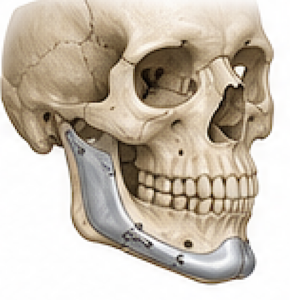
- Chin
- Jaw body
- Jaw angles
- Entire mandibular border
Benefits
- Increases jawline projection and width
- Improves chin definition
- Enhances lower facial balance
- Creates a stable skeletal foundation for overlying tissues
Ideal For
Patients with:
- Weak or recessed jawline
- Poor chin projection
- Narrow mandibular angles
- Facial asymmetry
2. Deep Plane Facelift – Soft Tissue Repositioning
Purpose
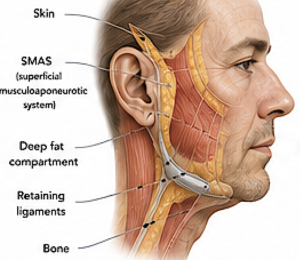
Releases and elevates the deeper facial tissues beneath the SMAS layer.
Benefits
- Repositions descended cheeks
- Improves jowls
- Restores jawline definition
- Improves neck contour
- Produces a more natural appearance than skin-only tightening
Ideal For
Patients with:
- Jowling
- Midface descent
- Nasolabial folds
- Neck laxity
Why Combine Them?
Custom Implant Provides:
- Structural projection
- Jawline width and definition
- Chin enhancement
- Skeletal support
Deep Plane Facelift Provides:
- Soft tissue elevation
- Jowl correction
- Neck tightening
- Facial rejuvenation
Combined Effect
The implant creates the framework while the facelift repositions tissues over that framework.
Structure + Support + Rejuvenation = Superior Facial Definition
Typical Surgical Sequence
Step 1 – Facelift Incisions
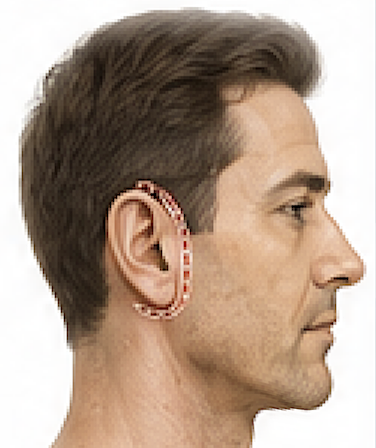
Incisions are placed:
- Around the ear
- Behind the ear
- Within the hairline when necessary
Step 2 – Implant Placement
The custom jawline implant is:
- Inserted through intraoral or hidden external access
- Precisely fitted to the mandible
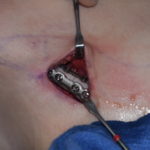
- Rigidly fixed with titanium screws
Step 3 – Deep Plane Dissection
The facial retaining ligaments are released and the deep facial tissues mobilized.
Step 4 – Tissue Repositioning
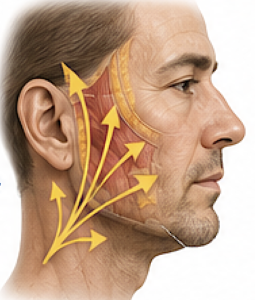
The elevated tissues are repositioned superiorly and posteriorly over the enhanced jawline framework.
Step 5 – Redraping
Skin is redraped without tension.
Step 6 – Closure
Incisions are meticulously closed and dressings applied.
Advantages of the Combination
Improved Jawline Definition
The implant provides projection while the facelift removes tissue descent that can obscure jawline contours.
Better Neck Contour
A stronger mandibular border improves the cervicomental angle and neck appearance.
Enhanced Facial Harmony
Addresses both skeletal deficiency and age-related soft tissue descent.
More Durable Results
The facelift tissues are supported by an enhanced skeletal framework.
Natural Appearance
Rather than creating an “over-pulled” look, the improvement comes from restoring both structure and position.
Considerations
- Longer operative time
- Increased swelling compared with either procedure alone
- Slightly higher infection risk because of the implant
- Precise 3D planning is essential
- Recovery generally ranges from 3–6 weeks for social recovery, with continued refinement for several months
Best Candidates
- Weak jawline with aging changes
- Recessed chin and jowling
- Poor mandibular angle definition
- Neck laxity combined with skeletal deficiency
- Patients seeking a stronger, more youthful lower face
Key Concept
The custom jawline implant builds the foundation. The deep plane facelift repositions the overlying tissues. Together they produce a stronger, cleaner jawline and a more complete facial rejuvenation than either procedure can achieve independently.
Dr. Barry Eppley
Plastic Surgeon