
Top Articles

The Latissimus Dorsi Muscle and Rib Removal Surgery – Surgical Access

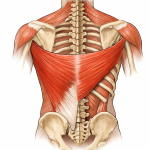
In rib removal surgery, the latissimus dorsi (LD) muscle matters a lot because of where it sits, how it’s used for access, and how it’s altered during the operation. Latissimus Dorsi Muscle Anatomy The latissimus dorsi is a large, flat, superficial muscle that: Covers the posterolateral chest wall Originates from: Spinous processes of T6–L5 Thoracolumbar Read More…

The Intercostal Nerve in Rib Removal Waist Modification Surgery

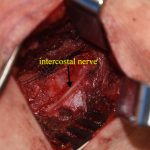
The intercostal nerve is a critical structure that must be carefully respected during rib removal or rib contouring surgery. Failure to properly manage this nerve can result in long-term pain complications. Intercostal Nerve Anatomy Each rib has a neurovascular bundle that runs along its inferior border within the costal groove. Order (superior ? inferior): Vein Read More…

Horizontal Backlift with Rib 10 and 11 Removals and Rib 9 Osteotomy Case Study

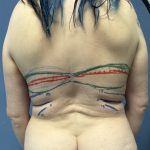
Back Lifts: Clarifying the Two Primary Types Back lifts are body-contouring procedures with several variations. These are often grouped together, even though they produce very different contouring effects. The key distinction lies in the direction of skin excision, which determines the aesthetic outcome. What Is a Back Lift (Posterior Body Lift) A back lift removes Read More…

Combining Rib Removal and Pelvic Plasty Body Contouring Surgeries

There are several structurally or skeletally based aesthetic body contouring procedures that can be performed from the clavicles down to the lower extremities. Excluding lower extremity lengthening or shortening, the three primary procedures are shoulder narrowing, rib removal or modification, and hip widening or augmentation (pelvic plasty). Many patients desire more than one of these Read More…

Piezotome Bone Cutting in Rib Removal Surgery

A piezotome is a surgical device that uses ultrasonic vibrations to cut bone precisely while sparing soft tissue (nerves, blood vessels, mucosa). It’s basically bone surgery on “precision mode.” What it’s used for In plastic surgery (and related fields), it’s commonly used for: Rhinoplasty (especially piezo rhinoplasty for nasal bone osteotomies) Facial bone contouring Orthognathic Read More…

Limited Subcostal Rib Shave Prominence Reductions

A subcostal rib shave is a cosmetic surgical procedure designed to reduce the visible edge or flare of the lower rib cage, creating a smoother and less prominent lower ribcage appearance. This can be the entire lower subcostal rib margin or it can be an isolated bump or protrusion. What it involves The subcostal ribs, usually ribs 8 and 9 on the Read More…

Ribcage Reshaping Osteotomies for Subcostal Rib Flare

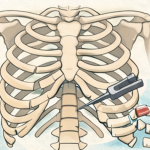
Subcostal rib flare refers to the outward protrusion of the lower ribs, most commonly ribs 8–12, at the lower costal margin. It is primarily an osteocartilaginous issue, not a soft-tissue problem. Its key characteristics include: Visible outward angulation of the lower rib cage Most noticeable from: Frontal view (V-shaped or squared costal margin) Oblique view Read More…

Rib 11–12 (Type 1) vs Rib 10–12 (Type 2) Resection in Advanced Waist Contouring

Rib 11–12 vs Rib 10–12 Resection Advanced Waist Contouring — Indications, Impact, and Risk Escalation This comparison applies to advanced, carefully selected aesthetic cases. Rib 10 involvement changes the operation from flank refinement to structural waist narrowing. 1. Anatomical Importance Ribs 11–12 Both are floating ribs Influence the lower third of the waist No role Read More…

Rib 11 and 12 Removal Surgery

Resection of ribs 11 and 12, the freely floating ribs, are most commonly associated with aesthetic waist refinement. Because of their lack of a sternal attachment and their proximity to the waistline removal of their lateral projecting ends reduces the structural support of the sides of the waistline. Rib 11 is longer than rib 12 Read More…

Top Articles