Top Articles

Blog

Skull Shape Guidelines for Aesthetic Augmentation Implant Designs

For overall cranial augmentation performed purely for aesthetic enhancement, there is surprisingly little scientific literature defining an “ideal” skull shape compared to the extensive literature on facial aesthetics. Most implant design is therefore based on artistic contouring principles combined with anthropometric measurements rather than any single formula such as the Golden Ratio. What Makes a Read More…
Does the Golden Ratio Apply fo Custom Skull Implants

The Golden Ratio (approximately 1.618:1) has some relevance to the design of custom skull implants but it is not rigidly applied.  It is helpful in understanding good skull shape proportions For aesthetic facial procedures, surgeons sometimes reference proportions related to the Golden Ratio when evaluating facial balance, forehead width, facial thirds, or overall craniofacial harmony. However, Read More…

Calf Implant Sizing in the Charcot-Marie-Tooth (CMT) Patient

Implant sizing in Charcot–Marie–Tooth (CMT) patients is very different from standard cosmetic calf augmentation because the tissues are usually: thinner tighter more asymmetric neurologically compromised less forgiving of oversized implants The reconstructive goal is usually: “restore proportional leg contour without creating implant conspicuity.” Core Principles of Sizing in CMT 1. Conservative sizing is critical The Read More…

Calf Implants in the Charcot-Marie-Tooth (CMT) Patient

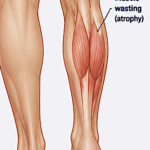
Calf implants can be a useful reconstructive option in selected patients with Charcot–Marie–Tooth (CMT) disease, particularly when there is severe lower leg muscle wasting (“stork legs”) that causes cosmetic deformity and sometimes difficulty fitting clothing or feeling comfortable socially. A few important considerations make CMT patients different from standard cosmetic calf augmentation patients: Why calf Read More…

Medpor Jaw Angle Implant Removal; Unique Considerations and Technical Stratagies

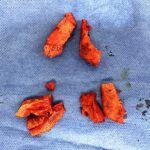
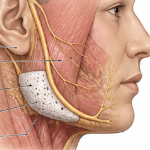
Medpor jaw angle implant removal is one of the more technically demanding explant procedures because of thick soft tissue coverage, strong tissue ingrowth, and proximity to the masseter muscle and the facial artery.. It’s very different from silicone angle implant removal and often behaves like a deep subperiosteal dissection with partial reconstruction. Here’s how it’s Read More…

Secondary Dorsal Implant After Inadequate Rib Graft Augmentation Rhinoplasty

Nasal dorsal augmentation involves increasing the height and/or improving the contour of the nasal bridge (dorsum). It is a common component of rhinoplasty, particularly in patients with a low or flat nasal bridge or an irregular dorsal contour. Common Indications Low nasal bridge (common in many Asian, African, or revision rhinoplasty patients) Saddle nose deformity Read More…

The Tunnel Technique in Aesthetic Rib Removal Surgery for Waist Narrowing

The “tunnel technique” in rib removal for aesthetic waist narrowing refers to a minimally invasive surgical approach where portions of the lower ribs (typically 10–12) are removed through small, strategically placed incisions, creating a “tunnel” to access tand remove he ribs rather than using a wide ??? (open) exposure.   Core Concept Instead of fully Read More…

Challenges in Medpor Facial Implant Removals

Medpor (porous polyethylene) facial implants are designed to integrate with surrounding tissue, which is great for stability—but that same feature makes removal significantly more difficult than with smooth implants (like silicone). Here are the main challenges surgeons face: 1. Tissue Ingrowth (Primary Issue) Medpor is porous, allowing fibrovascular tissue to grow into it. Over time, Read More…

Comparing Medpor vs Silicone Jaw Angle Implant Removals

Jaw angle implant removal: Medpor vs silicone Factor Medpor jaw angle implant Silicone jaw angle implant Tissue reaction Fibrovascular ingrowth into pores Smooth capsule around implant Plane of removal Often obliterated Usually preserved Removal method Sharp dissection, often piecemeal Usually en bloc extraction Operative difficulty High Low to moderate Masseter involvement Common integration into masseter/periosteum Read More…

Dermal-Fat Graft for Steroid Induced Glabellar Soft Tissue Defect Case Example

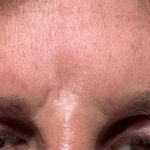
Soft tissue atrophy is a known complication of corticosteroid (steroid) injections, especially when they’re placed superficially or repeatedly in the same area. What it is: It’s a localized loss or thinning of subcutaneous fat and sometimes skin, leading to a visible depression or “dent” at the injection site. Why it happens: Corticosteroids can: Inhibit fibroblast Read More…

Top Articles