
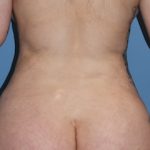
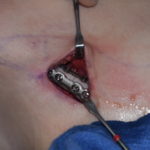
Pectoral and biceps implants are a logical combination for male upper body augmentation and can be performed during the same operation in an appropriately selected patient.
The advantages of combining them include:
- One anesthesia event
- One recovery period
- Better overall upper-body proportionality and contour enhancement
- Lower total cost compared with staging the procedures separately
However, there are several considerations:
- Longer operative time: Combined surgery typically takes several hours longer than either procedure alone.
- Recovery limitations: Both procedures affect upper-body function. During the first few weeks, activities involving pushing, pulling, lifting, and arm flexion will be significantly restricted.
- Increased swelling and discomfort: Recovery can feel more intense because both the chest and upper arms are healing simultaneously.
- Implant selection and sizing: Careful planning is required so the chest and arm enhancements remain proportional and natural-looking.
In my experience, healthy patients seeking comprehensive upper-body augmentation are often good candidates for having both procedures performed together. The most important factors are overall health, skin and soft-tissue characteristics, realistic expectations, and willingness to follow postoperative activity restrictions.
Case Example
This male presented for pectoral implant replacements for increased projection. At the same time he desired bicep augmentation as well.
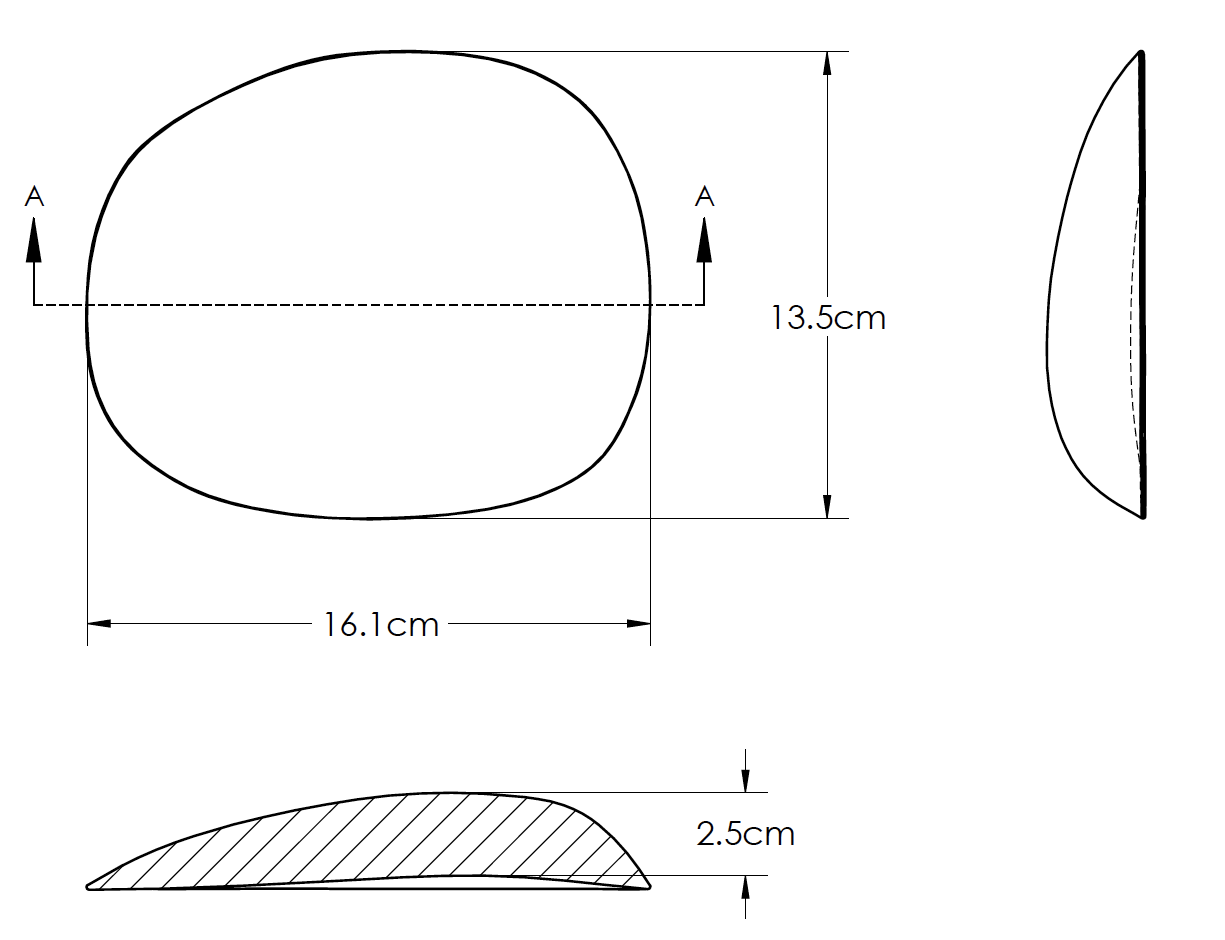 He had standard pectoral implants which by 3D CT scan were well placed. From the scan the implant dimensions and volume (270ccs) were obtained.
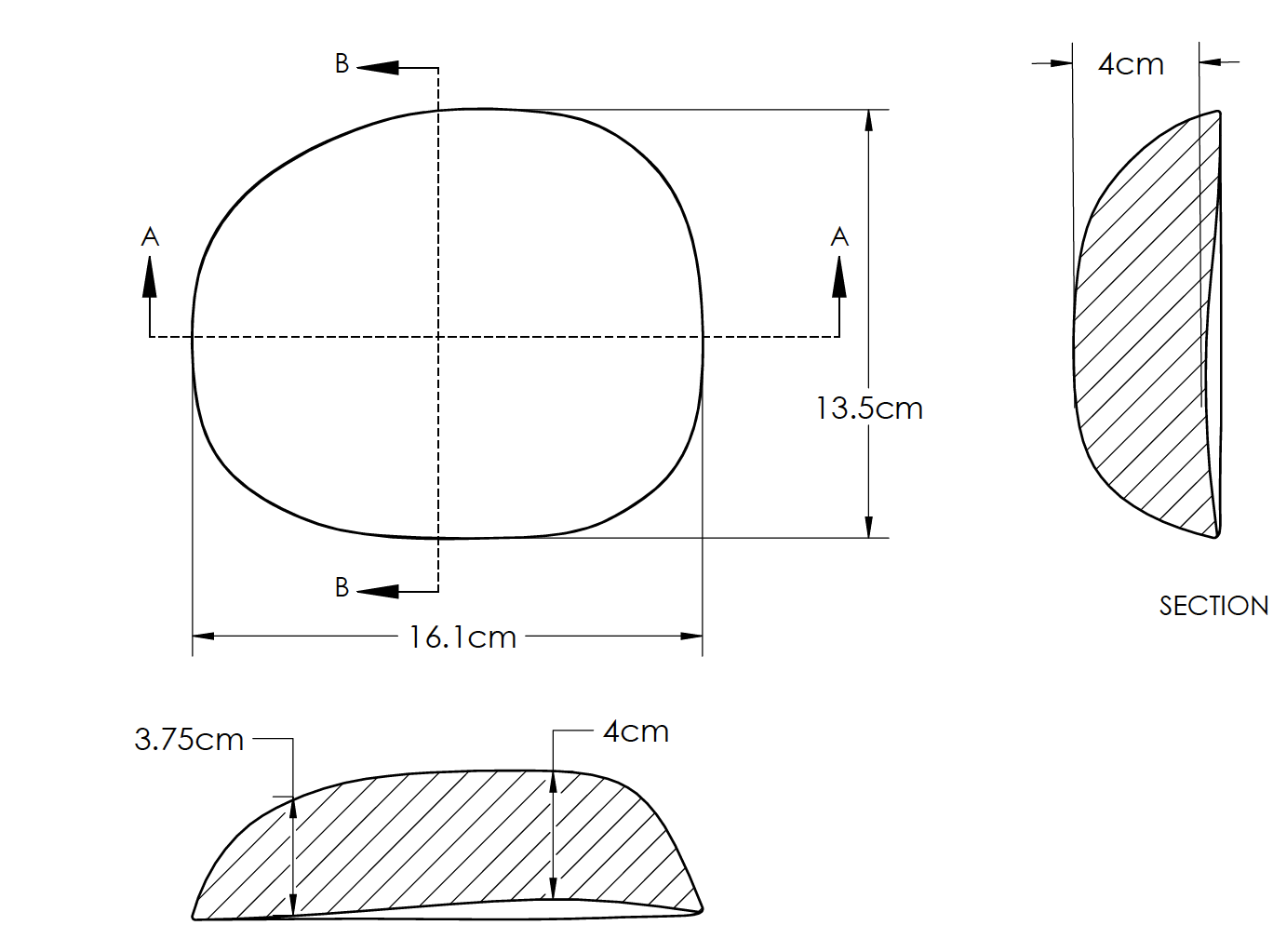 Because of the good implant positioning the existing implant footprint was maintained and only the projection of the new custom pectoral implants increased. The new implant volume was double at 550ccs.
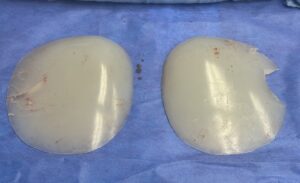 Through the same lateral chest wall incisions the existing standard pectoral implants were removed…often tearing them in the process.
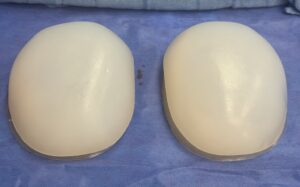
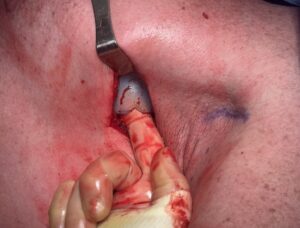 The new larger custom pectoral implants were inserted using a funnel into the existing pocket. To help orient the implant once inside the pocket small wedges were cut onto the lateral border.
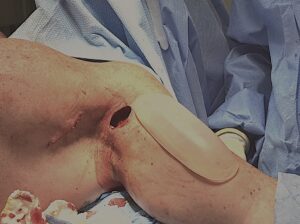
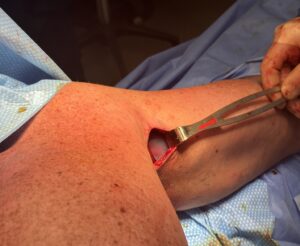 The bicep implants were inserted through high axillary incisions into a subfascial pocket.
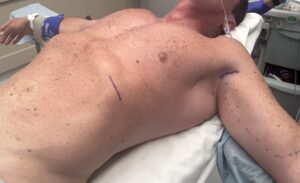
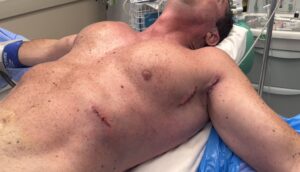 The combination of large custom pectoral implants and standard bicep implants (along with subcostal rib shaves) made for a dramatic immediate body contouring change.
Discussion
For combined pectoral and biceps implants in a patient with no prior implant history, a typical recovery timeline looks like this:
First Week
- Significant chest and upper arm tightness, swelling, and soreness.
- Arm movement is limited, especially reaching overhead and forceful elbow flexion.
- Most patients can perform basic self-care but need assistance with some activities for several days.
- Sleeping on the back is recommended.
Weeks 2–3
- Bruising largely resolves.
- Swelling begins to decrease.
- Light daily activities and desk work are usually possible.
- Range of motion gradually improves.
- No lifting, gym workouts, pushing, pulling, or upper-body exercise.
Weeks 4–6
- Most discomfort has resolved.
- Patients feel substantially more normal in daily life.
- Walking and lower-body exercise are generally unrestricted.
- Light upper-body activities may begin depending on healing and surgeon preference.
Weeks 6–8
- Progressive return to gym activities.
- Light resistance training can usually start.
- Direct chest exercises (bench press, push-ups) and heavy biceps work are introduced gradually.
8–12 Weeks
- Most swelling is gone.
- Implants begin to feel more natural and less tight.
- Return to full weight training is often allowed.
- Chest and arm definition becomes more apparent.
3–6 Months
- Final implant settling.
- Scars continue to mature.
- Chest and biceps feel significantly softer and more natural.
- Most patients have reached 90–95% of their final result.
The biceps implants are usually the rate-limiting factor in recovery because elbow flexion creates tension on the implant pocket. Consequently, activities like lifting, pulling, rowing, curls, pull-ups, and heavy gripping are restricted longer than they would be after pectoral implants alone.
For a muscular patient who wants to get back to serious weight training, I generally advise planning on:
- 2 weeks off work (if physically demanding)
- 6 weeks before light upper-body training
- 10–12 weeks before heavy lifting
What is different in this patient example is that he had prior pectoral implants.A pectoral implant exchange, even when the replacements have twice as much projection as that of the original implants, is going to have less postoperative discomfort than the first time. He also had existing incisional scars well be low the axilla which I used since the scars were already present. This also contributes to less traction on the muscle insertion crossing the axillary region.
Case Highlights
- Combining pectoral and bicep implants can be a good aesthetic combination in the patient who has the proper recovery awareness and mindset.
- Incisional access can have implant pocket location. Pectoral and biceps implants can be placed through the same axillary incision (submuscular pectoral and subfascial bicep) or the axilla can be completely avoided with a lateral chest wall (submuscular pectoral) and an inner arm incision (submuscular bicep)
- In secondary pectoral implants for increased projection implant volume can be doubled and it takes a custom implant design to do so. If the existing implants have good placement the new implant designs should keep the same footprint.
Dr. Barry Eppley
Plastic Surgeon