
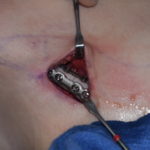
Facial implants have a long history of being done in conjunction with facelift surgery. This almost always has been with the use of standard chin and cheek implants to help build out a flat or recessed cheek and chin bone structure which both aids the aesthetic result and provides some support to the lifted soft tissues (result > support effects)
But as facelifts have become extensive with improved anatomic understanding (deep plane facelift) facial implants have also improved in design, bone surface area coverage and with more powerful facial reshaping effects (custom facial implants). This then takes the facelift + implant discussion up to the next level.
Custom facial implants can be placed at the same operation as a deep plane facelift, and in some patients the combination can be very complementary.
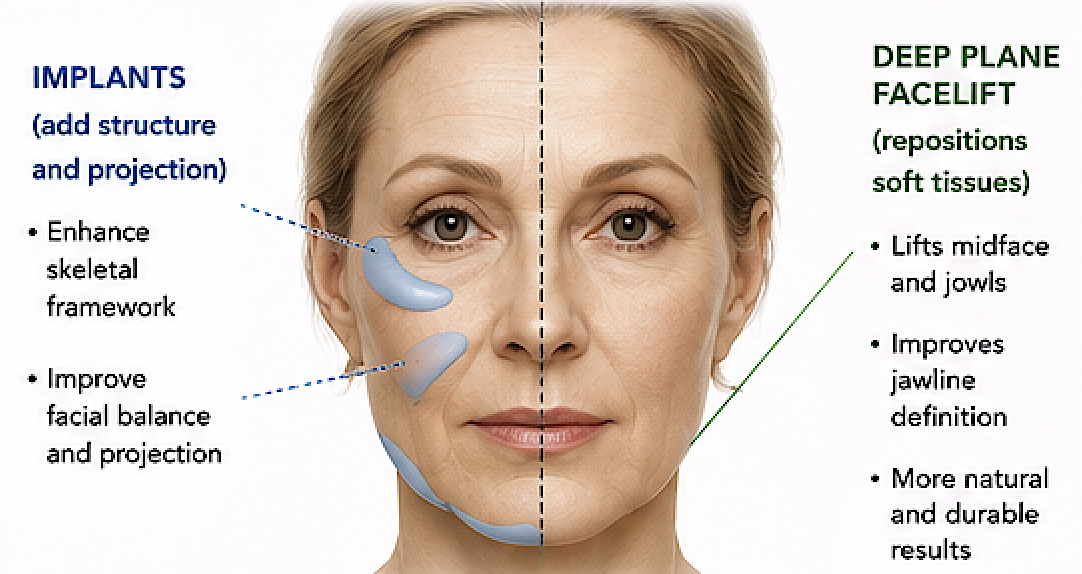
The two procedures address different aspects of facial aging and facial structure:
- Deep plane facelift repositions descended soft tissues (cheeks, jowls, jawline, neck).
- Custom facial implants increase skeletal projection and support (chin, jaw angles, cheekbones, paranasal/midface, orbital rims).
Combining them can provide benefits that neither procedure alone can achieve:
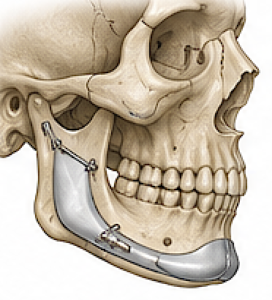
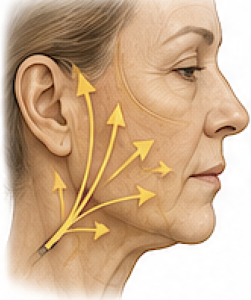
- Improved jawline definition from both soft-tissue tightening and increased mandibular projection.
- Better midface support when cheek or paranasal implants are used.
- Enhanced facial balance in patients with underlying skeletal deficiencies.
- Potentially more durable aesthetic results because the facelift tissues are draped over a stronger skeletal framework.
Some considerations:
- Surgical planning is critical. The implants are usually designed from a CT scan and must be positioned so they do not interfere with facelift dissection planes.
- Incision management. Many custom implants require intraoral or hidden skin incisions, while the facelift uses incisions around the ears and hairline.
- Swelling is greater. Recovery can be longer than for either procedure alone.
- Infection risk. Any implanted device adds some risk, particularly if intraoral approaches are used.
- Sequence matters. Most surgeons place and secure the implants first, then perform the facelift so the soft tissues can be redraped over the new contours.
Patients who often benefit from the combination include:
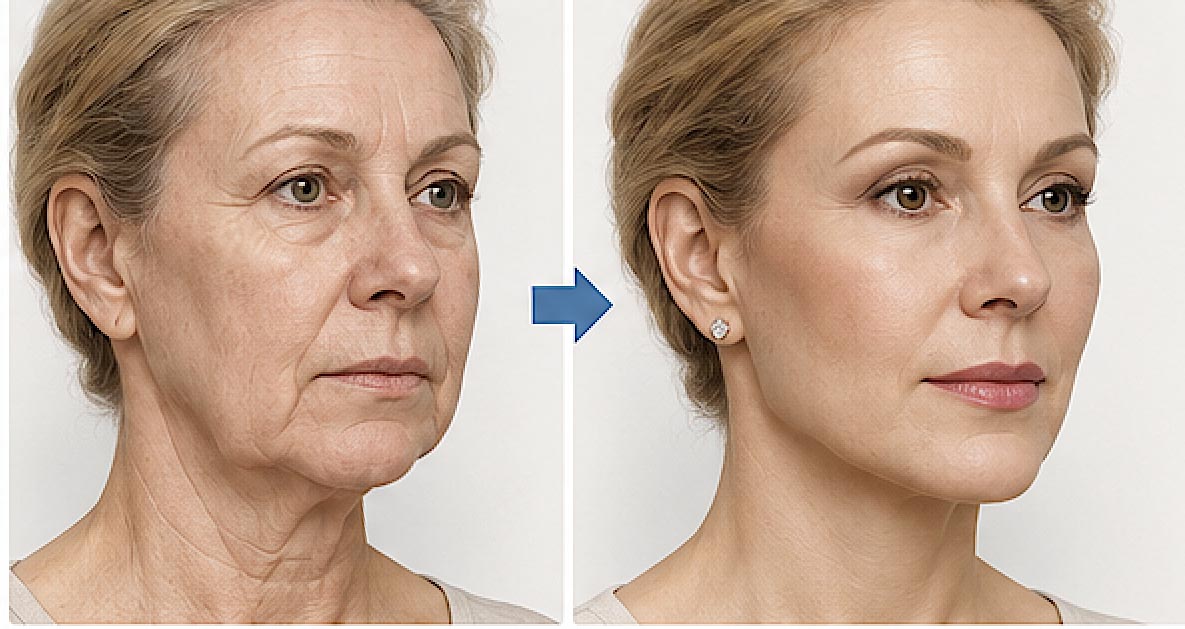
- Weak chin or jawline with jowling.
- Flat or deficient cheekbones with midface descent.
- Congenital facial skeletal deficiencies that become more apparent with aging.
- Men seeking stronger jawline definition along with facial rejuvenation.
In fact, custom jawline implants combined with a deep plane facelift can be particularly powerful because the implant creates the framework while the facelift releases the loigamentous attachments and removes the overlying soft-tissue laxity that would otherwise obscure the implant’s effect.
Dr. Barry Eppley
Plastic Surgeon