

For a custom pectoral implant for aesthetic augmentation, I typically think of the design in terms of six major specification categories:
1. Overall Dimensions
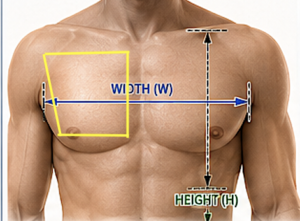
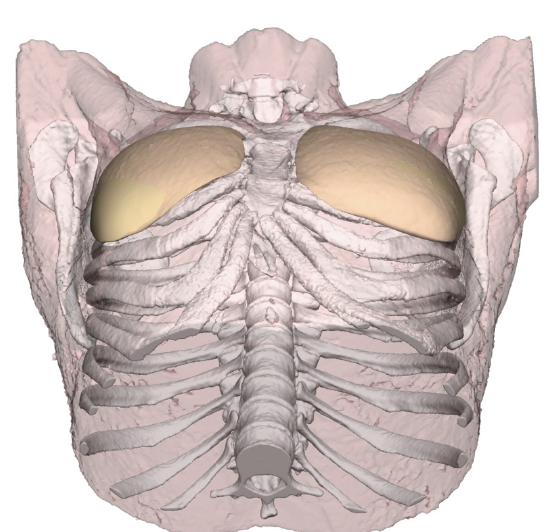
When it comes to creating the implant’s dimensions it is not about the overall height and width of the chest but mimicking the outline of the pectoralis major muscle on the anterior ribcage on both sides. The goal of the implant is create a more defined/larger muscle appearance. But to effectively do so the implant does not need to look exactly like the shape of the muscle. Think of it as a near rectangular shape with more vertical height than width.
Base Width (BW)
- Medial sternal border to nipple.
- Typical range:: 12–14 cm
- Never any lower than the horizontal nipple level
Superior or Clavicular Width (SW)
- Superior border below the clavicle.
- Upper sternal border to anterior axilla
- Typical range:16–18 cm
Sternal Height (SH)
- Upper to lower sternal border.
- Upper border at horizontal level of the anterior axilla
- Lower sternal border at horizontal nipple level
- Typical range:15–17 cm
Lateral Border Height (LBH)
- Nipple to anterior axilla
- Typical range:15–18 cm
Maximum Projection (P)

- Determines chest prominence.
- Often the greatest projection at the clavicular area of the implant, NOT in the center of the implant (common mistake)
- Less projection at inferior end of implant at the nipple level
- Typical range:
- Subtle augmentation: 1.0–1.5 cm
- Moderate: a.5–2.5 cm
- Large: 2.5–4cm
- X Large > 4.0cm
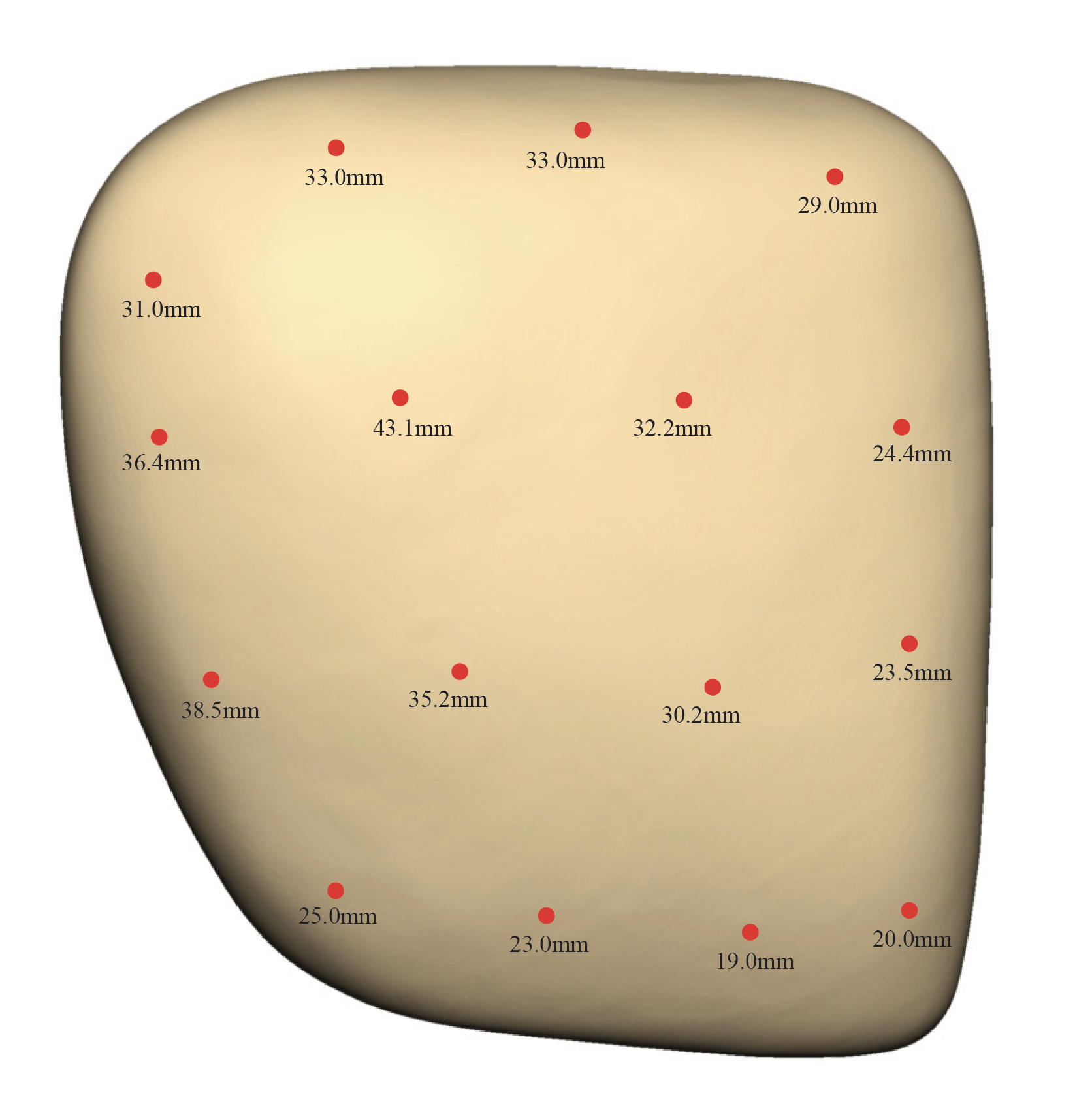
2. Regional Thickness Map
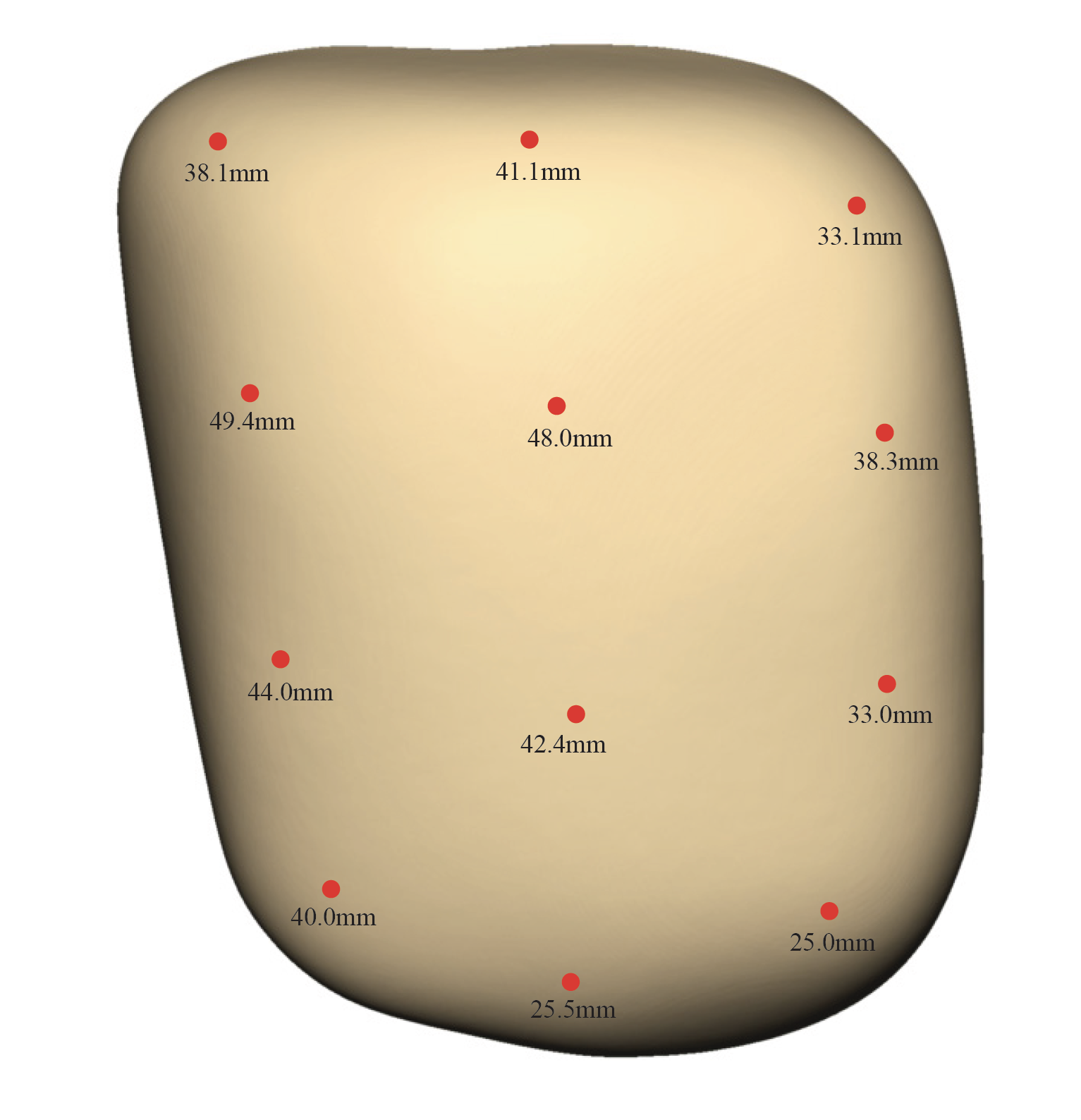
Rather than a single projection value, a custom implant will have a thickness distribution baed on the patient’ enhancement objectives.
Upper Pole Thickness
Controls clavicular fullness, oftenthe greatest area of implant projection
Central Thickness
The same or less than the upper pole but NEVER more
Lower Pole Thickness
Typically the lowest amount of thickness/projection
Example:
|
Region |
Thickness |
|
Superior |
35mm |
|
Central |
30 mm |
|
Inferior |
15 mm |
Ensures good upper pole projection.
3. Medial Border Design
One of the most important aesthetic variables. Most patients prefer a non-tapered design to have a more visible prominence along the sternal border
Aggressive Medial Extension
- Creates greater ‘cleavage’
- Popular for those seeking a stronger chest result even if it is more unnatural
Conservative Medial Extension
- For the most natural look
Typical distance:
- Implant edge 1–2 cm lateral to sternum.
4. Lateral Border Design
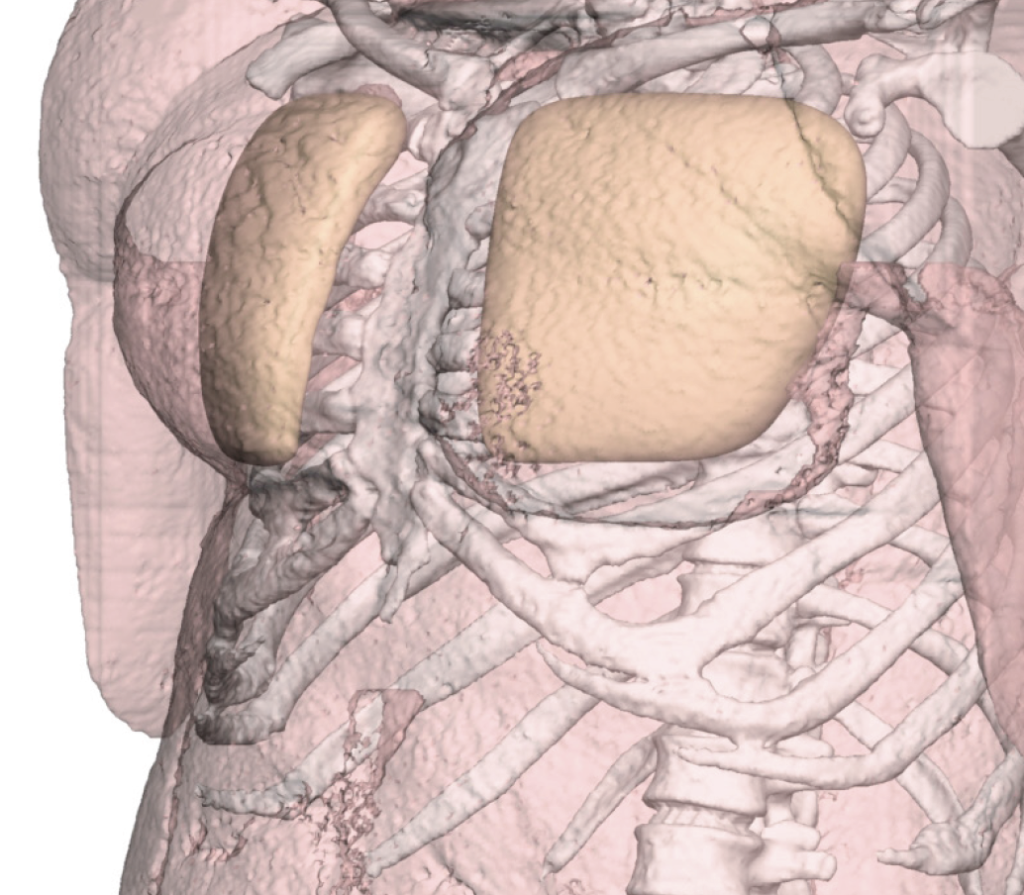
Because the ribcage is not a flat surface the lateral border thickness is often the same or even slightly thicker than the sternal side of the implant.
In implant designing you can’t think of the ribcage as a flat surface as the ribs are arced or curved.
Options:
Standard
Ends at anterior axillary line.
Extended
Protrudes beyond the lateral muscle border.
Useful for:
- Bodybuilder physiques.
5. Edge Characteristics
Tapered Edge
- Preferred for modest and moderate augmentation
- Less visible
- Better blending
Feathered Edge
- Gradual reduction to 0–2 mm.
- Almost never used
Defined Edge
- More dramatic contour
- Greater implant effect
Typical peripheral edge:
- 1 cm +
6. Posterior Surface Geometry
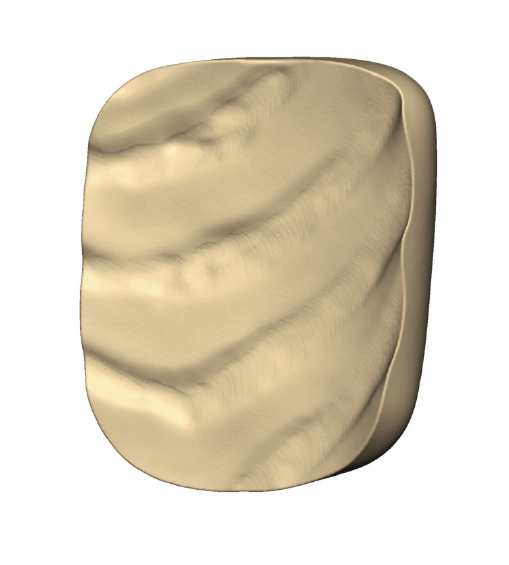
The back surface should match the chest wall (curved)
Flat Posterior Surface
- Works in most cosmetic cases becausen the soft implant is flexible and is compressed against the ribcage by the pressure of the overlying muscle
Curved Posterior Surface
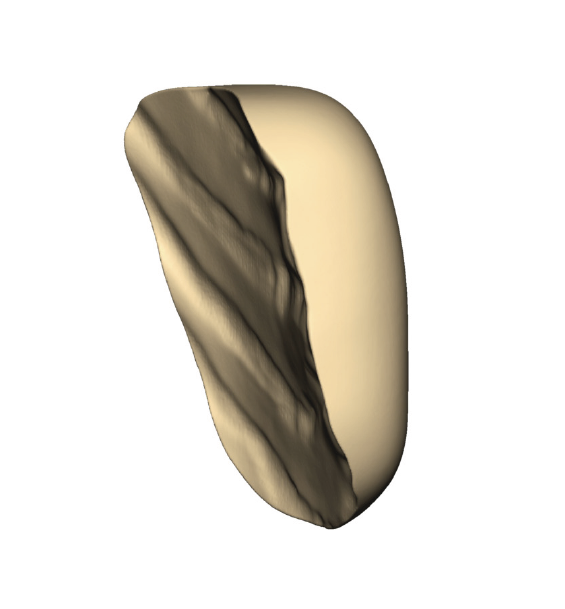
- CT-derived
- Better fit
- Less dead space
- Minimizes implant flexion
For all custom implants, a CT-derived posterior surface geometry is used. It also can account for any asymmetry of the ribcage shape in which the implant will sit.
Advanced CAD Parameters
When designing from CT data, additional variables include:
X-Axis
Medial-lateral contour.
Y-Axis
Anterior projection.
Z-Axis
Superior-inferior contour.
Chest Wall Curvature Radius
Determines posterior conformity.
Implant Volume
Calculated from the CAD model.
Typical custom pectoral volumes:
|
Implant Type |
Volume |
|
Small |
100–150 cc |
|
Medium |
150–250 cc |
|
Large |
250–400 cc |
|
Very Large |
400–800 cc |
Unlike breast implants, the effect of volume is synergistic with implant shape and projection.
Manufacturing Specification Example
Custom Right Pectoral Implant
- Material: Solid silicone elastomer
- Base Width: 15 cm
- Medial Sternal Height: 17cm
- Medial Sternal Height 16cm
- Lateral Axillary Line Height 17cm
- Maximum Superior projection: 3.8 cm
- Maximum Inferior Projection. 2.0cm
- Volume: 385 cc
- Posterior surface: CT-matched curvature
- Surface finish: Smooth
- Orientation marker: lateral border notch can also be made intraop by hand to aid intraoperative implant orientation
This type of specification package is generally sufficient for a custom implant manufacturer to generate a production-ready CAD model.
Dr. Barry Eppley
Plastic Surgeon