
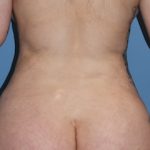
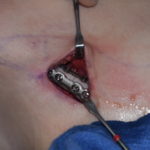
For a custom jawline implant, both solid silicone and PEEK can work well, but they behave quite differently surgically and biologically. There is not strong head-to-head evidence showing that one is universally superior; much of the published custom-implant literature is observational and PEEK-specific rather than direct PEEK-versus-silicone comparison.
|
Feature |
Custom silicone |
Custom PEEK |
|
Consistency |
Flexible / rubber-like |
Hard, rigid, bone-like |
|
Customization |
Excellent with modern CAD/CAM manufacturing |
Excellent; very precise CAD/CAM milling |
|
Insertion |
Can flex/compress through a smaller incision |
Cannot substantially flex; larger exposure or segmented design may be needed |
|
Intraoperative modification |
Easy to trim/carve |
Can be modified, but generally less conveniently |
|
Fixation |
May be screw-fixed; flexibility can make positioning forgiving |
Usually rigidly screw-fixed with very stable geometry |
|
Palpability |
Softer transition, potentially less noticeable at edges |
Harder implant; edge design and soft-tissue coverage become especially important |
|
Bone behavior |
Usually fibrous encapsulation; bone remodeling/resorption has been reported |
Bioinert and generally fibrous rather than true osseointegration unless surface-modified |
|
CT imaging |
Some artifact is possible but generally manageable |
Radiolucent with minimal CT artifact |
|
Removal/revision |
Generally straightforward because it does not integrate into bone |
Also generally removable because standard PEEK has limited osseointegration |
|
Cost |
Usually less expensive |
Usually substantially more expensive |
|
Best practical strength |
Flexibility, ease of placement/revision, lower cost |
Rigid, highly accurate skeletal reconstruction |
Silicone: main advantages
1. Easier insertion for large jawline implants.
A long wraparound mandibular implant can be folded or flexed during insertion. That can be a meaningful advantage when trying to minimize incision length and dissection.
2. Easier intraoperative adjustment.
If the surgeon wants to reduce projection by a few millimeters or feather an edge, silicone is relatively easy to modify.
3. Softer interface with the surrounding tissues.
Because silicone is compliant, a carefully designed implant can produce a gradual transition rather than behaving like a rigid extension of the mandible.
4. Long clinical track record.
Solid silicone has been used for chin, mandibular-angle, and other facial implants for decades. Significant foreign-body tissue reactivity is uncommon.
5. Cost.
For otherwise comparable custom manufacturing, silicone is typically the less expensive material.
Silicone: disadvantages
The biggest concerns are mobility, pocket-related malposition, and bone remodeling. Silicone does not bond to bone, so accurate pocket creation and/or screw fixation are important. Literature on facial silicone implants describes displacement, asymmetry, infection, sensory symptoms, and bone changes among the recognized complications.
Bone erosion deserves some nuance. Older literature often emphasized pressure-related mandibular resorption beneath silicone chin implants. A 2025 review argued that the biology is more complicated: both neo-ossification and resorption occur, and clinically significant pressure erosion appears to be less universal than older descriptions imply.
For a very large jaw augmentation, silicone’s flexibility can also become a disadvantage. A broad implant extending from chin through body to angle can deform slightly during placement, which means the surgeon has to ensure that its final seating exactly matches the planned position.
PEEK: main advantages
1. It behaves more like a rigid skeletal component.
PEEK is much stiffer than silicone. Once seated and screw-fixed, the implant retains its designed geometry extremely well. This is attractive for correcting substantial asymmetry, mandibular deficiency, or complex three-dimensional contour problems.
2. Very high CAD/CAM precision.
PEEK lends itself particularly well to computer-designed, patient-specific implants. The implant can reproduce irregular mandibular surfaces and incorporate screw locations, segmentation, registration features, or interlocking pieces. A small clinical series of interlocking PEEK facial implants found the approach predictable and mechanically stable, although the study included only 10 patients.
3. Radiolucency.
PEEK produces relatively little imaging artifact on CT compared with metallic implants, which makes postoperative assessment easier.
4. Mechanical properties closer to bone than metal.
Its elastic modulus is substantially closer to cortical bone than titanium’s, one reason PEEK has become attractive for craniofacial reconstruction.
PEEK: disadvantages
1. It is rigid during insertion.
This is probably the largest practical difference for a cosmetic jawline implant. A one-piece, ear-to-ear PEEK implant cannot simply be folded through a small incision. Large implants therefore require either greater surgical exposure or a multi-piece/interlocking design.
2. Edge transitions need careful design.
Because the implant is hard, an inadequately feathered edge may be more palpable or visible in a thin patient. That is mainly a design and soft-tissue-coverage issue rather than an inherent failure of PEEK.
3. It does not naturally osseointegrate particularly well.
Unmodified PEEK is hydrophobic and biologically inert; its bone interface tends toward fibrous encapsulation rather than robust direct bone integration. Modern research is investigating coatings and surface modifications to improve this.
4. Cost and manufacturing complexity.
PEEK patient-specific implants generally cost considerably more and depend heavily on the quality of the CT segmentation, virtual surgical planning, and manufacturing workflow.
Infection and complication risk
I would not counsel a patient that PEEK is demonstrably safer than silicone with respect to infection, because the evidence doesn’t justify that conclusion.
The newest systematic review I found, published in July 2026, evaluated patient-specific PEEK and titanium implants, not silicone versus PEEK. Among 447 PEEK implants, the pooled overall complication rate was about 6.9%, infection about 1.5%, and explantation about 0.7%. The authors emphasized substantial study heterogeneity and the need for better prospective comparisons.
Similarly, broader facial-implant database research suggests that mandibular alloplastic implantation is generally safe, while complication risk rises when mandibular augmentation is performed alongside other procedures.
Where I think the distinction matters most clinically
For a primarily cosmetic, smooth wraparound jawline enhancement, custom silicone has several practical advantages: it is easier to insert, easier to revise, easier to feather intraoperatively, and usually cheaper.
For a major skeletal asymmetry, post-traumatic defect, craniofacial reconstruction, or an implant where exact rigid 3-D registration is paramount, PEEK becomes especially attractive. It essentially functions as a precisely manufactured extension of the bony skeleton.
For either material, I would consider implant design, pocket accuracy, fixation, incision choice, dead-space control, sterility, dental contamination, and soft-tissue coverage at least as important as the material itself. The available literature does not support a simple “PEEK good, silicone bad” or vice versa conclusion.
Dr Barry Eppley
Plastic Surgeon