
For facial masculinization, a custom jawline implant designed in the “Eppley style” typically focuses on creating a stronger, wider, and more angular lower face while maintaining proportional harmony with the chin and cheekbones.
Key design principles include:
1. Wraparound Jawline Design
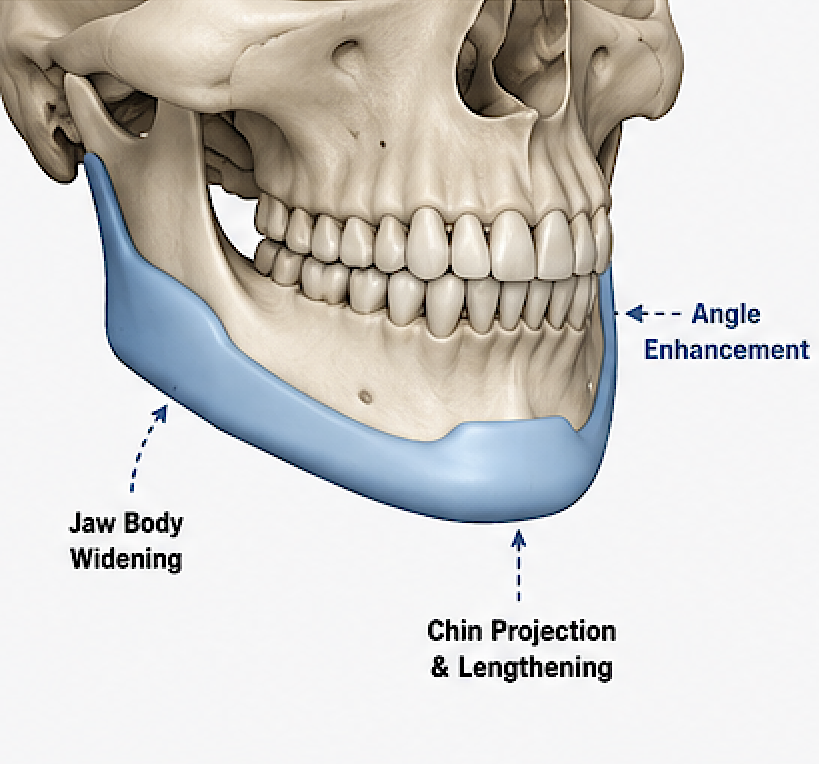
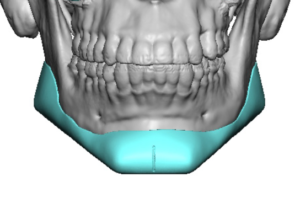
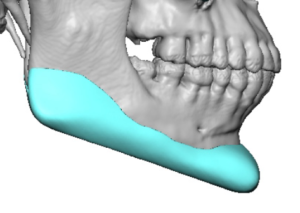
Rather than separate angle implants and a chin implant, the design is usually a single custom wraparound implant that extends:
- Across the chin
- Along the inferior mandibular border
- Into both mandibular angles
This creates a continuous masculine jawline without visible transitions.
Think of it as expanding the entire inferolateral mandibular border, width, lengths or combinations thereof, to create a new jaw shape as this is the actual part of the lower jaw you see externally..
2. Vertical Lengthening
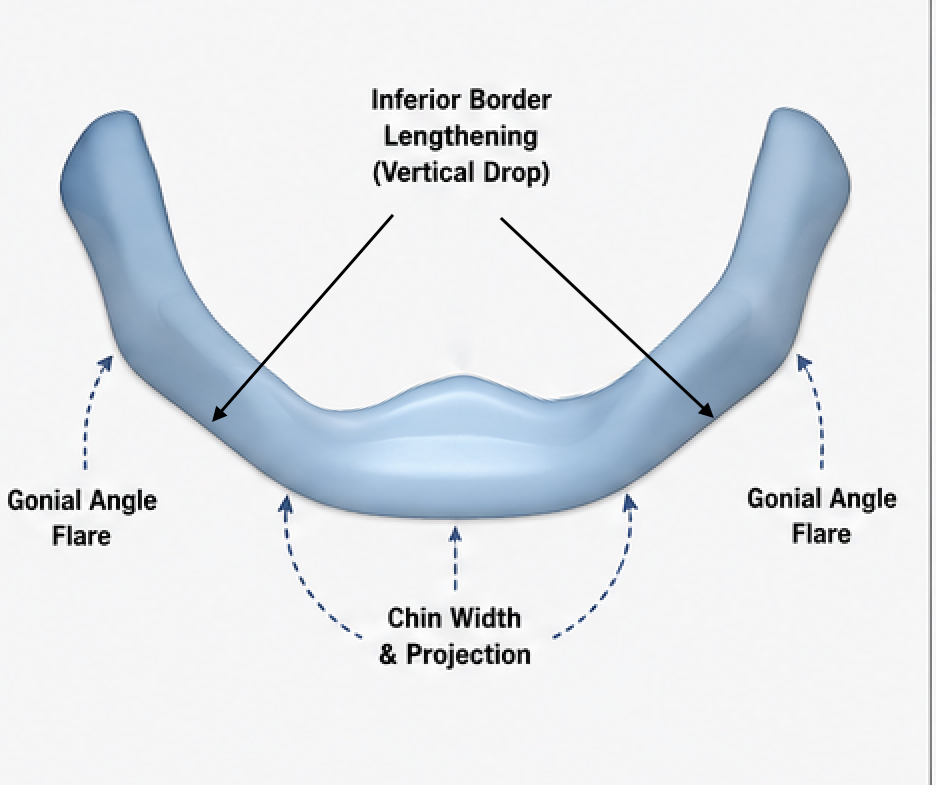
Some male jaws are not just wider—they also need to be longer
The implant can:
- Increase lower facial height
- Lower the mandibular border
- smooth out the inferior border
- Create a squarer facial shape
Vertical augmentation for those patients that need it often produces a more dramatic masculinization effect than width alone because of the stronger border augmentation effect.
3. Gonial Angle Enhancement
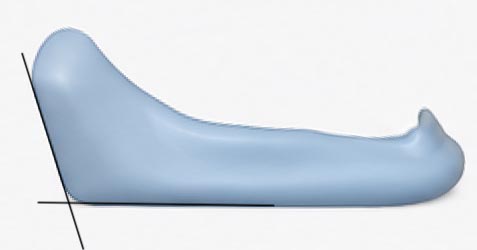
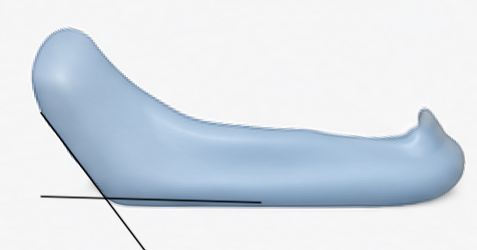
The posterior jaw angles have three dimensions that has to be determined:
- Can be widened (width)
- Can be inferiorly lengthened (length)
- A more defined gonial angle can be created (angle shape)
This is one of the strongest visual markers of a masculine jaw but also one of the hardest to get dimensionally correct as it is a corner of the jawline with a 3D shape.
4. Square Chin Development
The chin portion may include:
- Increased width
- Greater projection
- Inferior lengthening
The goal is usually a square chin that blends naturally into the jaw body.
Often it is called a broad chin which makes one think that a square chin comes from being wider or more broad…but this is not accurate.
A square chin comes from being more square at the ‘corners’ not being wider.
5. Customized Asymmetry Correction
A custom implant can compensate for:
- Mandibular asymmetry
- Chin deviation
- Unequal gonial angles
- Previous surgery or congenital deficiencies
Each side can be designed independently.
6. Relationship to Facial Masculinization Goals
The amount of augmentation must be translate into numbers at the three corners (chin and jaw angles) which depends on the size of the patient and the strength of the desired augmentation effect. While there is no simple formula that applies to everuy patient here are some general guidelines:
Subtle Masculinization
- 2–5 mm jaw body widening
- 2 – 3mm jaw angle widening
- 0 – 3mm vertical chin lengthening
- Keep natural chin shape or slight increased squareness
- 14cc or less implant volume
Moderate Masculinization
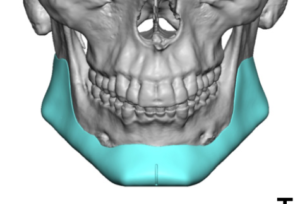
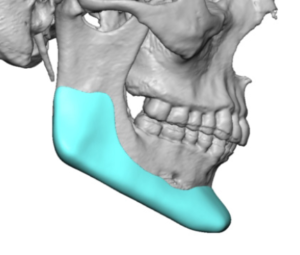
- 7 to 10 mm jaw angle widening
- 3 to 5 mm jaw body widening
- May have some inferior angle drop
- 6 to 8mm horizontal chin increase
- 32/33mm width square chin
- 15 – 22 cc implant volume
Maximal Masculinization
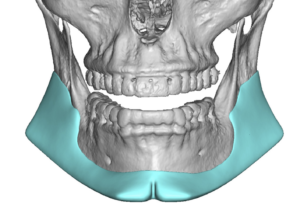
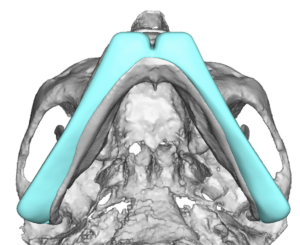
- 10 to 15+ mm jaw angle width
- 5 to 7mm vertical jaw angle drop
- 8 to 10 mm horizontal chin augmentation
- strong squarte chin but not excessively broad
- >24cc implant volume
Common Design Workflow
- High-resolution facial CT scan.
- Virtual surgical planning.
- 3D implant design based on:
- Existing bone anatomy
- Occlusion
- Soft-tissue thickness
- Desired aesthetic endpoint
- Patient review of renderings.
- Manufacture in solid silicone or PEEK depending on patient preference
The hallmark of the Eppley approach is generally the emphasis on three-dimensional jawline transformation (width, projection, and vertical length) rather than simply making the jaw wider or just adding bulk. There are 7 dimensions which must be established (3 for the chin, 3 for the jaw angle and a connection width betweem the chin and the jaw angles) This produces a more natural and powerful masculine result as the dimensionall increase wraps around the entire jawline.
Dr. Barry Eppley
Plastic Surgeon