
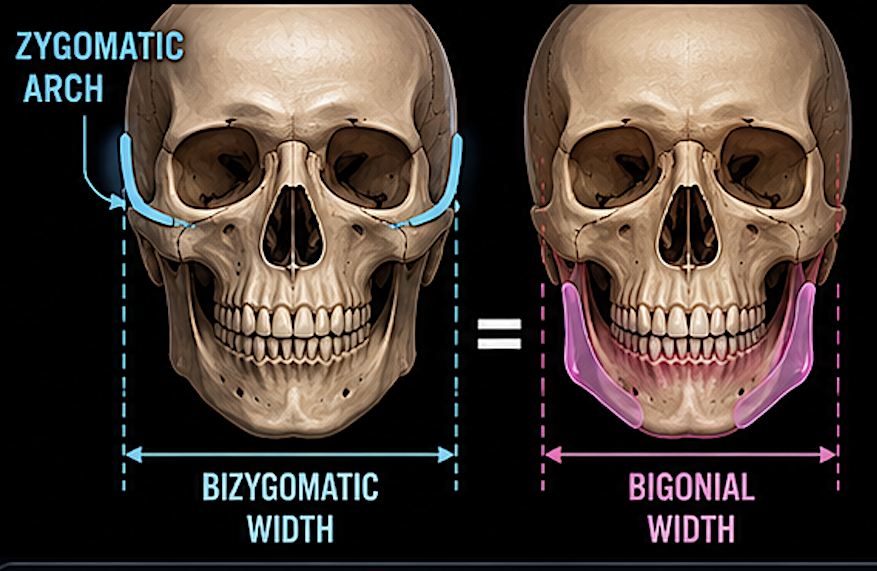
In custom jawline implant design, the zygomatic arch is not part of the implant itself, but it is a very important anatomic landmark and aesthetic reference point that influences the design.
Several ways it comes into play:
1. Defines the Upper Limit of Jawline Width
When creating a mandibular angle or wraparound jaw implant, one has to consider the relationship between:
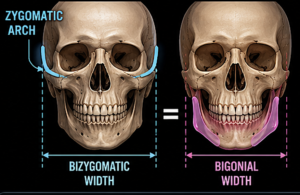
- Bizygomatic width (cheekbone width)
- Bigonial width (jaw angle width)
The zygomatic arches essentially establish the upper facial width. If the implant widens the mandibular angles beyond or close to the zygomatic arch width, the face can develop a very square or “inverted taper” appearance.
A common design goal in men is:
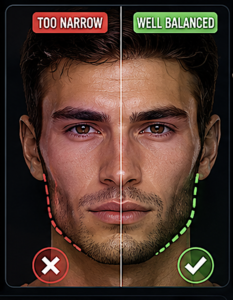
- Bigonial width ? bizygomatic width
- Or slightly less than bizygomatic width
The arch therefore serves as a reference for how much lateral jaw augmentation is appropriate.
2. Determines Facial Shape Balance
The implant is designed in the context of the entire facial skeleton.
Examples:
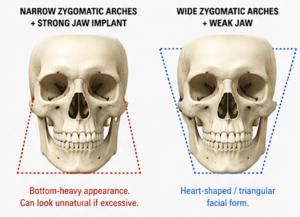
Narrow zygomatic arches + strong jaw implant
- Creates a bottom-heavy face.
- Can look unnatural if excessive.
Wide zygomatic arches + weak jaw
- Creates a heart-shaped or triangular facial form.
For patients with prominent cheekbones but a narrow jaw, jaw implants are often designed to “catch up” to the zygomatic width.
3. Influences Posterior Jaw Angle Design
The zygomatic arch overlies the masseter muscle superiorly.
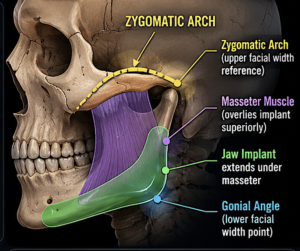
When extending the implant posteriorly:
- The designer must consider masseter thickness.
- The flare of the gonial angle is judged relative to the arch above.
On lateral and oblique views, the line from:
- Zygomatic arch
- Masseteric region
- Gonial angle
should form a harmonious contour.
4. In Combined Midface–Jawline Designs
For some custom facial skeletal augmentations, the zygomatic arch becomes directly relevant.
Examples:
- Custom malar implants
- Malar-submalar implants
- Zygomatic arch implants
- Total facial width enhancement
In these cases the designer evaluates:
- Cheek projection
- Arch projection
- Jaw angle projection
as one integrated framework.
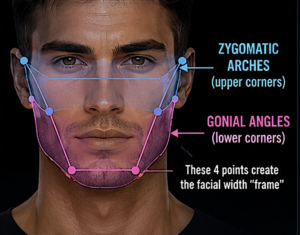
I often think of facial skeletal design as creating a balanced “frame” where the zygomatic arches form the upper corners and the gonial angles form the lower corners. The relationship between those four points largely determines the perceived masculinity and width of the face.
5. Surgical Considerations
The zygomatic arch also indirectly affects:
- Masseter muscle shape
- Temporalis insertion
- Soft tissue drape
If a jaw implant creates substantial lateral expansion, the resulting lower facial width must still appear proportional to the overlying midface soft tissues that originate around the arch.
For custom wraparound implants, I would say the zygomatic arch is a critical reference structure that determines how much width, flare, and posterior extension the jaw implant should have to maintain facial harmony.
Dr. Barry Eppley
Plastic Surgeon