

A large two-stage skull augmentation is used when the desired increase in skull size or contour exceeds what the scalp can safely accommodate in a single operation. The goal is to create enough scalp tissue first, then place a much larger custom implant in a second surgery.
Stage 1: Scalp Expansion
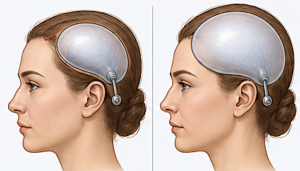
- A scalp tissue expander (essentially an inflatable balloon) is placed beneath the scalp.
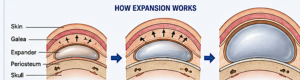
- Over several weeks, saline is added to gradually stretch the scalp.
- Typical expansion periods are about 6–12 weeks, depending on the amount of augmentation desired.
Stage 2: Custom Skull Implant Placement
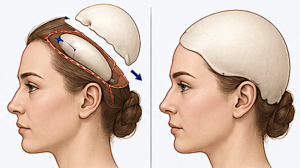
- The expander is removed.
- A custom-designed skull implant is inserted into the expanded space.
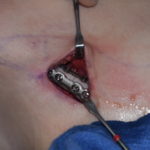
- For very large augmentations, the implant is often designed in two pieces so it can be inserted through a relatively short scalp incision and assembled once in position.
Why Use a Two-Stage Approach?
Benefits include:
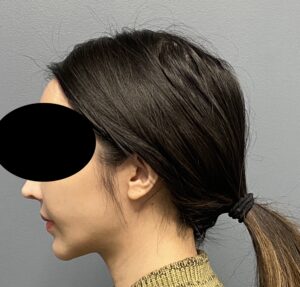
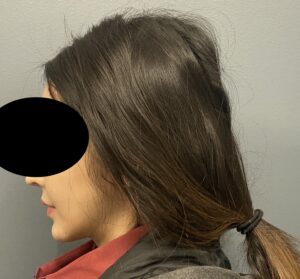
- Allows substantially larger augmentations than a one-stage procedure.
- Reduces the risk of excessive scalp tension and wound healing problems.
- Makes it possible to use a smaller scalp incision despite a large implant volume.
Typical Volumes
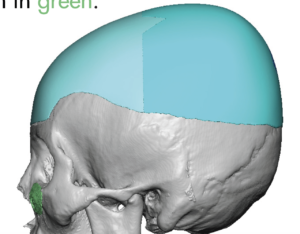
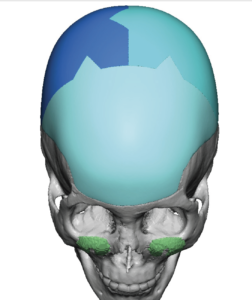
Based on reported cases, implant volumes in the 200–350cc range are often achievable with prior scalp expansion, which is generally much larger than can safely be done in a single stage.
Common Indications
- Small overall head size requiring increased height and width.
- Significant crown or occipital (back of head) augmentation.
- Congenital skull shape deficiencies.
- Patients seeking major head shape changes that exceed the limits of scalp stretch in a single operation.
Trade-Offs
- Requires two operations instead of one.
- Longer overall treatment timeline.
- Temporary visible scalp expansion between stages.
- Higher overall cost and recovery burden compared with a one-stage skull implant.
If you’re considering a specific case, CT-based imaging and the desired amount of augmentation are usually what determine whether a patient is a candidate for a one-stage versus two-stage skull augmentation.
Dr Barry Eppley
Plastic Surgeon