
EXPLORE
Plastic Surgery
Dr. Barry Eppley

Explore the worlds of cosmetic
and plastic surgery with Indianapolis
Double Board-Certified Plastic
Surgeon Dr. Barry Eppley

Archive for the ‘thigh lifts’ Category

The Inner Thigh Gap – Can It Be Created?

Monday, March 11th, 2013


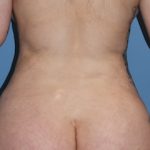
The shape of the thighs has long been an aesthetic interest/concern for some women. The most common thigh deformity are saddle bags, those outward protrusions that violate a straight or gently convex curve from the hip down to the knee. But the inner thigh is also an area of thigh insecurity as well with bulges and sagging skin that obscures a smooth line upward into the genital area.

An often requested inner thigh goal is to have a space created between the inner thighs. Sometimes this is to get rid of rubbing or a chronic irritation from continuous tissue contact. Others seek a more ambitious aesthetic goal where one can see right through the inner thighs like a model going down the runway. Recent reports act as if this is a new cosmetic request (the thigh gap trend) but the reality is that it has been a long-standing concern for as long as plastic surgeons can remember.

While the goal of inner thigh separation is long-standing, the methods to try and achieve it are both old and new. Liposuction and inner thighs lifts are historic treatment strategies that are likely to make the most difference. New treatments such as Smartlipo and non-surgical approaches like Exilis and other energy-based treatments hope to achieve inner thigh reduction through fat cell shrinking and/or removal. It should not be expected that these energy-based treatments will be as effective at inner thigh slimming as surgery.

The reality of inner thigh surgical and non-surgical treatments is that they can be effective but rarely, if ever, can create an open inner thigh space. Unless one is thin enough that they naturally have a gap or are predisposed to one, it is very difficult to create it. One should expect inner thigh shape improvements with various treatments but the creation of a gap is not realistic for most patients.

Dr. Barry Eppley

Indianapolis, Indiana

Postoperative Instructions: Inner Thigh Lifts

Tuesday, March 5th, 2013


Inner thigh lifts are done to recontour the bulging or full area between the inside of the upper legs. In some cases, it is done to correct sagging inner thigh skin after a large amount of weight loss. Through a crecent removal of skin of varying widths with the upper end in the groin crease, the sagging thigh is lifted and tightened. Liposuction of the fat in the thigh skin below the excision is often done to debulk the inner thigh area as well. The location of the incisional closure/scar is hidden as much as possible in the groin crease.

The postoperative instructions for inner thigh lifts are as follows:

1.  Thigh lifts usually have a minimal amount of postoperative discomfort but they will feel very tight. There will be some swelling of the thighs and groins after this kind of surgery. This will go away within a few weeks.

2.  There are no dressings or garments to cover the incisions but they will be heavily taped. The tapes are to be left in place to serve both as a dressing and reinforcement of the incisions.

3.  After 48 hours, take a shower and do not worry about getting the tapes wet.  Do not take a bath or submerge the incisions under water for three weeks after surgery.

4.   The tapes on your incisions will be removed by Dr. Eppley at your first follow-up visit. Most of the sutures will be dissolvable and underneath the skin. There may be several support sutures on the outside which will be removed two weeks after surgery.

5.   Numbness of the skin around the groin and inner thigh is normal after this kind of surgery. Normal feeling will return but it may take up to three months after surgery for that to occur.

6.   Avoid exercise of any kind for four weeks after surgery so breakdown (opening) of the incisions can be prevented. Too much activity too soon is the main reason why problems with healing of the incisions occurs.

7. Squatting places the greatest stress on the inner thigh incisions and should be avoided as much as possible until the incisions are well healed.

8. You may drive when you feel comfortable and can react normally and are off pain medication.

9. The inner thigh scars will initially be red and ropey feeling. This will take months to settle down.

10.   If any redness, tenderness, or drainage develops after the first week of surgery, call Dr. Eppley and have your pharmacy number ready.

Consent for Plastic Surgery: Inner Thigh Lifts

Monday, March 4th, 2013


Every plastic surgery procedure has numerous issues that every patient who is undergoing a procedure should know. These explanations are always on a consent form that you should read in detail before surgery. This consent form, while many perceive as strictly a legal protection for the doctor, is actually more intended to improve the understanding of the inner thigh lift procedure. The following is what Dr. Eppley discusses with his patients for this procedure. This list includes many, but not all,of the different outcomes from surgery. It should generate both a better understanding of the procedure and should answer any remaining questions that one would have.

ALTERNATIVES

The alternatives to thigh lift surgery are liposuction which can remove some inner thigh fat but has little effect on skin tightening or lifting.

GOALS

The goal of thigh lift surgery is to slim and lift the inner thighs and reduce any prominent inner thigh bulging. Creating an space or gap between the inner thighs is not a realistic goal for most patients.

LIMITATIONS

The limitations of an inner thigh lift is in how much reduction and tightening can be achieved. There is a limit as to how much skin can be removed without risking wound healing problems and noticeable scar widening afterwards.

EXPECTED OUTCOME

Expected outcomes include the following: temporary swelling and bruising of the inner thighs, a temporary feeling of tightness and numbness of the inner thighs that is felt most with leg extension and squatting and up to 3 months after surgery until the inner thighs feel completely normal again.

RISKS

Significant complications from inner thigh lifts have not occurred. More common risks include infection,  wound separation, scar widening, a persistent tight feeling and discomfort on leg extension, and inner thigh irregularities and asymmetries and limited improvement in the profile of the inner thighs. Any of these risks may require revisional surgery for improvement.

ADDITIONAL SURGERY

Should additional surgery be required for inner thigh revision or any complications, this will generate additional costs.

Thighplasty (Thigh Lifts) after Extreme Weight Loss

Wednesday, December 31st, 2008

The thighs suffer loose and hanging skin after extreme weight loss and often look like ‘wax melting on a candle’.  Thigh lifts or thighplasty is the plastic surgery procedure that can address some of these issues.  Thigh liftsconsist of a variety of procedures that differ based on the location and extent of the procedure.  There are inner and outer thigh lifts and vertical and  extended vertical thigh lifts, all based on the nature of the excess skin on your thighs.

The outer thigh lift is done as either part of the circumferential body lift or as an isolated procedure. When the circumferential skin cutout of the body lift crosses the outer waistline (actually lower so it is an upper or outer thigh lift), the saddlebag area of the thighs is lifted. The final scar will cross or be just above the hip bone so this area can be quite tight when closed at the time of surgery. Some plastic surgeons choose to anchor the underside of the thigh skin to the tough lining of the hip bone (iliac crest) and this maneuver can be a good one to prevent scar widening later. In the extreme weight loss patient, the extended nature of the sagging ski n around the waistline makes the body lift a logical choice to get a tummy tuck, outer thigh lift, and buttock lift all in one procedure. Isolated outer thighs in extreme weight loss patients is unusual because if one has sagging thighs there will be other areas that sag as well.

Inner thighs lifts consist of two basic types, simplistically those that are oriented horizontally and those that are more oriented vertically. In either type of thigh lift, I don’t recommend doing them until after the tummy tuck or body lift is first completed. This is because these procedures will provide a mild thigh lift effect which may change the amount of thigh skin removed or the incision (cutout) pattern. Either inner thigh lift approach is a compromise. A horizontal inner thigh lift removes a crescent of skin and fat along the groin crease and this is where the final scar will be. A groin crease scar can be long, extending back into the buttock crease, but it is placed in a natural skin crease that is not that visible. A vertical thigh lift usually includes a horizontal excision of skin along the groin crease but also has a long vertical cut out, a T excision pattern. This is a very effective thigh reshaping procedure but results in a long visible scar down the inner thigh. Most extreme weight patients are usually better off with the combined horizontal/vertical inner thigh lift, if the scar is acceptable.

Dr. Barry Eppley

Indianapolis, Indiana

The Thigh Lift in the Bariatric Surgery Patient

Tuesday, April 29th, 2008

For many massive weight loss patients (> 100 lbs), the thigh is often the last stage of body contouring that is done. It is always a good idea to see how much result you can get in the thighs after the abdominoplasty/panniculectomy/circumferential body is completed first. While these procedures won’t make a dramatic difference in the thighs, they do have some lifting effect in the upper portions of the inner and anterior thigh areas. I never do thigh lifts in conjunction with an abdominal/body lift procedure as this creates an enormous of swelling with lengthy operative times. Plus I don’t like the thought of a narrow strip of skin between the abdominal and thigh incisions from a blood supply/survival standpoint.
Thigh lifts in the massive weight loss patient are very different from the typical thigh lift procedure. First and foremost, the amount skin in all dimensions is simply greater. Therefore, the typical cutout pattern with a resultant scar isolated to the groin crease is not going to be sufficient. A good amount of improvement can not be done this way despite the fact that the scar is fairly well hidden. Second, the excessive thigh skin exists in three-dimensions, meaning both horizontal and vertical skin cutouts must be done to make a true size reduction. This results in an extra scar running down the inside of the leg to at least the knee and sometimes past it. Third, as the scar burden has increased so the the ‘typical’ postoperative problems which can occur including wound separation at the T (junction of horizontal and vertical scars), fluid build-up after drain removal, and some degree of scar thickening.
Like many bariatric plastic surgery procedures, thigh lifts result in a lot of scar but they are tremendously effective. They are not painful to go through other than some discomfort from being tight in the groin area. Recovery from a thigh lift really relates to the need to limit the amount of walking that you do in the first few weeks after surgery so as not to put too much stress on the incision sites.
Dr Barry Eppley

Indianapolis, Indiana


Dr. Barry EppleyDr. Barry Eppley

Dr. Barry Eppley is an extensively trained plastic and cosmetic surgeon with more than 20 years of surgical experience. He is both a licensed physician and dentist as well as double board-certified in both Plastic and Reconstructive Surgery and Oral and Maxillofacial Surgery. This training allows him to perform the most complex surgical procedures from cosmetic changes to the face and body to craniofacial surgery. Dr. Eppley has made extensive contributions to plastic surgery starting with the development of several advanced surgical techniques. He is a revered author, lecturer and educator in the field of plastic and cosmetic surgery.

Read More


Free Plastic Surgery Consultation

*required fields


Pricing

The cost of any type of elective plastic surgery plays a major role in the decision to undergo the procedure(s).

Get Your Quote Here


My Plastic Surgery Story

Military Discount

We offer discounts on plastic surgery to our United States Armed Forces.

Find Out Your Benefits


Categories