

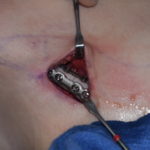
There is an established association of bone changes with facial implants but it is poorly understand despite that the biology of bone remodeling in response to mechanical stress is well known.
Facial implants can cause underlying bone resorption (bone remodeling/imprinting), although the degree varies considerably by implant type, location, design, fixation method, and duration of implantation.
How Does It Occur?
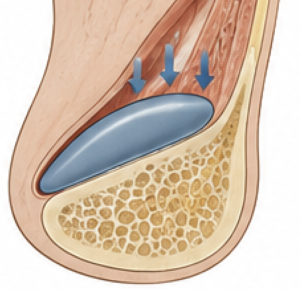
Bone is a living tissue that responds to pressure. When an implant is placed on bone, which violates the natural biologic boundaries of the tissues, it initially generates pressure on the surrouding tissues. This generates a response to relieve the pressure which can lead to:
- Shallow saucerization or indentation of the bone (imprinting)
- Localized bone resorption/remodeling
In most cases this is a slow, self-limited remodeling phenomenon, not an ongoing aggressive bone destruction. Interestingly it is not a uniform phenomenon. In some patients you see itwhile in others it is not seen at all.
The amount of implant pressure generated on the bone is related to the muscle coverage over it and the natural tightness of the tissues. Implants under masticatory muscles (jaw angles) or tight overlying soft tissues (chin) aer much more lilely to exhibit bone remodeling changes than any other craniofacial implanted areas.
By implant type
Chin implants
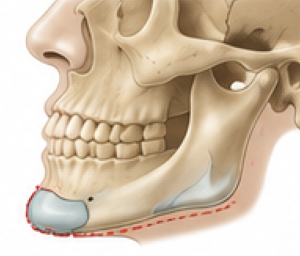
- Bone resorption beneath silicone chin implants is well documented.
- Usually occurs across the how implant interface
- Most cases are minor and asymptomatic
- May be more visible in:
- Large implants
- Implant mobility
Jaw angle implants
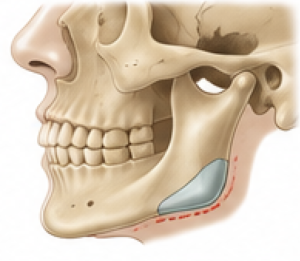
- Can produce pressure remodeling of the mandibular angle.
- Clinically significant bone loss is uncommon but radiographic remodeling is not rare.
Malar/cheek implants
- Typically cause very little bone imprinting than chin implants.
- Mild remodeling beneath the implant may be seen on CT scans years later.
Paranasal implants
- Generally show minimal bone change, have never seen any actual evidence of it
Does implant material matter?
- Silicone implants have the longest history of reported pressure-related bone resorption…because they have the longest track record of any implant material.
- Porous polyethylene (Medpor) implants integrate with tissue and may distribute forces differently, but bone remodeling still occurs.
- PEEK and titanium are also not immune to having an imprinting effect.
In essence it is not a material related phenomenon. The issue is more related to mechanical loading and implant stability than simply the material itself.
Is it clinically important?
Most of the time:
- The bone changes are discovered incidentally on 3D imaging from custom implant designs or in implant removal/replacement surgeries
- It does not affect aesthetics or implant stability.
- No treatment is required.
Occasionally, significant resorption can:
- Complicate revision surgery as associated bone overgrowths need to be removed
How much bone loss?
Published studies of long-term chin implants have shown everything from:
- Minimal cortical remodeling
- To several millimeters of localized bone resorption in some patients after many years
Severe resorption is very rare and it typically associayted with highly positioned older style chin implants where the cortical bone is thinner.
Bone Overgrowths
Associated with bone imprinting, particularly in chin and jaw angle implants, are bony overgrowths which are never simultaneously discussed even though many surgeons see them. While not easily seen in plain x-rays the use of 3D CT scans today make their occurrence very visible.
Practical perspective
For most facial implant patients, some degree of underlying bone remodeling over decades should be considered a normal biological response with no clinical relevance.
Dr. Barry Eppley
Plastic Surgeon