
Clavicle shortening fundamentally changes the way forces are transmitted across the shoulder girdle. The clavicle is not simply a strut connecting the arm to the trunk—it is a compression and bending beam that maintains the lateral position of the scapula while transferring loads from the upper extremity to the axial skeleton. When the clavicle is shortened, both its geometry and the forces acting on it change.
1. Shorter Beam = Lower Bending Moment
From a structural engineering standpoint, the clavicle behaves like a curved beam.
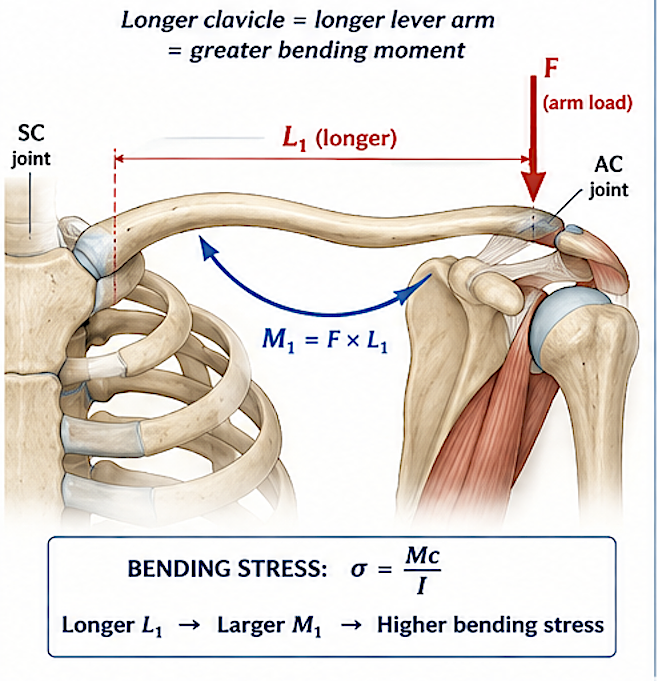
The bending stress in a beam is:
sigma = Mc/I
where:
- M = bending moment
- c = distance from neutral axis
- I = moment of inertia
The bending moment is proportional to beam length:
M = F × L
where:
- F = applied load
- L = lever arm
Because clavicle shortening decreases L, the bending moment decreases proportionally.
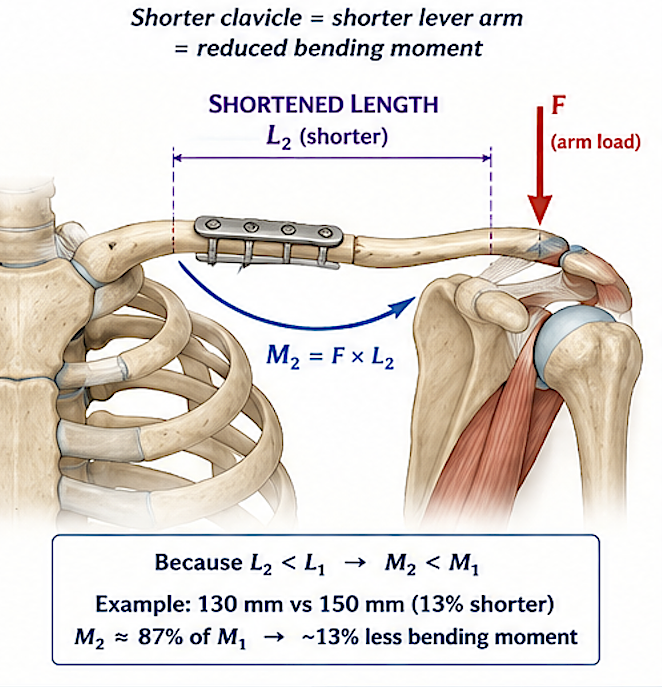
For example:
- Original clavicle length = 150 mm
- Shortened clavicle = 130 mm
- Same arm load
130/150 = 0.87
This represents roughly a 13% reduction in bending moment.
Mechanically, the shortened clavicle is actually subjected to less bending stress, not more.
2. Compression Forces Increase Slightly
The clavicle normally functions primarily as a compression strut.
The shoulder musculature (trapezius, deltoid, pectoralis major, sternocleidomastoid) generates large compressive loads.
When the clavicle becomes shorter:
- muscle attachments are brought closer together
- the angle of muscle pull changes slightly
- compressive forces become somewhat more axial
This tends to reduce bending while slightly increasing pure compression.
Bone tolerates compression exceptionally well.
3. Stiffness Increases
Beam stiffness varies inversely with length.
For a beam,
Deflection approximates L3
Small decreases in length produce disproportionately large increases in stiffness.
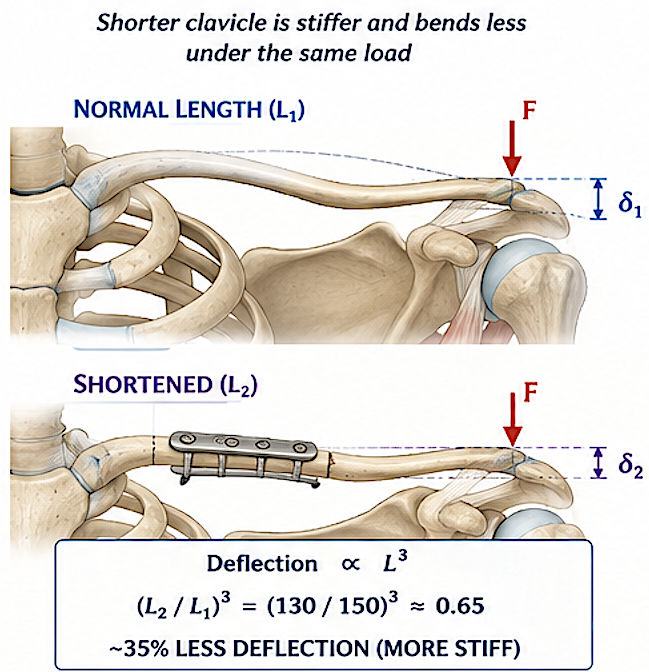
For example:
(130/150)3 = 0.65
Meaning the shortened clavicle bends approximately 35% less under the same load.
This is one reason fracture healing after shortening osteotomy is generally mechanically robust once union occurs.
4. Joint Forces Change More Than Bone Forces
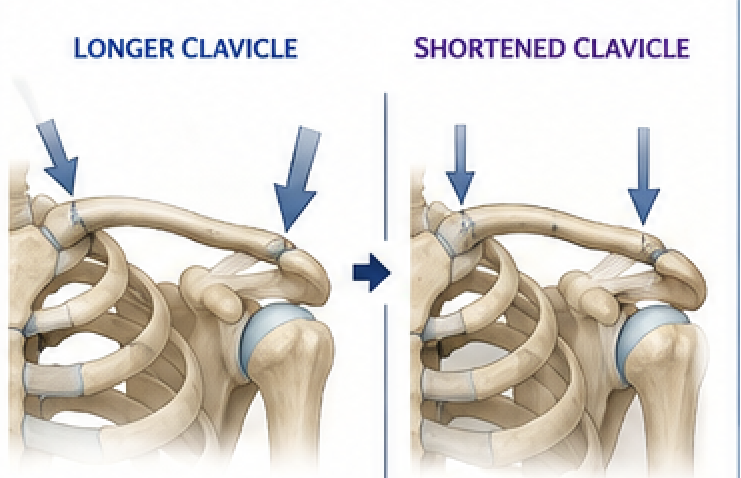
The larger biomechanical changes occur at the joints rather than within the clavicle itself.
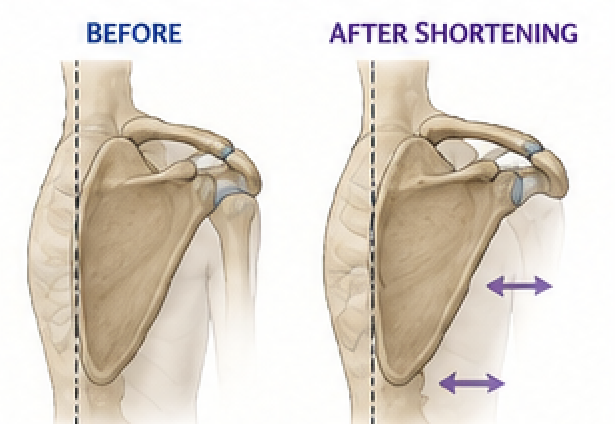
Shortening moves the scapula:
- medially
- slightly anteriorly
- slightly inferiorly
Consequently:
- AC joint orientation changes
- SC joint rotation changes
- scapulothoracic mechanics change
The clavicle itself experiences less bending, but the shoulder girdle must function with altered geometry.
5. Muscle Moment Arms Become Shorter
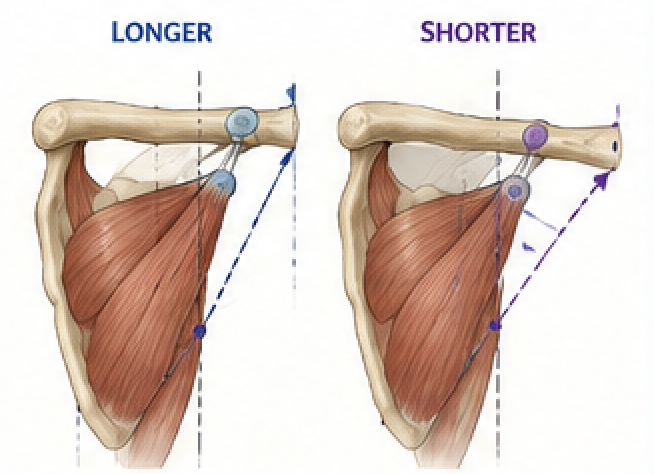
Several muscles lose small amounts of leverage:
- trapezius
- deltoid
- sternocleidomastoid
- pectoralis major
- subclavius
Because the shoulder sits closer to the chest, the muscles require slightly different activation patterns to produce the same arm motion.
This explains why patients often experience:
- shoulder fatigue
- altered proprioception
- mild weakness
during the early postoperative period.
The nervous system gradually adapts over several months.
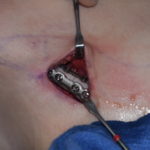
6. Plate Loading After Osteotomy
In clavicle shortening osteotomy, fixation plates primarily resist:
- bending
- torsion
Since shortening reduces the bending moment, plate stresses during normal activities are generally not increased. The highest plate stresses occur early after surgery, before bone union, particularly during heavy lifting or sudden arm movements. Once union is achieved, the bone again bears the majority of the load.
7. Practical Implications for Shoulder Narrowing Surgery
For clavicle shortening performed as part of shoulder narrowing surgery, these biomechanical principles are encouraging:
- The shortened clavicle is not mechanically weaker simply because it is shorter.
- Bending loads are modestly reduced due to the shorter lever arm.
- Structural stiffness increases, making the clavicle less prone to elastic bending.
- The principal biomechanical adaptation occurs in the shoulder girdle kinematics rather than in the clavicle itself.
- Clinical limitations after surgery are more often related to altered scapular positioning, muscle adaptation, and healing of the osteotomy than to increased stress within the shortened clavicle.
Dr Barry Eppley
Plastic Surgeon