
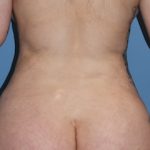
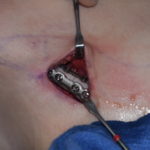
One of the more interesting observations in clavicle reduction osteotomy surgery is that no two clavicles are exactly alike. The clavicle is arguably the most variable long bone in the human skeleton in terms of its shape, curvature, cross-sectional dimensions, and even bone quality. This variability has important implications for shoulder narrowing surgery because it directly affects how much shortening can be achieved and how the osteotomy and fixation are performed.
The reasons for this variability include:
1. The Clavicle Has a Complex Developmental Origin
Unlike most long bones, the clavicle is the first bone in the body to begin ossification (around the fifth fetal week) and is one of the few long bones that develops primarily through intramembranous ossification, with only the ends undergoing endochondral ossification.
Because of this unique developmental process, its final shape is heavily influenced by individual growth patterns rather than following a rigid genetic template.
2. Muscle Forces Continuously Remodel the Bone
The clavicle serves as the attachment site for several powerful muscles:
- Sternocleidomastoid
- Pectoralis major
- Deltoid
- Trapezius
- Subclavius
Over years of growth, these muscles apply different magnitudes and directions of force depending on:
- genetics
- body habitus
- athletic activity
- handedness
- occupation
Wolff’s Law predicts that bone remodels according to mechanical loading. Thus, a swimmer, weightlifter, violinist, and sedentary office worker may all develop noticeably different clavicles.
3. Body Size Does Not Predict Clavicle Size
Surprisingly, larger people do not always have proportionately larger clavicles.
Examples include:
- A 6’3″ male may have a relatively slender clavicle.
- A 5’7″ male may have a very broad, thick clavicle.
- Some women have remarkably robust clavicles.
- Some muscular men have surprisingly delicate bones.
Cross-sectional thickness and cortical bone thickness vary independently of clavicle length.
4. The Degree of Curvature Varies Dramatically
The clavicle is an S-shaped bone.
Some patients have:
- very gentle curves
- sharply curved lateral segments
- long straight midshafts
- short compact clavicles
This alters:
- osteotomy location
- plate contouring
- final shoulder width after shortening
A highly curved clavicle often produces a different aesthetic effect after shortening than a straighter clavicle, even if the same amount of bone is removed.
5. Cross-Sectional Shape Is Highly Variable
Looking at a CT scan, the midshaft may appear:
- nearly circular
- triangular
- oval
- flattened superior-inferior
- flattened anterior-posterior
These differences affect:
- screw purchase
- plate selection
- osteotomy stability
- resistance to torsional loading
6. Cortical Thickness Differs Greatly
Some patients have:
- thick cortices with narrow marrow canals
- thin cortices with wide canals
- very dense bone
- relatively osteopenic bone
This influences:
- ease of osteotomy
- drilling characteristics
- screw fixation
- healing behavior
7. Left and Right Clavicles Are Often Not Identical
Many patients have measurable asymmetry.
Differences may include:
- length (often 2–6 mm, occasionally more)
- curvature
- rotational alignment
- superior bowing
- cross-sectional size
These asymmetries may reflect normal variation, prior injuries, or long-term dominance of one arm. In shoulder narrowing surgery, recognizing these differences can help avoid over- or under-correction if equal shortening is applied without considering the native anatomy.
8. Sex Differences Are General Rather Than Absolute
On average:
Male clavicles tend to have:
- greater diameter
- thicker cortex
- longer length
- more pronounced muscle attachment sites
Female clavicles generally have:
- smaller diameter
- smoother contours
- thinner cortices
However, there is substantial overlap, making CT-based evaluation more useful than assumptions based on sex alone.
Implications for Shoulder Narrowing Surgery
For clavicle shortening osteotomies, this variability means that the operation must be individualized. Preoperative CT imaging allows assessment of:
- clavicle length
- cortical thickness
- medullary canal size
- degree of curvature
- osteotomy location
- fixation strategy
- maximum safe shortening
A thick, gently curved clavicle with dense cortical bone can usually tolerate more robust fixation and may accommodate greater shortening than a small, highly curved clavicle with thin cortices. Similarly, plate selection and contouring often need to be tailored to the patient’s unique anatomy rather than relying on a standard implant.
An Evolutionary Perspective
The clavicle has evolved to position the shoulder girdle away from the thorax, maximizing upper limb mobility rather than load-bearing efficiency. Because shoulder function in humans depends on a wide range of motion for reaching, climbing, throwing, and manipulation, there has been relatively little evolutionary pressure for a uniform clavicular shape. Instead, natural variation in clavicle length, curvature, and robustness is common and well tolerated. This anatomical diversity explains why surgeons performing clavicle shortening procedures encounter such a wide spectrum of bone morphology and why individualized preoperative planning is essential for safe and predictable outcomes.
Dr, Barry Eppley
Plastic Surgeon