Top Articles

Blog

The Tunnel Technique in Aesthetic Rib Removal Surgery for Waist Narrowing

The “tunnel technique” in rib removal for aesthetic waist narrowing refers to a minimally invasive surgical approach where portions of the lower ribs (typically 10–12) are removed through small, strategically placed incisions, creating a “tunnel” to access tand remove he ribs rather than using a wide ??? (open) exposure.   Core Concept Instead of fully Read More…

Challenges in Medpor Facial Implant Removals

Medpor (porous polyethylene) facial implants are designed to integrate with surrounding tissue, which is great for stability—but that same feature makes removal significantly more difficult than with smooth implants (like silicone). Here are the main challenges surgeons face: 1. Tissue Ingrowth (Primary Issue) Medpor is porous, allowing fibrovascular tissue to grow into it. Over time, Read More…

Comparing Medpor vs Silicone Jaw Angle Implant Removals

Jaw angle implant removal: Medpor vs silicone Factor Medpor jaw angle implant Silicone jaw angle implant Tissue reaction Fibrovascular ingrowth into pores Smooth capsule around implant Plane of removal Often obliterated Usually preserved Removal method Sharp dissection, often piecemeal Usually en bloc extraction Operative difficulty High Low to moderate Masseter involvement Common integration into masseter/periosteum Read More…

Dermal-Fat Graft for Steroid Induced Glabellar Soft Tissue Defect Case Example

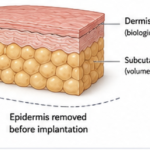
Soft tissue atrophy is a known complication of corticosteroid (steroid) injections, especially when they’re placed superficially or repeatedly in the same area. What it is: It’s a localized loss or thinning of subcutaneous fat and sometimes skin, leading to a visible depression or “dent” at the injection site. Why it happens: Corticosteroids can: Inhibit fibroblast Read More…

Transfemale Breast Augmentation Case Example

Breast augmentation in transfeminine (transfemales / trans women) patients is a well-established procedure, but it has some important differences from augmentation in cisgender women due to anatomical and hormonal factors. 1. Background: Hormone Therapy First Most transfeminine patients undergo estrogen-based hormone therapy before considering surgery. This: Promotes natural breast development (often A–small B cup) Helps Read More…

Sagittal Ridge Skull Reduction – Basic Concepts and Surgical Technique

A sagittal ridge skull reduction refers to contouring down a prominent midline ridge on the top of the skull that follows the sagittal suture. It is usually done for cosmetic reasons when the ridge creates a peaked, narrow, or “keel-shaped” head appearance. What causes a sagittal ridge? Common causes include: Normal anatomical variation — thickened Read More…

Male Custom Back of Head Skull Implant Case Example

In adults, a flat back of the head is usually due to one of these situations:            Natural skull shape (flat occiput) Very common and often genetic/ethnic/anatomical. Usually harmless. Some people notice it more with short haircuts or certain head angles. Residual positional plagiocephaly/brachycephaly from infancy Flattening that developed as a Read More…

Male Earlobe Reduction Case Example

Earlobe reduction is a minor cosmetic procedure used to make large, elongated, or drooping earlobes smaller and more proportionate. Common reasons patients seek it include: Naturally large lobes Age-related stretching and thinning Heavy earrings causing elongation Gauged/stretch-pierced ears Asymmetry between lobes Procedure The surgery is typically performed under local anesthesia if done alone Techniques vary Read More…

Use of the Ogee Curve in Custom Facial Implant Designing

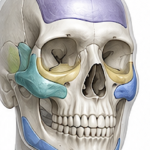
The ogee curve is one of the most important visual concepts in facial aesthetics and has increasing relevance in the design of custom facial implants. In facial analysis, the ogee curve refers to the flowing double-S contour seen on the oblique view of the face that extends from the lateral brow and orbital rim, sweeps Read More…

Top Articles