

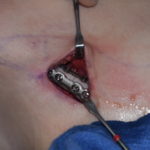
The success of forehead reshaping surgery depends far more on accurate diagnosis than on operative technique. Patients frequently present with a perceived aesthetic concern—such as a forehead that appears too sloped, too prominent, too wide, or too high—but the visible deformity often represents only the external manifestation of a more complex three-dimensional skeletal relationship. Consequently, modern forehead surgery begins not with selecting a procedure but with identifying the underlying anatomical cause of the contour abnormality.
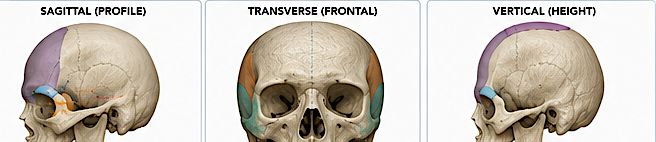 Historically, forehead evaluation relied primarily on clinical examination and profile photographs. Although these remain indispensable, they provide only a two-dimensional representation of a three-dimensional structure. Surface appearance alone cannot reliably distinguish between frontal bone deficiency, brow overprojection, frontal bossing, temporal narrowing, cranial asymmetry, or combinations of these abnormalities. Similar external appearances may result from entirely different skeletal anatomies, each requiring a different surgical strategy.
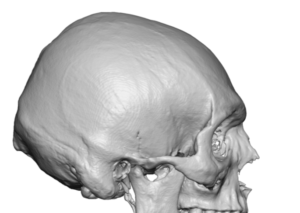
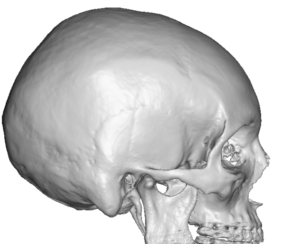 For this reason, high-resolution three-dimensional computed tomography has become the cornerstone of contemporary forehead analysis. Unlike conventional photographs, CT imaging allows direct visualization of the craniofacial skeleton, including frontal bone thickness, frontal sinus anatomy, supraorbital rim projection, temporal contour, cranial asymmetry, and the transition between the forehead and anterior cranial vault. Equally important, CT data provide the digital foundation for patient-specific implant design and objective preoperative simulation.
The purpose of CT evaluation extends beyond identifying deficiencies or excesses of bone. It allows me to understand how individual skeletal components interact to create the patient’s overall facial appearance. For example, what appears clinically to be excessive brow projection may actually result from a deficient upper forehead. Conversely, a forehead that seems excessively sloped may have normal frontal bone inclination but an unusually prominent supraorbital ridge or a retrusive anterior cranial vault. These distinctions fundamentally alter the surgical plan and often determine whether augmentation, reduction, or a combination of both procedures is indicated.
Modern forehead analysis therefore consists of evaluating multiple architectural parameters rather than relying on isolated measurements. While numerical values may assist planning, successful surgery depends primarily on recognizing proportional relationships among these variables.
The principal components of analysis include:

Forehead Inclination
Forehead inclination describes the angle formed between the frontal bone and the facial profile. Rather than representing a single measurement, it reflects the overall direction of the forehead from the brow break to the frontal hairline. Excessive posterior inclination is one of the most common indications for forehead augmentation, particularly in men seeking improved facial balance. Conversely, excessive anterior projection may represent frontal bossing requiring bony reduction rather than augmentation.
Brow Projection
The brow complex establishes the inferior boundary of the forehead and strongly influences profile aesthetics. Analysis should assess not only the degree of horizontal projection but also the continuity of the supraorbital rims, brow break definition, and lateral brow contour. The objective is not simply increasing or decreasing projection but creating appropriate relationships between the brow, forehead, and upper orbit.
Frontal Convexity
Forehead convexity refers to the curvature of the frontal bone between the brows and hairline. Some patients demonstrate generalized flattening, whereas others exhibit localized deficiencies or excessive prominence. Custom implant design allows selective modification of convexity without unnecessarily altering adjacent regions of the forehead.
Forehead Width
The transverse dimensions of the forehead are determined primarily by the position of the anterior temporal lines and the contour of the lateral frontal bone. Patients may seek either widening or narrowing depending on their facial proportions. Width analysis should always include evaluation of the temporal transition, since changes in forehead width directly influence the apparent shape of the upper face.
Temporal Transition
One of the most overlooked aspects of forehead analysis is the transition from the frontal bone to the temporal region. A smooth, continuous contour creates the appearance of natural skeletal architecture, whereas abrupt transitions or localized depressions produce visible contour abnormalities even when central forehead projection is satisfactory. Contemporary custom implants frequently extend across this region to achieve seamless integration with the temporal skeleton.
Upper Forehead Continuity
The forehead should not terminate at the hairline but blend naturally into the anterior cranial vault. Patients with severe forehead retrusion often exhibit deficiency extending well beyond the frontal bone onto the superior skull. Failure to recognize this relationship results in isolated forehead augmentation that appears incomplete or artificial. Extended forehead implants addressing both the frontal bone and anterior cranial vault have largely eliminated this problem.
Symmetry
Perfect craniofacial symmetry is uncommon. Minor asymmetries of the frontal bone, brow projection, temporal contour, and orbital position are present in nearly every patient. The objective of surgery is therefore not mathematical symmetry but perceptual symmetry. Three-dimensional imaging permits precise identification of skeletal asymmetries that are frequently unapparent on clinical examination yet significantly influence implant design and surgical planning.
Perhaps the greatest conceptual advance in forehead surgery has been the transition from describing isolated deformities to recognizing patterns of skeletal architecture. Rather than diagnosing a patient as having a “sloping forehead” or “prominent brow bone,” I can identify the combination of anatomical factors responsible for that appearance. This architectural approach allows procedures to be selected according to the underlying skeletal diagnosis rather than the visible contour abnormality alone.
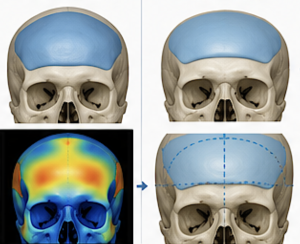 Increasingly, digital planning software and artificial intelligence assist in this analytical process. Automated segmentation, surface mapping, and comparative three-dimensional models can rapidly identify asymmetries and quantify skeletal relationships. However, these technologies remain planning tools rather than decision-makers. The final implant design and operative strategy continue to depend on my understanding of facial aesthetics, anatomical limitations, and the patient’s individual goals.
Dt. Barry Eppley
Plastic Surgeon