

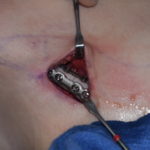
A female chin reduction combined with a facelift can be an effective facial balancing procedure when an overly prominent chin contributes to a masculine lower face or detracts from a youthful neck and jawline. The key is to reduce the chin in a way that preserves feminine proportions while allowing the facelift to enhance soft tissue definition rather than simply tighten the skin.
Why combine the procedures?
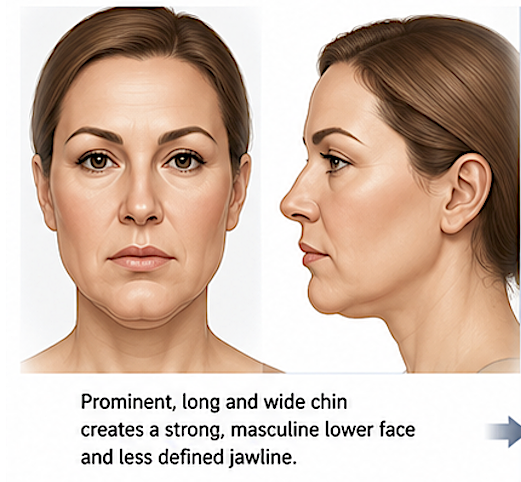
A facelift repositions the soft tissues of the lower face and neck but does not change the underlying facial skeleton. If the chin is excessively long, wide, or projecting, reducing the bone at the same operation can produce a more harmonious result by:
- Softening an overly strong or masculine chin
- Improving lower facial proportions
- Enhancing the jawline created by the facelift
- Reducing excessive mentalis muscle strain if vertical chin excess is corrected
- Creating a more delicate, feminine facial contour
Types of chin reduction
The surgical technique depends on the specific deformity.
- Horizontal projection reduction: The chin is set back with a reverse sliding genioplasty or reduced with burring in selected cases.
- Vertical reduction: A wedge of bone is removed to shorten an excessively long chin.
- Width reduction: The chin can be narrowed by removing the lateral portions of the chin bone during a genioplasty.
- Combination reduction: Many women benefit from reducing projection, height, and width simultaneously.
Combining with a facelift
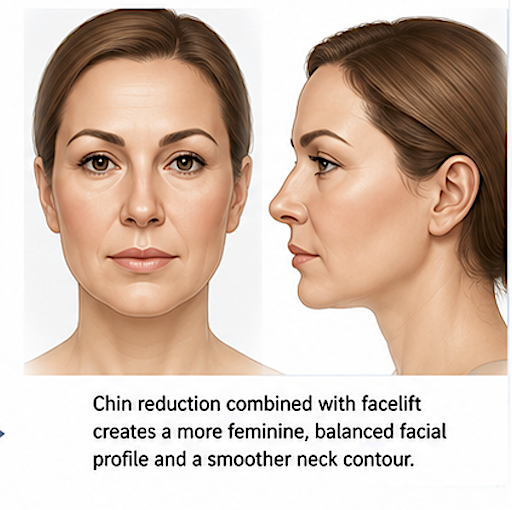
The procedures complement each other because they address different anatomical layers:
- Chin reduction: reshapes the bone.
- Facelift: repositions the SMAS, jowls, and neck tissues.
The facelift can often improve the soft tissue redraping over the newly reduced chin, minimizing postoperative fullness beneath the chin.
Surgical considerations
When performing both operations together:
- The chin reduction is usually performed first through an intraoral incision or a small submental incision.
- The facelift follows after skeletal reshaping.
- Care is taken to preserve the mental nerves.
- If a sliding genioplasty is used, rigid fixation with titanium plates and screws stabilizes the bone.
Recovery
Recovery is generally similar to a facelift alone, although swelling of the chin lasts longer.
Typical recovery timeline:
- Week 1–2: Bruising and most swelling resolve.
- Weeks 3–6: Facial contours become more defined.
- 3–6 months: Chin swelling continues to improve.
- 6–12 months: Final skeletal and soft tissue contours are apparent.
Ideal candidates


The best candidates are women who have:
- A disproportionately large or masculine chin
- Jowling or neck laxity
- Good dental occlusion (when orthognathic surgery is not indicated)
- Realistic expectations regarding facial balance rather than simply making the chin “smaller”
The most successful outcomes occur when the amount of chin reduction is determined in relation to the nose, lips, jawline, and neck, rather than treating the chin as an isolated feature. The objective is a balanced, feminine lower face in which the facelift and chin reduction enhance each other’s results.
Dr, Barry Eppley
Plastic Surgeon