

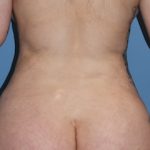
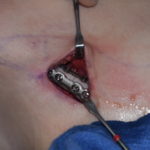
Unlike many aesthetic facial procedures that directly modify the soft tissues, forehead augmentation is fundamentally a skeletal operation. The implant changes the position and contour of the underlying frontal bone, while the overlying scalp, forehead soft tissues, eyebrows, and skin adapt passively to the new skeletal framework. Understanding this relationship is essential for both surgical planning and patient counseling because the final aesthetic result depends as much on soft tissue accommodation as on implant design.
One of the unique characteristics of the forehead is its relatively thin and firmly adherent soft tissue envelope. Unlike the cheeks or neck, where thick mobile tissues may conceal minor skeletal irregularities, the forehead closely reflects the contour of the underlying bone. Consequently, the implant essentially becomes the new skeletal surface of the forehead. As postoperative swelling resolves and tissue contraction occurs, every contour transition, asymmetry, and design feature becomes increasingly apparent.
For this reason, the objective of implant design is not to create an oversized augmentation that will be hidden beneath the soft tissues. Rather, the implant should reproduce the exact contour ultimately desired after complete healing. Surgeons should resist the temptation to overcorrect in anticipation of tissue compression or implant settling, as these phenomena are minimal in forehead augmentation.
Forehead Skin Expansion
Immediately following implantation, the forehead soft tissues undergo mechanical expansion to accommodate the increased skeletal volume. Although the degree of expansion depends on implant size and tissue elasticity, the forehead skin generally adapts remarkably well because of its broad surface area and extensive vascular supply.
Patients are frequently concerned that the skin may become excessively tight or appear stretched. In clinical practice, however, this sensation is usually temporary and reflects postoperative edema rather than permanent tissue tension. Over the ensuing weeks, soft tissue relaxation gradually reduces this feeling while allowing the skin envelope to conform naturally to the underlying implant.
Because tissue expansion occurs over a broad area, even relatively large augmentations rarely produce an unnatural appearance when the implant has been properly designed. In contrast, localized overprojection is far more likely to create visible tension, contour abnormalities, or an artificial appearance.
Eyebrow Position
One of the most common patient questions concerns whether forehead augmentation elevates the eyebrows.
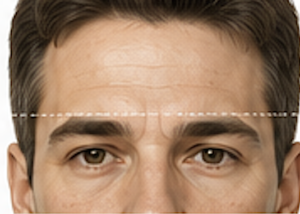 In most patients, eyebrow position changes very little if at all following augmentation alone. Because the implant is placed beneath the periosteum rather than within the brow soft tissues, its primary effect is projection rather than elevation. The eyebrows simply drape over the newly positioned skeletal framework. It is possible that in very large forehead augmentations there may be some slight brow elevation, but this would be the exception and not the rule.
Small increases in brow fullness may occur, particularly when augmentation extends inferiorly toward the supraorbital rims. This should not be confused with a brow lift. True elevation of eyebrow position requires release or repositioning of the soft tissues and should not be expected from implant placement alone.
Conversely, forehead implants with a brow bone component may help lower the position of the eyebrows, which often is a desired effect. In many young male seeking a Hunter Eye look. How effective a forehead – braow implant may be in lowering the brows depends on many factors from the implant design to the natural position of the patient’s eyebrows and their forehead skin laxity.
Temporal Soft Tissue Response
Modern forehead implants frequently extend laterally beyond the anterior temporal lines. In these regions, the implant no longer rests directly on bone but transitions onto the temporalis fascia and, in selected cases, over the temporalis muscle itself.
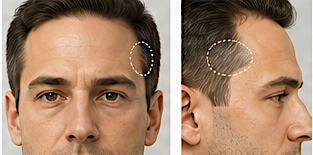 This extension produces gradual lateral expansion of the temporal soft tissues and effectively treats mild temporal hollowing while improving the continuity between the forehead and side of the head. Importantly, these changes occur gradually over a broad surface area, minimizing the risk of visible implant borders.
The temporal transition is often one of the most aesthetically rewarding aspects of extended implant design because it creates a more natural upper facial contour than isolated central forehead augmentation.
Long-Term Tissue Stability
Unlike injectable fillers or fat grafts, solid silicone forehead implants produce stable skeletal augmentation that does not depend on tissue survival or gradual volume loss. Once postoperative healing has been completed, forehead contour remains remarkably stable over time.
The surrounding soft tissues undergo normal aging, including loss of skin elasticity and gradual brow descent. However, these age-related changes occur over the augmented skeletal framework rather than replacing it. Consequently, the implant continues to provide structural support decades after surgery without meaningful changes in volume or projection.
This long-term stability represents one of the principal advantages of skeletal augmentation over soft tissue volumization techniques.
Implications for Implant Design
An appreciation of soft tissue behavior directly influences implant design.
Because the forehead skin faithfully reproduces the underlying implant contour, abrupt transitions, sharp edges, and excessive regional projection should be avoided. Instead, augmentation should be distributed over broad surfaces with gradual transitions into the surrounding forehead, temporal region, and anterior cranial vault.
Similarly, implant thickness should never be selected solely according to the desired increase in profile projection. The quality of the contour is considerably more important than the magnitude of augmentation. Experience consistently demonstrates that smooth continuity produces a more natural and aesthetically pleasing result than greater projection achieved through localized implant thickness.
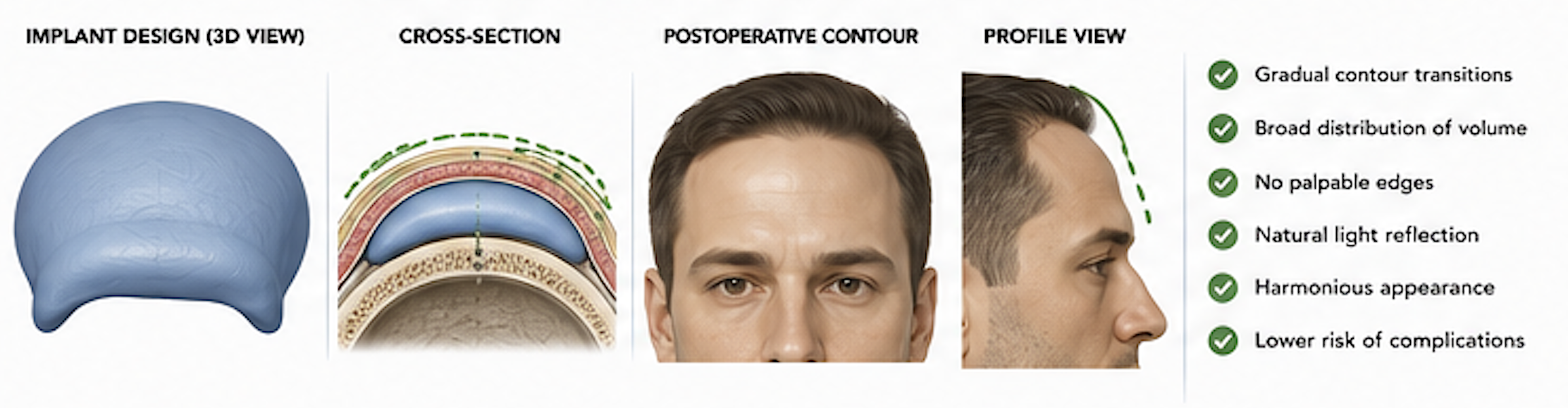
Ultimately, successful forehead augmentation is achieved when the observer perceives a naturally attractive forehead rather than recognizing the presence of an implant. This distinction reflects thoughtful implant design, precise surgical placement, and predictable adaptation of the overlying soft tissues into a harmonious three-dimensional contour.
Dr. Barry Eppley
Plastic Surgeon