

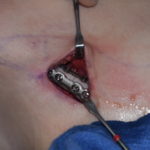
Correction of pre-existing clavicle asymmetry is an important consideration when performing cosmetic shoulder narrowing surgery. In fact, many patients seeking shoulder reduction already have subtle differences in clavicle length, slope, rotation, or position that become more noticeable once the shoulders are narrowed.
Can Clavicle Asymmetry Be Corrected?
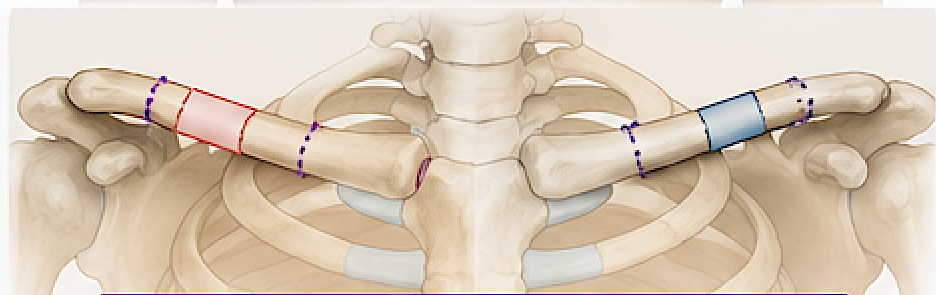
Yes. Because shoulder narrowing surgery involves shortening the clavicles through bilateral osteotomies, the amount of bone removed from each side can be adjusted independently to improve symmetry rather than simply removing the same length from each clavicle.
For example:
- Right clavicle appears 5 mm longer than the left – remove 25 mm from the right and 20 mm from the left.
- Left shoulder sits higher due to clavicular orientation – osteotomy planning can incorporate slight rotational adjustments during fixation.
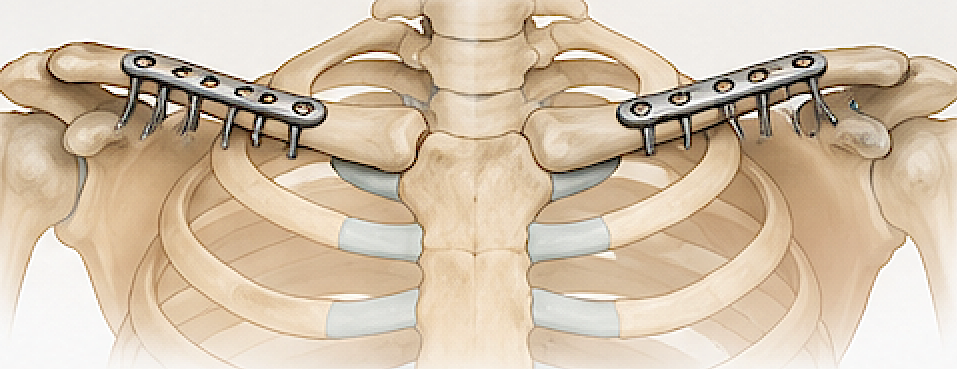
- One clavicle has greater anterior bowing – plate fixation can help optimize final alignment within the limits of the existing bone anatomy.
Types of Asymmetry That Can Be Improved
Shoulder narrowing surgery is best at correcting:
- Differences in clavicle length
- Shoulder width asymmetry
- Mild differences in clavicular angle
- Minor anterior/posterior positioning differences
- Asymmetry from a healed clavicle fracture (in selected cases)
Limitations
Not every shoulder asymmetry originates from the clavicle. Other contributing structures include:
- Scapular position
- Trapezius muscle bulk
- Sternoclavicular joint anatomy
- Acromioclavicular joint orientation
- Rib cage asymmetry
- Thoracic scoliosis
- Differences in muscle development
If these structures are responsible, clavicle shortening alone cannot completely eliminate the asymmetry.
Importance of Preoperative Planning
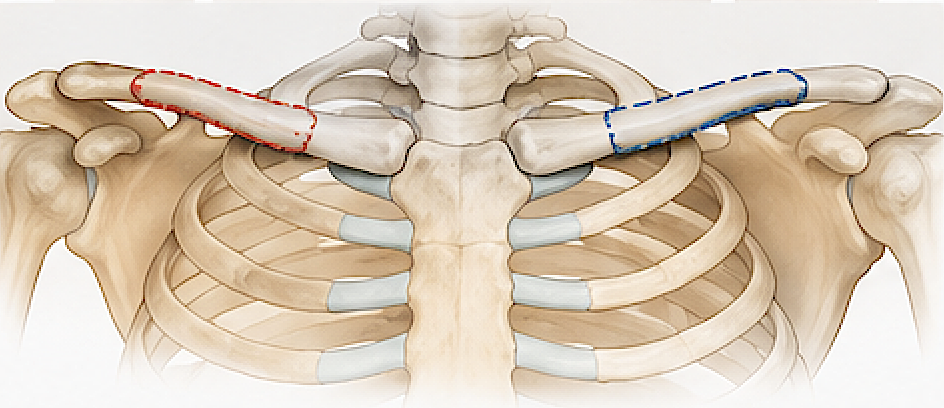
Accurate correction begins with detailed measurements from either a plain x-ray or, ideally, a 3D CT scan rather than relying solely on physical examination. Modern planning software allows the surgeon to:
- Measure the exact length of each clavicle.
- Quantify side-to-side differences.
- Determine independent shortening amounts for each side.
- Simulate the postoperative shoulder position.
- Plan plate placement and osteotomy location.
This converts shoulder narrowing from a symmetric operation into a customized reconstructive procedure tailored to each patient’s anatomy.
Expected Results
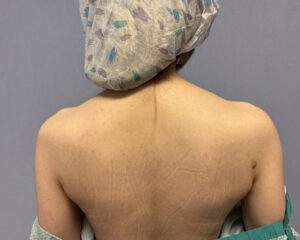

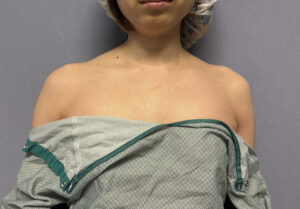
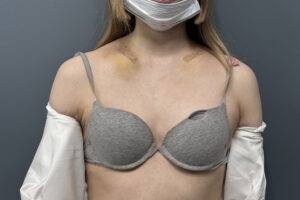
Most patients with mild to moderate clavicular asymmetry can achieve a noticeably more balanced shoulder appearance while simultaneously reducing overall shoulder width. The objective is not perfect mathematical symmetry—which is uncommon even in unaffected individuals—but rather a visually harmonious shoulder girdle.
In experienced hands, individualized clavicle shortening can improve both cosmetic symmetry and shoulder proportions without increasing recovery time compared with a standard bilateral procedure.
Dr. Barry Eppley
Plastic Surgeon