
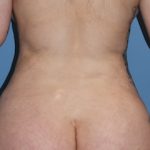
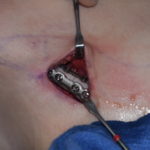
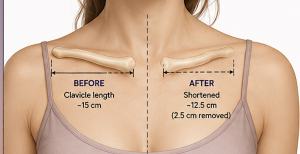
 Shoulder narrowing surgery by clavicle reduction osteotomies is a procedure with a high satisfaction rate. It works by pulling the shoulder closer to the sternum the same distance of the bone removed from the clavicle on each side. While the procedure has an immediate shoulder narrowing effect the other criteria for success is good bone healing across the reunited bone ends.
Typically the only long term request that has occurred in a handful of patients is the desire for removal of the fixation hardware. But every now and then someone will ask….
Can you do clavicle shortening surgery more than once?
Yes — clavicle shortening surgery can technically be done more than once, but repeat procedures become progressively more difficult and riskier.
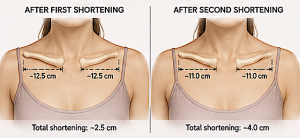
A second shortening procedure is usually only considered if:
- The first surgery did not achieve enough reduction
- There was asymmetry between the two clavicles
- Hardware failure or nonunion occurred
- The patient later wanted additional narrowing (making a good result even better)
The main limiting factors are:
Remaining clavicle length
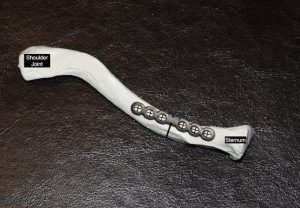
The clavicle cannot be shortened indefinitely. Excessive shortening can lead to an inability to apply adequate plate and screw fixation. The more the straight section of the clavicle bone is removed the closer the two curved ends get closer together. This limits the length of the stfaight plate that can be applied.
It can also lead to altered shoulder biomechanics resulting in:
-
- shoulder rounding
- reduced arm range of motion
Quality of the bone
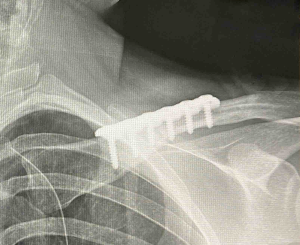
A second resection of bone through a healed osteotomy site is not the same bone quality as the first time. This is due to three reasons:
- the screw holes that are in the bone from the removed hardware are empty spaces (less bonemass
- the hardware has stress shielded the bone so its density around the osteotomy site is not the same as it was pre-shortening
- the two bone ends at the osteotomy site do not have the same diameter when initially put together so the clavicle is not sa thick as it once was
Bone healing and blood supply
After the first osteotomy, scar tissue and altered blood supply make another osteotomy more complex. Risks increase for:
-
- delayed union
- nonunion
- infection
- fixation failure
Neurovascular safety
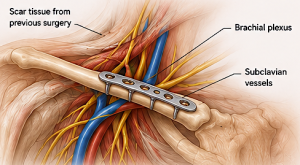
The brachial plexus and subclavian vessels lie directly beneath the clavicle. Repeat surgery means more scar tissue around these structures, which increases operative difficulty.
Cosmetic vs functional tradeoff
Small additional reductions may produce little visible cosmetic change while substantially increasing functional risk.
Conclusion
A second clavicle osteotomy is very different than the the first one in many ways. Anaddiitonal 1 to 1.5cms of bone length removal tips the balance from a low risk procedure to one with increased risks.As a result it should be considered very cautiously.
Dr Barry Eppley
Plastic Surgeon