EXPLORE
Plastic Surgery
Dr. Barry Eppley

Explore the worlds of cosmetic
and plastic surgery with Indianapolis
Double Board-Certified Plastic
Surgeon Dr. Barry Eppley

Archive for the ‘pectoral implants’ Category

Postoperative Instructions for Pectoral Implants

Monday, April 1st, 2013

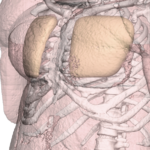
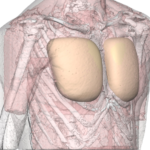
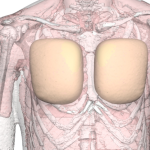
Male chest enlargement by soft solid pectoral implants is done by placing them under the pectoralis major muscle. The implant is placed so that it stays above the lower muscle border, creating a larger pectoralis muscle bulge.

These are the typical postoperative instructions to follow after having had pectoral implant surgery.

1. Pectoral implants in men, similarly to breast implants in women, are associated with a moderate amount of pain in the first few days after surgery.  Usually narcotic pain medications are needed and you should them as prescribed. In a few days, you may switch to Tylenol or Ibuprofen or alternate between doses with the narcotic medication.

2.  There will be a circumferential chest wrap placed right after surgery. This is in place for comfort only and does not play a role in maintaining the position of the implants. You may take it on and off based on your comfort. Most patients feel more comfortable wearing fairly continuously for the first week after surgery.

3.  The sutures in the armpit incisions are dissolveable and do not need to be removed. You may apply antibiotic ointment to the armpit incisions twice a day for the first week after surgery.

4. Bruising may develop on the chest a few days after surgery which is perfectly normal.

5. You may shower and get your chest and armpits wet. There is no harm in cleaning them with soap and water.

6. Your armpits will feel stiff and sore after surgery and your arms more so on raising them. A faster recovery will occur if you begin raising your arms up to the level of your shoulders in the first day or two after surgery. Thereafter, practice raising your arms above your head. These arm range of motion exercises will help the injured pectoralis muscle feel less stiff sooner.

7. You may wear any type of shirt or garment, including one that has to pull over your head to get it on or off.

8. There are no restrictions on normal daily activities after the surgery. You may do light exercise anytime afterwards that you feel comfortable. But no strenuous exercise of the chest muscles for three weeks after surgery.

9.   You may drive within several days after the procedure, provided you are off pain medication and can react normally to driving conditions.

10.  If any redness, tenderness, or drainage develops on the chest or from the armpit incisions after the first week of surgery, call Dr. Eppley and have your pharmacy number ready.

Consent for Plastic Surgery: Pectoral Implants

Sunday, March 31st, 2013


Every plastic surgery procedure has numerous issues that every patient who is undergoing a procedure should know. These explanations are always on a consent form that you should read in detail before surgery. This consent form, while many perceive as strictly a legal protection for the doctor, is actually more intended to improve the understanding of the pectoral implant chest augmentation procedure. The following is what Dr. Eppley discusses with his patients for this procedure. This list includes many, but not all, of the different outcomes from surgery. It should generate both a better understanding of the procedure and should answer any remaining questions that one would have.

ALTERNATIVES

There are no alternatives to augmentation of the male chest other than using an implant.

GOALS

The goal of pectoral implants is to increase the size of the male chest by creating more pectoral volume and definition.

LIMITATIONS

The limitations to pectoral augmentation are the dimensions of the patient’s chest and what size pectoral implant can inserted.

EXPECTED OUTCOME

Expected outcomes include the following: temporary swelling and bruising of the chest wall, a temporary firmness/hardness of the chest, mild to moderate discomfort of the chest wall and temporary redness of the armpit incision line/scar. It may four to six weeks before the final shape and appearance of the chest is seen.

RISKS

Complications may include bleeding, infection, dehiscence of the incisional closure (part or complete separation), prominent or noticeable armpit scars, chest asymmetry, and too big or too small a chest size result.

ADDITIONAL SURGERY

How the implanted site heals and the occurrence of complications can influence the final shape and appearance of the chest. Should complications or the desire to enhance the result further by additional surgery be needed, this will generate additional costs.

Chest Enhancement in Men with Pectoral Implants

Saturday, September 15th, 2012


Changing the chest of women is a very commonly done plastic surgery procedure, with nearly 350,000 women having the procedure last year in the U.S. Adding up all the women who have had breast augmentation over the past 20 years, it is estimated that about 1 in 7 women between the ages of 21 and 45 now have breast implants. Despite this tremendous chest changing that goes on in women, men do far less of it.

The equivalent of breast augmentation in men is the use of pectoral implants. There are no quoted estimates of the number of pectoral augmentations that are done per year in the U.S.. But it would be fair to say that for every 100 breast augmentations that are done, maybe one pectoral augmentation is done. This low rate is understandable as men have the ability, often times requiring extraordinary effort but possible nonetheless, to make the pectoral muscles bigger and more defined. No amount of exercise in a woman will make their breasts enlarge.

But there are men who simply can not build their pectoral muscles adequately through the natural route. Either through lack of effort, insufficient time or the anatomy and genetics of their chest shape and muscle size, they just can not build up their chest. I have even seen some men who have done well with their biceps and shoulder girdle muscle development but their pectoral muscles lag behind. They have a disporportionate chest shape.

Whatever the reason, the stories I hear are the same for why men explain their desire for surgical chest enhancement. Embarrassment to take their shorts off at the gym, at the pool, or in sports are the most common self-image issues. A flat chest with little pectoral definition and minimal pectoral margins is what you see. It is very uncommon to see a bodybuilder who merely wants to ‘cheat’ to an even larger pectoral muscle profile.

Like a breast implant, a pectoral implant is designed to enhance the natural chest muscle anatomy that one has. It increases the projection of the pectoral muscle and better defines its lateral margin known as the pectoral line. The pectoral muscle is a large fan-shaped muscle that occupies much of the chest and runs from the sternum  to the upper arm. This large muscle and its position on the chest wall  provides plenty of muscular coverage of the implant, unlike a breast implant which sits lower and often has only the upper half covered by the pectoral muscle.  With 100% muscle coverage, pectoral implants look perfectly natural.

There are other features that differentiate a pectoral implant from a breast implant. A breast implant is essentially a plastic bag that contains a filler material, either saline or silicone gel. They have a wide range of sizes in volumes from 150cc to 800cc. Conversely, pectoral implants are a solid (but incredibly squishy) implant whose sizes are much smaller, more in the ranges of 150cc up to around 350cc. Because they are a non-liquid implant they can never rupture, deflate or otherwise fail, once placed they are lifelong devices that will never need to be replaced due to a change in size or shape.

While pectoral implants are placed in the identical manner as the transaxillary saline implant approach, it is critical that they are not positioned on the chest wall like breast implants. Breast implants are positioned well below the lower edge of the pectoral muscle to create the lower pole shape of the breast. Conversely, pectoral implants are placed only down to the level of the lower border of the muscle…and never below.  They are actually positioned just above the nipple level. This will avoid the creation of ‘man boobs’. There are numerous stories of inexperienced surgeons with misadventures performing pectoral enhancement using breast implants and placing them too low.

Pectoral implants is gaining in popularity in men but will always lag far behind that of breast augmentation. But men should now that pectoral enhancement is as easily done as breast implants and are just as successful.

Dr. Barry Eppley

Indianapolis, Indiana

Case Study: Pectoral Implants in Men

Tuesday, May 1st, 2012

Background:  One sign of masculinity is the size and shape of a man’s chest. This has been so since antiquity and is evidenced today from comic book characters to body building and muscle supplements. The one largest tissue component that gives a male chest its features is the pectoral muscles.

The pectoral muscle is a very large fan-shaped muscle that extends from an attachment from the upper arm bone to the clavicle and outer edge of the sternum across the chest area. It is a triangular-shaped muscle whose lower border, running from a line from the upper arm to the lower chest, creates a well-defined lower pectoral edge. The size of the muscle, primarily defined as its thickness, is what creates the pectoral outlines and amount of projection.

For men who want an immediate solution to increased pectoral size and definition, pectoral implant surgery can be done. This would be appropriate for those men who can not get the pectoral size they want despite exercise or for those men who simply do not have the time or desire to achieve it by exercise-induced muscular hypertrophy. Pectoral implants come in a variety of shapes and thicknesses to fit just about any man’s chest shape.

The placement of pectoral implants in men is very similar to female breast augmentation in many filled device. It is a solid silicone implant that is incredibly soft and flexible, very similar in feel to that of natural muscle. Like transaxillary breast augmentation, the implant is placed through an incision high up inside the armpit. The exact placement of a pectoral implant in relation to the muscle is also different. While breast implants release and go below the lower pectoral muscle border, it is extremely important that pectoral implants do not. The goal of pectoral implant placement is to keep it entirely in a submuscular location which will help to push the entire muscle forward as well as keep its natural muscular outline.

Case Study: This 46 year-old male wanted pectoral enlargement. He freely admitted that he had long wanted it but did not want to make the effort to try and achieve it by exercise. He had tried when he was younger but was never able to create much pectoral enlargement. His pectiral dimensions where 16cm width and 12cm in height at the mid-pectoral line.

Under general anesthesia, transaxillary incision of 4.5 cms were made high up inside his armpit starting at the edge of the pectoral muscle. A submuscular pocket was developed preserving the lower edge of the pectoral muscle border with instruments. Using oval style pectoral implants of 310cc volume with maximal projection of 3.5 cms, these were rolled and inserted into the pockets. The incisions were closed with dissolveable sutures and he was placed in a circumferential chest wrap. Surgery time was one hour and he was discharged to home after recovering for an additional hour.

His postoperative course was typical for pectoral augmentation with some significant pain the first day or two and moderate swelling. But by one week after surgery he was much more active and comfortable. He returned to work ten days after surgery but remained on lighter duty for a few additional weeks. He descibed full recovery as taking a full month after surgery.

Pectoral implants provide an immediate solution to make chest augmentation. It is really no different than women who have breast augmentation that is much more common. The implants are solid, however, and will never fail or need to be replaced unlike those used in breast augmentation. Proper pectoral implant size selection is important to make sure that the implant stays within the outlines of the pectoral muscles.

Case Highlights:

         Development of the pectoral muscles in size and outline can be difficult for some men either failing to achieve their size or not having the time/committment to exercise enough.

         Pectoral augmentation is done through an armpit incision using a very soft but solid silcione elastomer implant.

         Recovery after pectoral implant augmentation takes about three weeks until one can return to all normal activities including working out.

Dr. Barry Eppley

Indianapolis, Indiana

Case Study: Pectoral Implant For Reconstruction of Male Poland’s Syndrome

Sunday, March 25th, 2012

Background:  Poland’s syndrome is a very well known set of congenital malformations involving one side of the chest and arm. The complete set of findings include a smaller hand with webbing and an underdeveloped sterno-clavicular portion of the pectoralis muscle. This results in a smaller chest on the affected side with a less developed nipple and muscle. It occurs five times more frequently on the right side and two or three times as often in males.

The key feature and often the one of greatest concern to a patient is the chest deformity. The distal end of the pectoralis major muscle that attaches to the lower end of the sternum is missing. This is technically known as aplasia of the sternal head of the pectoralis muscle. Regardless of the name, this appears as a smaller and asymmetric chest shape in men.

No amount of exercise will develop an asplastic pectoralis muscle to match the contralateral normal side. The muscle is simply smaller and making what exists bigger through weight training will not create enough muscle mass. Exercise-induced muscle hypertrophy does help but some form of reconstruction is necessary to get the best chest symmetry possible.

Case Study: This 33 year-old male presented for a right pectoral implant. He had always had a smaller chest on the right side as well as a deviated and lower positioned right shoulder. There was some slight skin webbing across the axilla and he had a small web between the third and fourth finger of his right hand. He had never been given the formal diagnosis of Poland’s syndrome.

Under general anesthesia, an incision was made high up inside the right armpit. Dissection was carried under the pectoralis muscle which was difficult as it was very fibrotic and adhered to the chest wall. The muscle could be felt to be short in length. Dissection was carried down below the edge of the muscle to a predetermined skin mark that matched the lower edge of the pectoralis muscle on the opposite side. A soft flexible silicone elastomer pectoral implant was used of a style 1 shape. Its maximal projection was 3 cms. After trying it in, it was cut down in size by about 1/3. It was then re-inserted and the incision closed. No drain was used.

His postoperative course was typical for any other pectoral implant surgery. He was sore and swollen but by three weeks after surgery was back to all normal activities. He resumed full weight training one month after surgery. His chest symmetry was much improved.

For mild to moderate chest asymmetries due to pectoralis muscle deformities, a traditional silicone elastomer pectoral implant can be very helpful. Adjustments to the size and shape of the implant are often needed to avoid creating a chest appearance that is bigger than the normal side.

Case Highlights:

1)      Poland’s syndrome causes underdevelopment of one side of the chest, shoulder and arm, including the pectoralis muscle.

2)      An increase in the size of the pectoralis muscle in Poland’s syndrome in men can be done with a pectoral implant.  

3)      A pectoral implant is inserted through a transaxillary incision under the pectoralis muscle. It  will usually have to be modified down in size for a more custom approach to the hypoplastic muscle.

Dr. Barry Eppley

Indianapolis, Indiana

Pectoral Implant Styles and Sizes for Chest Enhancement

Sunday, January 23rd, 2011

A desireable male chest is usually defined by having well defined and fuller pectoralis muscles. For a body builder, model or anyone that does weightlifting to any serious degree, pectoral definition is the cornerstone upon which a great male body is built. Pectoral muscles due to their size and attachment to the arms is one of the easier muscles to build. Through the enlargement of both the major and minor divisions of the muscle, most men can usually develop adequate pectoralis fullness and thickness.


But developing the pectoralis muscle for some is not so easy. Whether it be one’s genetics or lack of time or commitment to the development process, a shortcut to achieve a better defined chest is appealing. Pectoral implants have been available for some time to those who are unable to  develop the desired thickness of their chest muscles.


While the concept of an implant in one’s chest may seem unnatural for a man, the subpectoral (under the muscle) location of the implant gives a fairly natural look. Being completely under the muscle (unlike a breast implant in a female in which half of the implant is beyond the lower border of the muscle), one’s pectoral muscle is pushed out so that is actually what you see and feel. For a man with poor or ill-defined pectoral muscle size, the implant can easily give better bulk. In the already muscular male, pectoral implants produce the best results since the muscle is already fairly developed. That is a key point…pectoral implants can only highlight what you already have. You can’t go from a completely flat chest to a chest that looks like a professional bodybuilder. That is not a realistic expectation from pectoral implants.


Like the breast implant in breast augmentation, the pectoral implant in male chest augmentation is key. Determining the correct shape and size of implant to be used is as important as the surgical technique in placing it.If the implant size is incorrect or the shape is wrong, the result of even the most technically perfect surgical procedure will not produce the best aesthetic result.


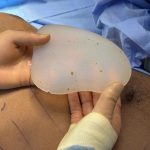
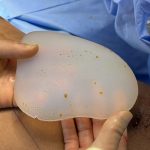
Pectoral implants are very soft and flexible solid silicone elastomers. This not only makes them soft and natural to feel but enables them to be folded onto themselves to be inserted through an incision in the armpit. While there are numerous manufacturers who offer different styles and sizes, there are some basic implant considerations. One style is that of the anatomic (oval or teardrop) shape which will provide a natural pectoral definition with moderate amounts of projection. The other main style is that of the square or non-oval shapes which provide a more square definition to the chest with projections closer to the sternum and the collarbone. Determining which style of pectoral implant is fairly easy by looking at the shape of the patient’s chest and where any existing muscle bulk currently exists. By far, the anatomic shape is the most commonly used. Furthermore, these implants are easily cut and modified during surgery.


Choosing the size of a pectoral implant is more difficult. Sizes are done in volumes that can range anywhere from 185cc up to just under 400ccs. But such volumes don’t really mean anything to a patient. Volume relates more to the surface area that the implant covers. While a large volume pectoral implant does add more overall volume to pectoral muscle size, a more  relevant concept that patient’s more easily understand is that of projection. Implant projections range anywhere from 2 to 3cms, or just around an inch. Understanding that even the biggest pectoral implant volume (380cc) gives a maximal projection of 3 cms can help one understand why the native thickness of one’s pectoral muscle is so important to what type of result can be  achieved with an implant.  


Some male patients have chest shape issues such as asymmetry or congenital and traumatic deformities that will not be bestserved by the shape and size of off-the-shelf implants. While some modifications can be easily done during surgery to shape an implant, custom implants are often better. These custom pectoral implants can now be made through the use of a moulage or mold kit. Manufacturers provide the kit which enables an elastic mold to be made of the patient’s chest from which an implant can be custom made.  These custom designed pectoral implants can help an abnormally-shaped chest by providing more projection or fullness to specific areas of the implant which can not be done by cutting down a stock implant.


Dr. Barry Eppley

Indianapolis Indiana

Common Questions about Body Implant Surgery

Tuesday, January 26th, 2010

1. What is body implant surgery?

While everyone has heard of breast implants, few are aware that there are other locations for the placement of implants to enhance the contours of one’s body. All of these body implants are for the purposes of enhancing certain muscles. Think of body implants as muscle contouring surgery. These include traditional areas of the chest, buttocks, and calfs as well as newer implants for the arm (biceps and triceps), hip and deltoid areas. The majority of body implant patients are male.

Some may think that the use of these implants is cheating, as opposed to muscle growth through working out, but many of these procedures are used for reconstructive purposes as well. Some  patients may use them to help with genetic or injury-related body deformities caused by such conditions as pectus excavatum, spina bifida, and clubfoot. These cause deformities marked by muscle atrophy, underdevelopment or asymmetry.

2. Aren’t pectoral implants in men a lot like breast implants in women?

Yes and no. Pectoral implants, commonly referred to as breast implants for men or male chest implants, is done to  enhance the appearance, size and outlines of the pectoral muscles. Like breast implants, they are very effective at creating that change and are associated with no greater amount of risks or complications. From the standpoint of location under the existing pectoralis muscle, they are very similar to breast implants in that regard.

They do differ in that the end goals are not the same. Breast implants are trying to make a rounded or tear-drop mound that sits up and away from the chest wall and has some compressibility. Pectoral implants are only trying to push out the existing muscle and, as a result, need less volume to do so. A muscle also has more of a firm feel to it rather than displacement to the touch like a breast. Therefore,  pectoral implants are smaller in size and are composed of a soft but solid silicone elastomer. They are not fluid or gel-filled like breast implants.

3. What is the best way to achieve a larger and rounder buttocks?

There has been a significant increase in the number of buttock enlargement/enhancement requests. Fueled by increasing multiracial population growth and popular figures like Jennifer Lopez, more women are pursing an increased curvature to the buttocks through different forms of augmentation.

The debate in buttock augmentation is whether to do it through the use of an implant or with fat injections. There are surgeon advocates for both procedures and, when done well, satisfying results can be achieved either way. This is why it is important to look at each one’s advantages and disadvantages.

Buttock or gluteal implants have the advantages of a bigger and immediate result that will not change after surgery. Its downside is that it is a more invasive procedure, takes a lot longer to recover, and runs the risk of infection and implant displacement.

Fat injections have the advantage of a more ‘natural’ procedure that is not associated with any of the potential complications related to a foreign body. It also gives one the extra benefit of fat reduction from the donor site. Its disadvantages are that it can not usually achieve the same buttock size as that of an implant (at least in one fat grafting session) and the take of the fat graft is not completely predictable.

4. Can an implant make my calf bigger?

Calf augmentation creates fullness in the gastrocnemius muscle of the  lower leg by placing implants in subfascial pockets overlying the muscle. It can help those men and women who can’t achieve the size of the calf muscle they desire. The calf muscle is one of the more difficult muscles in the body to enlarge due to its very compact muscle fibers. This form of lower leg  sculpting can also correct muscle imbalance as a result of such congenital defects as disproportionate calf development, clubfoot, bowleggedness, and just plain skinny calfs. (aka ‘chicken legs’)

The calf muscle is a two-headed muscle in which one or two implants which may be used in each leg. A person may desire to have only the inner head of the muscle enlarged, the outer head, or both. They are inserted through a small incision in the skin crease behind the knee.

The biggest issue with calf implants is the recovery period. Because they are in the lower part of the legs, some significant swelling can occur. And it usually takes up to three weeks before one can walk more normally. Working out and other unrestricted activities will take at least a month or two following surgery.

Recent reports have seen the use of fat injections for calf augmentation. But this approach is just in its infancy and consistent long-term outcomes remain to be seen.

5. I have heard there are implants for the arms. Is this true?

Bicep and tricep implants will create muscular definition and perceived enlargement of the muscles in both the front and back of the upper arms. This procedure is done exclusively for those who can’t achieve the upper arm size they want even after significant efforts at muscular exercise. Generally, two implants are placed in each arm to give the greatest overall change.

6. Are there any new areas where body implants are being used?

The newest uses of body implants are for the hip and deltoid areas. Deltoid implants are used to rebuild or augment deficiencies of the deltoid muscle group caused by  congenital deformities (Sprengel’s deformity or scapular hypoplasia) or traumatic injuries. (motor vehicle accidents) Hip implants are exclusively done for cosmetic augmentation. For those women who feel that their hips are too narrow and want more of an hourglass figure, hip implants can give them more curvature.

7. What complications can occur with body implants?

Placing an implant always has the standard medical risks of infection, displacement, and chronic pain as well as the cosmetic risks of over- or undercorrection. Unlike the face, body implants are always placed in areas exposed to constant motion and stress and are much larger in size. As a result, they have a higher incidence of fluid collections and displacement.

Dr. Barry Eppley

Indianapolis, Indiana

Pectoral Implants – Enhancing Male Chest Size and Definition

Saturday, March 21st, 2009

Enlargement of the male chest is most commonly done through exercise and subsequent muscle hypertrophy. Strenuous physical exertion and protein supplements can build muscle, often times very impressively. Under ordinary circumstances, most people can create mild to moderate pectoral enlargement that they will find satisfactory. For those seeking substantial chest definition, chest enlargement in the shortest period of time, or if one suffers from developmental pectoral or sternal deformities, exercise alone will not produce a desired result.


Significant pectoral enlargement and definition can most rapidly and assuredly be achieved through an implant. While breast implants in women are far more commonly performed, pectoral implants for men are an equally satisfying procedure. Being essentially the same operation as that of breast augmentation (albeit with a different implant shape and texture), a well placed implant can create a subtle to dramatic change in one’s pectoral outline.


Pectoral implants are placed through an armpit (transaxillary) incision. Made larger than that used for a saline breast implant, the incision is usually about 6 to 8 cms long in the highest skin crease in the armpit. The incision needs to be longer than that for saline breast augmentation because the implant is inserted at its full size (this can not be altered) while a breast implant is deflated and inserted at a fraction of its functional size. The scars, while red for a time after surgery, usually heal quite well and are ultimately hidden within the armpit hair.


A pectoral implant is inserted under the pectoralis major muscle but above the smaller pectoralis minor muscle. This is a natural plane that is easily developed. The dissection should not be lower than the bottom edge of the muscle unlike the pocket that is developed for female breast implants. The goal is to increase the projection and definition of the existing pectoral muscle, not create a new outline or position for it. (in some developmental chest wall deformities this may be needed)


The pectoral implant itself is a solid silicone elastomer that is soft and flexible. Its flexibility is demonstrated but it being able to be folded unto itself to be inserted through the armpit incision. Its feels very much like a ‘gummy bear’ candy. Pectoral implants comes in several different styles (and different sizes within each style), an oval and a more rectangular shape. Which one is best can be determined by taking measurements of one’s pectoral muscle and an artistic sense of the patient’s final goal. As a general rule, rectangular implant is going to give more bulk and definition as there is more implant volume per size. But, like breast implants, the exiting size and shape of one’s chest has a major impact on how any style or size will look.


Because it is muscular manipulation, pectoral implant surgery will be sore after and it takes time to feel comfortable again. I do not use drains after surgery but some plastic surgeons do as this is perfectly fine. Fluid collections or seromas after surgery are not only possible but do occur. So limiting strenuous activity for 3 weeks after surgery is important. But I do want patients to be doing arm range of motion exercises within days after surgery, but just no weights.


Pectoral implants offer a rapid and reliable method for enhancing the male chest. Good results come from a limited intraoperative pocket dissection, good implant style and size selection, and refraining from strenuous physical activity for several weeks after surgery.


Dr. Barry Eppley

Indianapolis, Indiana

Male Chest Enhancement with Pectoral Implants – Indianapolis

Tuesday, September 30th, 2008

Pectoral implants, the male version of a female breast implant, is a popular option to increase the appearance of chest muscles. Some men desire to improve a congenital chest wall deformity, known as pectus excavatum, while other men have been simply unable to increase the size of the chest muscles with exercise. mass Pectoral implants add size and some definition to the chest because the specially-shaped solid silicone gel material is placed behind the pectoral chest muscle. In thinner men, some definition as well as size may be obtained while ‘thicker’ men may require some discrete liposuction done as well to get better definition and shape to the chest region.


The solid silicone gel implants are very soft, flexible and durable. Do not confuse them with the historic problems associated with old-style silicone liquid breast implants from the 1980s and early 1990s. Solid silicone gel carries no risk of allergic reactions or negative efffects on the immune system. Because of their tremendous flexibility, pectoral implants can be placed through a very small incision high up in the armpit so scarring is generally not visible or a cosmetic problem. The size and shape of the pectoral implant is based on measurements taken from your chest. The implant should never extend below the lower border of the pectoralis muscle and measurements must be taken with that anatomic boundary in mind.


I like to have my patients cease or lessen their chest workouts for several weeks before surgery so that the muscle is not too tight at the time of surgery. Pectoral implant surgery is an outpatient procedure that takes about an hour to perform. I do want patients returning to chest workouts for several weeks after surgery to allow the implant to keep a good position. Unlike breast implants, which can be manipulated into better positions after surgery, this is not possible with pectoral implants. So early aggressive arm motion is not a good thing!


Complications can occur from pectoral implants but, fortunately, are uncommon. Displacement, or asymmetric positioning of the implants, is the most common one that I have seen. Unlike breast implants, pectoral implants are hard to reposition due to the high armpit incision making fine-tuning adjustments of the implant difficult.  Fortunately, the shape of a pectoral implant is flat and oblong making the chances of slippage or displacement less than the chances of a female breast augmentation who has a rounder shaped implant. Should one be unhappy with a pectoral implant, it is easily removed.


The costs of male pectoral implants is fairly similar to a female breast augmentation as the procedures are fairly identical in execution and time as are the cost of the implants from the manufacturer.


Dr. Barry Eppley

Indianapolis, Indiana

Pectoral Etching and Liposculpture in Men

Sunday, January 6th, 2008

Pectoral Etching and Liposculpture for Better Chest Definition


Contouring of the chest region by pectoral etching helps provide better definition to the pectoral muscles and the shape of the chest wall. Borrowing the concept from abdominal etching, in which the use of linear liposuction is used to define muscular edges and definitions, a similar technique can be applied to the chest with equally good results.

By selective removal of fat (liposculpture) from the side and lower borders of the pectoralis major muscle, the muscular appearance of the chest wall can be improved. This virilizes the chest contour while creating few visible scars. By sculpting the borders, and leaving fat over the main body of the muscle, the pectoral muscle bulk appears greater. This pectoral etching technique provides better shaping than simple gross fat removal in an even unsculpted manner across the chest wall.

Pectoral etching adds visible and palpable pectoral inscriptions to the chest wall. In a recent study published in the Plastic and Reconstructive Surgery journal in December 2007, a report treating over 200 patients over the past three years with pectoral etching was published. With only a few minor complications (small hematoma, irregular contour, too conservative of a result), their experience has been that the results have been maintained, even in the face of weight gain and skin loosening with age. When pectoral etching is combined with abdominal etching, a more muscular-appearing torso is achieved. The procedure is becoming very popular in non-athletic males whose physique may not get sculpted even with regular strength training.

Dr Barry Eppley

Indianapolis, Indiana


Dr. Barry EppleyDr. Barry Eppley

Dr. Barry Eppley is an extensively trained plastic and cosmetic surgeon with more than 20 years of surgical experience. He is both a licensed physician and dentist as well as double board-certified in both Plastic and Reconstructive Surgery and Oral and Maxillofacial Surgery. This training allows him to perform the most complex surgical procedures from cosmetic changes to the face and body to craniofacial surgery. Dr. Eppley has made extensive contributions to plastic surgery starting with the development of several advanced surgical techniques. He is a revered author, lecturer and educator in the field of plastic and cosmetic surgery.

Read More


Free Plastic Surgery Consultation

*required fields


Pricing

The cost of any type of elective plastic surgery plays a major role in the decision to undergo the procedure(s).

Get Your Quote Here


My Plastic Surgery Story

Military Discount

We offer discounts on plastic surgery to our United States Armed Forces.

Find Out Your Benefits


Categories