
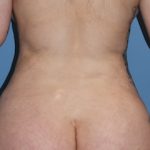
For female shoulder-narrowing surgery using bilateral clavicle-shortening osteotomies, I would frame the important long-term considerations in five buckets. The biggest caveat is that cosmetic shoulder narrowing is relatively new, so there is not yet robust 10–20 year peer-reviewed outcome data. Much of the reassurance about long-term results comes from clavicle-fracture literature plus relatively limited cosmetic clinical experience.
- Permanent shoulder-girdle biomechanics. Shortening the clavicle moves the shoulder complex medially and changes the resting relationship of the scapula, clavicle, sternoclavicular joint, and acromioclavicular joint. Studies of healed shortened clavicles show measurable alterations in scapular orientation, although these changes have often been small and have not consistently translated into impaired strength, range of motion, or patient-reported function. Even patients with shortening around 20–25 mm have shown surprisingly normal clinical function in several orthopedic series.
- Unknown very-long-term joint effects. This is probably the most intellectually important unanswered question. Because the clavicle acts as a strut controlling scapular position, shortening theoretically changes loads through the AC joint, SC joint, scapulothoracic articulation, and surrounding musculature. Current evidence does not demonstrate that cosmetic shortening causes premature arthritis, rotator-cuff disease, or chronic scapular dysfunction—but cosmetic patients simply have not been followed long enough in large numbers to exclude those outcomes confidently. Recent fracture-malunion data are somewhat reassuring: even 20 mm shortening did not correlate with worse ROM, scapular dyskinesis, rotator-cuff abnormalities, or arthritic changes at mid-term follow-up.
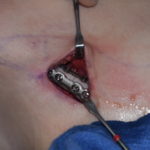
- Bone union and the lifetime implications of fixation. Once the osteotomy achieves solid union, the shortened clavicle should behave as a continuous bone rather than as a permanently fragile osteotomy. However, delayed union/nonunion, loss of fixation, or plate failure are consequential complications because they may require revision fixation and sometimes bone grafting. Orthopedic clavicle fixation literature confirms that these complications can occur, although rates from trauma populations cannot simply be transferred to elective cosmetic osteotomies. In 112 clavicle reduction osteotomies I have seen only one long term (1) non-union. The plate itself becomes a separate long-term consideration. The clavicle has very little soft-tissue coverage, especially in thin women, so plates or screw heads may remain palpable or occasionally visible. Plate irritation is a recognized reason for secondary surgery after clavicle fixation. Cosmetic shoulder-narrowing experience similarly reports that plates can be palpable even when they are not visibly obvious.
- Hardware removal is optional, but creates another temporary vulnerability. If hardware becomes bothersome, it can generally be removed after confirmed consolidation. Orthopedic studies show improvement in implant-related irritation after removal, but removing screws leaves temporary cortical holes and introduces a small refracture risk until those areas remodel. Cosmetic reports therefore recommend restricting strenuous activity again after plate removal.
- Aesthetic aging may matter as much as skeletal aging. The skeletal narrowing itself should be permanent after union, but what the patient sees can evolve. With weight loss, aging, or loss of subcutaneous tissue, hardware may become more conspicuous. Conversely, weight gain or increasing deltoid/trapezius mass can partially obscure the visual narrowing. Scar behavior is also important because the supraclavicular area is exposed and under movement; hypertrophic scars, widening, pigmentation differences, or visible asymmetry may ultimately bother a patient more than the bone itself. Available longer-follow-up cosmetic examples have shown favorable scars, but those observations are still based on relatively small clinical experience.
For female patients specifically, I would also think carefully about proportion rather than simply centimeters removed. Shoulder width interacts visually with pelvic width, waist, breast/chest width, neck length, trapezius bulk, and overall stature. Consequently, the same 2–2.5 cm shortening per clavicle can look quite different between women. Excessive reduction is also much harder to correct than an initially conservative reduction, so the long-term aesthetic question is not merely “How narrow can the shoulders become?” but “What degree of narrowing will continue to look anatomically harmonious decades later?”
The reassuring part is that the available clinical and orthopedic evidence does not currently suggest that modest clavicular shortening inevitably causes progressive shoulder weakness or loss of motion. Five-year fracture studies have found comparable mobility and strength despite persistent shortening, and more sophisticated kinematic studies have found only modest scapular changes without major functional impairment.
The main unresolved issue is therefore less immediate function and more what happens after 20–40 years of altered shoulder-girdle geometry. There simply are not enough cosmetic patients with that duration of follow-up yet to give a scientifically strong answer. But the short term data (10 years or less) does not suggest any long term functional concerns.
Dr. Barry Eppley
Plastic Surgeon