
The key distinction is between “bone-like stiffness” being mechanically necessary and simply being a useful material characteristic. For most aesthetic facial onlay implants, the second description is more accurate.
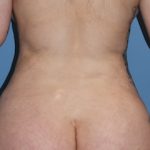
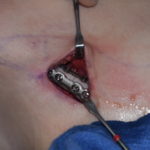
Think of a custom PEEK mandibular angle implant. Its job is primarily to create and permanently maintain a new skeletal contour. It isn’t replacing a segment of mandible or carrying the forces that the mandible normally carries. The patient’s underlying bone remains structurally intact. So the implant doesn’t actually need to reproduce the mechanical behavior of bone.
What elastic modulus means here
Elastic modulus tells you how resistant a material is to elastic deformation:
higher modulus = stiffer material = less deformation under the same stress.
Very roughly:
|
Material |
Elastic modulus |
Mechanical behavior |
|
Silicone elastomer |
~0.001–0.01 GPa* |
Very compliant |
|
Porous polyethylene |
~0.1–1+ GPa* |
Relatively compliant |
|
PEEK |
~3–4 GPa |
Rigid, but with some compliance |
|
Cortical bone |
~7–30 GPa |
Rigid biological structure |
|
Titanium |
~100–110 GPa |
Extremely rigid |
*Values vary substantially with formulation, porosity, and testing method.
So calling PEEK “bone-like” doesn’t mean PEEK and facial cortical bone have identical stiffness. It means PEEK is in a much more similar mechanical range than titanium is.
Imagine three implants sitting on the mandible
Suppose you manufacture exactly the same mandibular-angle augmentation from silicone, PEEK, and titanium and screw each one against the lateral mandible.
With silicone, the implant itself is much more deformable than bone. It can flex and conform to the underlying surface. That isn’t necessarily bad—the mechanical philosophy is essentially a les rigid implant sitting on a hard skeleton.
At the other extreme, titanium is considerably stiffer than bone. Once securely fixed, the construct behaves more like an extremely rigid shell attached to a somewhat less rigid skeleton.
PEEK occupies an interesting region between those extremes:
It behaves more like a rigid extension of the skeletal contour without having the extreme stiffness of metal.
That is potentially attractive for a patient-specific aesthetic implant.
Where the lower modulus can actually matter
Consider what happens when a force is applied to the side of the jaw.
The skin and soft tissues transmit some force to the implant. The implant transmits that force through its contact surface and fixation points into the mandible.
A very stiff material barely deforms. Consequently, differences in geometry, contact with the bone, implant edges, and screw fixation can create localized differences in stress.
A material with a lower modulus can undergo a tiny amount of elastic deformation under load. We’re not talking about movement that a patient or surgeon would perceive—the implant remains quite rigid. But mechanically, that compliance can make the transition between implant and bone less extreme.
That’s where the argument about stress concentration comes from.
But there’s a catch with an onlay
This is where orthopedic concepts sometimes get carried too far into facial implants.
Suppose a PEEK implant is placed over an intact mandibular angle:
soft tissue ? PEEK implant ? cortical bone
The mandible underneath still carries essentially all of its normal structural loads.
That’s fundamentally different from something like a hip stem, spinal cage, or load-bearing reconstruction where the implant participates substantially in transmitting physiological loads through the skeleton.
Therefore, the classic argument:
“PEEK prevents stress shielding because its modulus is closer to bone”
is much stronger for load-bearing orthopedic applications than for an aesthetic facial onlay.
Stress shielding could theoretically occur locally, but I would be cautious about claiming that PEEK’s modulus meaningfully prevents clinically important bone resorption beneath aesthetic facial implants without application-specific evidence.
What may be more important: rigidity versus thickness
There’s another useful consequence of modulus for aesthetic implant design.
Imagine you want 5 mm of mandibular angle augmentation.
The implant has to maintain that exact shape over many years. If the material is too compliant, you may need additional thickness or geometry to obtain the rigidity you want.
PEEK has enough stiffness that a CAD/CAM implant can behave as a structurally stable three-dimensional object.
This is particularly valuable with complex designs:
- thin feathered margins,
- large surface-area mandibular implants,
- wraparound chin implants,
- malar/submalar combinations,
- forehead/temporal transitions,
- precisely controlled asymmetric augmentation.
The implant can reproduce the CAD geometry very accurately and maintain it after fixation.
So from an aesthetic surgeon’s perspective, shape fidelity may be a more tangible advantage of PEEK’s modulus than stress shielding.
The implant–bone interface complicates things further
There’s another reason modulus alone doesn’t tell you how an onlay will behave.
A PEEK implant isn’t normally fused molecularly to the mandible. Mechanical behavior depends on the entire system:
PEEK + screws + implant geometry + bone contact + periosteum/soft tissue + eventual biological response.
For example, if there is a small gap between an implant and bone, the mechanical behavior of that interface may matter more than the difference between a 4-GPa and 10-GPa implant.
Likewise, screw number, screw position, implant thickness, and implant curvature can dramatically affect rigidity.
So saying:
“Material A has a modulus closer to bone, therefore it is mechanically superior”
is an oversimplification.
An analogy
Imagine putting a shell over a wooden structure.
A rubber shell follows the structure easily but doesn’t independently maintain a highly precise shape.
A steel shell maintains its shape exceptionally well but is enormously stiffer than the structure underneath.
A rigid engineering polymer sits between them: stiff enough to maintain a precisely manufactured contour, but not nearly as mechanically dissimilar from the substrate as steel.
That’s roughly the conceptual attraction of PEEK.
What I think is the most defensible way to describe PEEK for aesthetic facial implants
Rather than saying:
“PEEK is advantageous because its elastic modulus matches bone.”
I would say:
“PEEK provides sufficient rigidity to maintain a precise patient-specific skeletal contour while having substantially lower stiffness than metallic implants and a modulus closer to cortical bone.”
That distinction matters. It makes a strong mechanical argument without overstating the clinical significance of stress shielding in an aesthetic onlay.
And there’s an even more interesting question underneath this: for an aesthetic facial implant, is being closer to bone actually the optimal modulus at all? There are plausible reasons why an implant somewhat less compliant than PEEK could actually be desirable, provided it remains sufficiently dimensionally stable. That’s where comparing PEEK vs silicone vs porous polyethylene becomes much more clinically meaningful.
Dr. Barry Eppley
Plastic Surgeon