
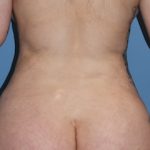
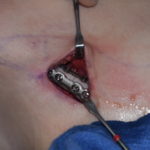
A webbed neck (pterygium colli) and a buffalo hump (dorsocervical fat pad) are distinct anatomical problems that can coexist and often accentuate one another. The fullness of a buffalo hump makes the neck appear shorter and more posteriorly sloped, while a webbed neck obscures the normal cervicomastoid angle and lateral neck contour. When both conditions are present, simultaneous correction provides a more harmonious and comprehensive improvement in neck shape than treating either deformity alone.
Why Combine the Procedures?
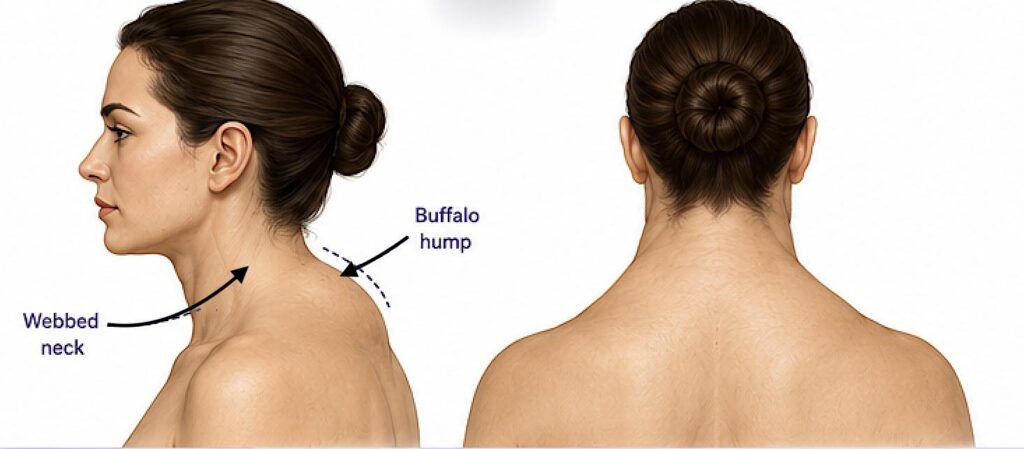
Although the two deformities involve different tissues, they are located adjacent to each other.
- Webbed neck correction addresses excess skin, fibrous fascial bands, and abnormal trapezial skin attachments.
- Buffalo hump reduction removes excess subcutaneous fat over the lower cervical spine and upper back through liposuction, and occasionally direct excision if the fat is very dense.
Performing both procedures at one operation allows the surgeon to reshape the entire posterior and lateral neck rather than improving only one component.
Surgical Strategy
The procedure generally begins with buffalo hump liposuction.
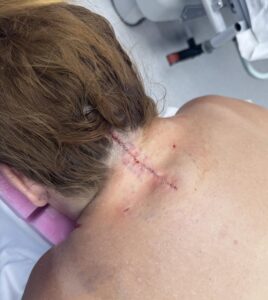
Small access incisions are placed within the hairline or posterior neck creases. Tumescent solution is infiltrated, and power-assisted or ultrasound-assisted liposuction is used to reduce the dorsocervical fat pad while preserving a smooth contour. Care is taken not to over-resect fat, which could create a visible depression over the cervical spine.
Once the posterior contour has been improved, the webbed neck is corrected.
The surgical technique depends on the severity of the webbing but commonly includes:
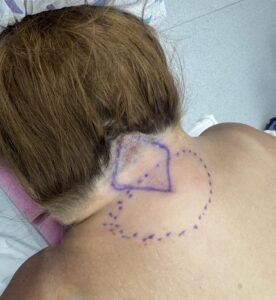
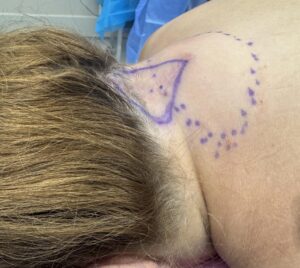
- Excision of the lateral neck skin web.
- Release of the underlying fascial bands.
- Repositioning of the posterior hairline when appropriate.
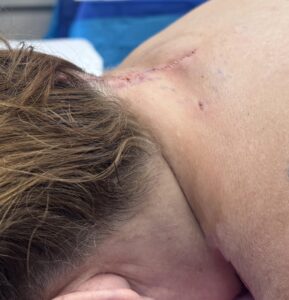
- Redraping the skin to create a sharper neck contour and more visible sternocleidomastoid muscle border.
- Layered closure designed to minimize scar widening.
Advantages of Combined Surgery
The benefits of performing both procedures together include:
- Improved neck length and definition.
- Better transition between the neck and upper back.
- More visible cervicomandibular angle.
- Elimination of the posterior neck fullness that can diminish the aesthetic benefit of webbed neck correction alone.
- Single anesthetic and recovery period.
Recovery
Most patients experience:
- Neck and upper back swelling for 2–4 weeks.
- Bruising for 10–14 days.
- Compression garment use for approximately 2–3 weeks following liposuction.
- Mild limitation in neck movement during the first week.
- Progressive scar maturation over 6–12 months.
Most patients can return to desk work within one to two weeks, although strenuous activity should be avoided for approximately one month.
Patient Selection
The best candidates are individuals with:
- Congenital or acquired webbed neck deformity.
- A localized buffalo hump composed primarily of fatty tissue.
- Good overall skin quality or skin excess that can be addressed during webbed neck correction.
- Stable body weight.
Patients with a buffalo hump caused by endocrine disorders (such as Cushing syndrome), chronic steroid therapy, or antiretroviral medications should first undergo appropriate medical evaluation, as treating the underlying cause is important before considering surgery.
Surgical Considerations
The greatest technical challenge is achieving smooth contour transitions. The surgeon must balance fat reduction with skin redraping so that the posterior neck, lateral neck, and upper back blend naturally. Excessive liposuction can create a skeletonized appearance, while insufficient reduction may leave persistent fullness. Likewise, aggressive webbed neck excision without addressing the buffalo hump may still leave the neck looking short and broad.

When carefully planned, combined webbed neck correction and buffalo hump liposuction can produce a substantially longer, leaner, and more anatomically defined neck profile than either procedure alone.
Dr. Barry Eppley
Plastic Surgeon