

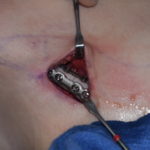
The forehead occupies the upper third of the face and is one of its most influential skeletal features. Despite its importance in defining facial balance, gender characteristics, and profile aesthetics, it has historically received far less attention than the nose, chin, or jawline. Over the past two decades, however, forehead reshaping has evolved into a distinct subspecialty within aesthetic craniofacial surgery, driven by advances in three-dimensional imaging, patient-specific implant technology, and a growing appreciation for the role of skeletal architecture in facial aesthetics.
Unlike many facial procedures that primarily reposition or tighten soft tissues, forehead reshaping directly modifies the underlying craniofacial skeleton. These procedures include augmentation, reduction, contour refinement, and width modification, each tailored to address specific anatomical deficiencies or excesses. Whether the goal is to create a stronger masculine brow, a smoother feminine forehead, correct congenital contour irregularities, or restore facial balance, successful outcomes depend on understanding the forehead as a three-dimensional structural unit rather than an isolated aesthetic feature.
Perhaps no area of facial skeletal surgery has changed more dramatically than forehead augmentation. Earlier techniques relied on intraoperatively molded bone cements such as polymethylmethacrylate (PMMA) and hydroxyapatite. Although effective in selected cases, these materials were highly technique-dependent, required extensive surgical exposure, and offered limited precision in reproducing complex three-dimensional contours. Today, custom-designed implants generated from high-resolution CT imaging have fundamentally changed the field. Modern implant design allows precise control of forehead projection, slope, convexity, width, brow definition, and temporal transition while permitting insertion through substantially smaller incisions with greater reproducibility and accuracy.
Similarly, forehead reduction techniques have become increasingly sophisticated. Contemporary approaches extend beyond simple burring of prominent bone to include bone flap setback procedures, temporal line reduction, frontal bossing correction, forehead width modification, and combined procedures such as simultaneous forehead augmentation with brow bone reduction. These operations require a detailed understanding of frontal sinus anatomy, cranial bone thickness, soft tissue behavior, and the aesthetic interplay between the forehead, orbit, nose, and lower face.
As aesthetic surgery continues to evolve, digital planning and artificial intelligence are beginning to influence implant design and surgical simulation. However, these technologies remain tools rather than replacements for surgical judgment. The success of forehead reshaping continues to depend on accurate anatomical diagnosis, thoughtful aesthetic analysis, and careful execution of individualized treatment plans.
Principles of Forehead Aesthetics
The forehead is often described as the upper third of the face, but this definition understates its aesthetic significance. It is better understood as the dominant skeletal platform of the upper face, establishing the structural framework for the eyebrows, upper eyelids, and orbital rims while serving as the visual transition between the facial skeleton and the cranial vault. Because of its broad surface area and central location, even subtle alterations in forehead contour can significantly influence the perceived proportions, masculinity or femininity, and overall harmony of the face.
Unlike many facial structures that are evaluated as isolated anatomic units, the forehead must always be analyzed in relation to surrounding facial landmarks. Its appearance depends not only on its own projection and contour but also on its relationship to the brow bones, orbital rims, nose, cheeks, hairline, and even the chin and jawline. A forehead that appears excessively prominent may actually be normally projected when viewed in isolation but seem disproportionate because of a deficient midface or retrusive chin. Conversely, an apparently recessed forehead may represent an exaggerated brow prominence rather than true forehead deficiency. Successful forehead surgery therefore begins with accurate diagnosis of the underlying skeletal imbalance rather than simply treating the patient’s perceived area of concern.
From an aesthetic perspective, the forehead is evaluated in three dimensions.
The sagittal dimension determines profile shape. This includes the degree of forehead inclination, overall convexity, the presence or absence of a brow break, and the transition into the frontal hairline. These characteristics largely define facial profile and are among the strongest visual indicators of skeletal masculinity or femininity.
The transverse dimension determines forehead width. The relationship between the anterior temporal lines, lateral forehead convexity, and temporal hollowing influences whether the forehead appears broad and square, narrow and tapered, or smoothly rounded. Although often overlooked, the temporal transition is one of the most important components of successful forehead reshaping because abrupt contour changes or poorly blended implant borders are immediately visible across the broad expanse of the upper face.
The vertical dimension encompasses forehead height and the position of the frontal hairline relative to the eyebrows. Excessive forehead height usually reflects a soft tissue issue involving the scalp and hairline, whereas excessive projection or width reflects an underlying skeletal abnormality. Distinguishing between these components is essential because they require fundamentally different surgical solutions.
Equally important is the concept of surface continuity. The forehead should never be viewed as an isolated bony prominence but rather as part of a continuous craniofacial contour extending from the supraorbital rims superiorly across the frontal bone and posteriorly into the cranial vault. The eye naturally detects interruptions in this continuity. Small asymmetries, abrupt transitions, contour irregularities, or poorly blended implant edges are often more noticeable than similar imperfections elsewhere on the face because the forehead provides such a broad, uninterrupted visual surface. This principle explains why forehead surgery demands greater precision than almost any other form of facial skeletal contouring.
The forehead also represents one of the strongest skeletal markers of gender. Masculine foreheads typically exhibit greater posterior inclination, more pronounced brow ridge projection, a distinct brow break, and a flatter upper forehead. Feminine foreheads generally demonstrate a smoother transition from the brow into a more vertically oriented or gently convex forehead with minimal supraorbital prominence. While these characteristics provide useful guidelines, contemporary aesthetic surgery increasingly recognizes that facial attractiveness exists along a spectrum rather than within rigid gender-specific ideals. Consequently, successful forehead reshaping should emphasize restoration of facial balance and individualized proportions rather than pursuit of predetermined anthropometric measurements.
Finally, forehead aesthetics must be considered within the context of the entire facial skeleton. Altering forehead projection changes the perceived prominence of the nose, the depth of the eyes, the projection of the midface, and even the apparent strength of the chin and jawline. For this reason, forehead reshaping should rarely be planned in isolation. Instead, it should be incorporated into a comprehensive analysis of facial skeletal architecture in which the forehead functions as one component of an integrated three-dimensional craniofacial framework.
Dr. Barry Eppley
Plastic Surgeon