
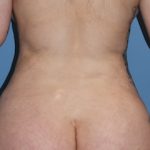
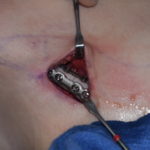
AI can play a valuable role in planning rib removal waistline narrowing surgery, but it cannot independently perform or determine the surgery. The greatest value of AI is in creating a more precise, patient-specific surgical plan before entering the operating room.
How AI Can Be Used
1. AI-Assisted 3D CT Analysis
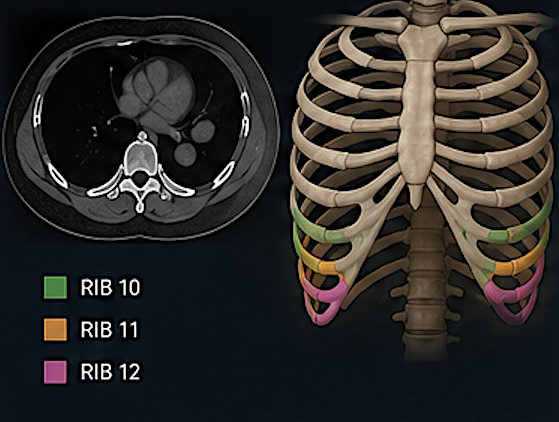
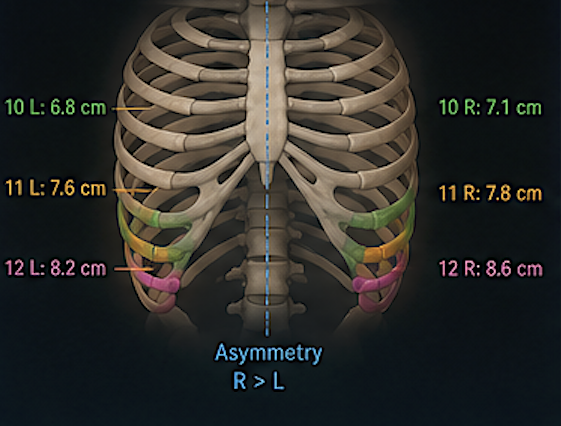
A high-resolution CT scan of the lower rib cage can be analyzed by AI software to:
- Identify ribs 10, 11, and 12
- Measure rib length, curvature, and angulation
- Calculate the relationship of the ribs to the iliac crest
- Map asymmetries between the two sides
- Estimate how much narrowing is anatomically possible
Rather than relying only on visual inspection, AI can rapidly generate objective measurements.
2. Predicting Waistline Change
One of AI’s most promising applications is simulation.
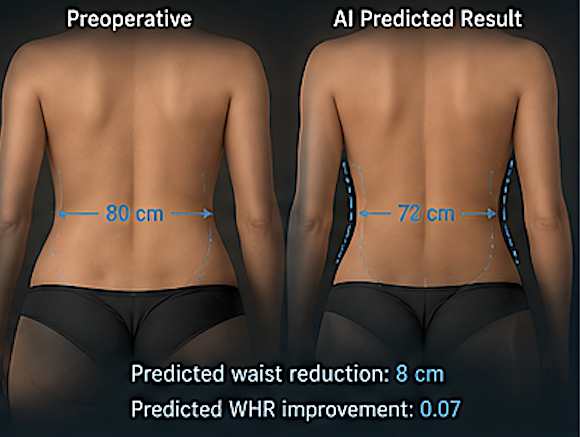
After analyzing the rib cage and torso anatomy, AI can estimate:
- Expected reduction in waist circumference
- Improvement in waist-to-hip ratio
- Degree of inward waist contour
- Symmetry of the expected result
These predictions would be probabilistic rather than guarantees, but they can help with surgical planning and patient counseling.
3. Designing Personalized Rib Osteotomies
Not every patient benefits from the same amount of rib removal or weakening.
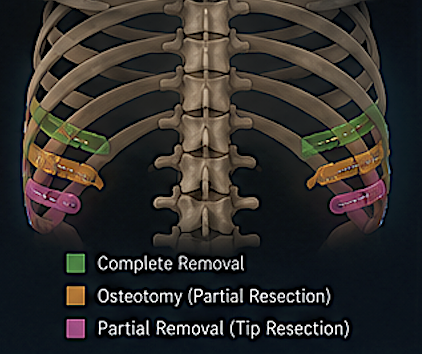
AI can recommend:
- Which ribs should be completely removed
- Which ribs should undergo controlled osteotomy rather than excision
- Optimal resection lengths
- Whether one side should be modified differently to improve symmetry
The surgeon remains responsible for making the final decisions.
4. Protecting Important Anatomy
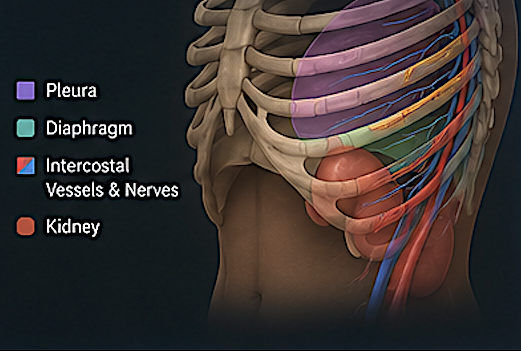
AI can automatically identify nearby critical structures, including:
- Pleura
- Diaphragm
- Kidneys
- Intercostal vessels and nerves
- Muscle attachments
This creates a patient-specific “danger map” that may help reduce the risk of injury.
5. Soft Tissue Prediction
Today’s surgery focuses primarily on skeletal changes, but the visible waist depends on soft tissue as well.
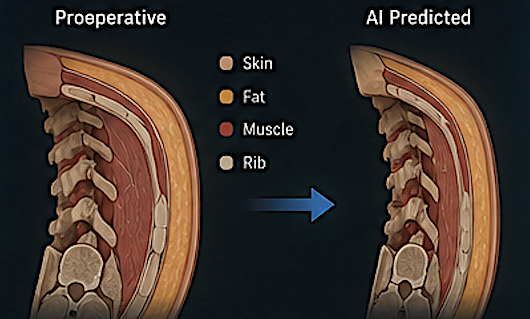
AI could eventually estimate:
- How the skin and muscles will drape after surgery
- The effect of body fat distribution
- Whether combining rib modification with liposuction or other contouring procedures would improve the final result
This remains an area of active research.
AI Cannot Replace the Surgeon
AI cannot determine:
- Whether the pleura has been entered
- Bone quality during surgery
- Tissue tension
- Bleeding
- Healing characteristics
- Intraoperative judgment
Those decisions require surgical experience and real-time assessment.
Future Possibilities
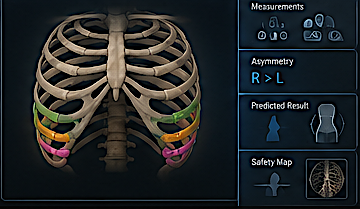
As AI and biomechanical modeling improve, surgeons may be able to create a complete digital “virtual waistline surgery” before the operation. This could include:
- Patient-specific 3D rib models
- Simulated rib resections and osteotomies
- Predicted changes in waist contour
- Soft tissue deformation modeling
- Quantitative comparisons of different surgical plans
Eventually, AI could function as a surgical planning assistant, allowing surgeons to compare multiple operative strategies and choose the one most likely to achieve the desired aesthetic result while minimizing risk.
Bottom Line
AI is best viewed as a sophisticated planning tool rather than a surgical replacement. For rib removal waistline narrowing surgery, it has the potential to improve anatomical analysis, personalize operative planning, predict aesthetic outcomes, and enhance safety. The operation itself, however, still depends on the judgment and technical skill of an experienced surgeon.
Dr Barry Eppley
Plastic Surgeon