
Despite that lip augmentation is sought by many women (and a few men), the perfect procedure to accomplish it remains elusive. A wide variety of treatment options exist to achieve bigger lips from injectable fillers and fat to surgical manipulations of the vermilion and skin excisions. Injectable fillers are by far the most common lip augmentation method because of their simplicity and immediate results. Their drawback is that no FDA-approved injectable filler is permanent and the treatments have to be repeated. Those filler materials that are permanent (silicone oil) is both non-FDA approved and has a propensity for nodules and foreign body reaction if improper injection techniques are used. (and sometimes even if they have been placed with good technique.
A lip implant, just like any other facial implant, would provide a stable and permanent lip augmentation effect. But the history of synthetic implants in the lip is very checkered with numerous materials and implant designs introduced and then eventually removed from the market (and often from the patient’s as well) due to a high rate of complications.
In the May 2014 issue of Plastic and Reconstructive Surgery Global journal, an article describing a newer lip implant was published entitled ‘Five Year Experience With Perma Facial Implant’. This paper reports on the experience and long-term effects of the silicone lip implant known as PermaLip which is a very soft smooth solid elastomer tapered tube. The authors placed 832 lip implants on 420 consecutive patients.(91% female, 6% transgender and 3% men) with an average follow-up of over two years. The vast majority had both upper and lower lips done simutaneously. (98%) Of the three available implant thicknessess, the 4mms was most commonly used (78%). The largest 5mm diameter was only used for implant replacement when patients wanted more lip volume. Of the three implant lengths available, the 60mm and 65mm comprised almost 90% of the implants used. Of the 832 implants placed, the complication rate was 12% with malposition representing the majority of them. Infection, hematoma or extrusion was less than 1%. Equally relevantly, implant buckling or permanent loss of lip sensation was not seen in any patient.
While one may interpret that a 12% complication rate with a two-year follow-up of lip implants is high, it is not. (it is far less than that seen in breast augmentation for example) One must remember that this is an implant placed in the body which will always be more prone to complications than when one uses natural tissue. Since it is a smooth silicone tube, it is easily reversible which was a big drawback to previous lip implant materials and design.
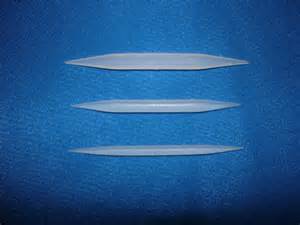 Like all implants, sizing and proper tissue positioning are the key factors in a low rate of complications for the PermaLip implant. For many patients, the largest 5mm size implant is too big for an initial augmentation, thus the popularity of the 4mm size. The hardest or trickiest part of the procedure is to get the implant is an even tissue plane across the whole lip and this is what accounts for implant malpositions. It is a problem that has always existed in lip implants. Because the lip is a curved structure and the implant instruments for placement are straight, it is not always easy to be in the same tissue plane from the side of the lip enter the instrument to the opposite side you exist from the corners of the mouth. This takes a bit of practice and and experience to keep the malposition rate low.
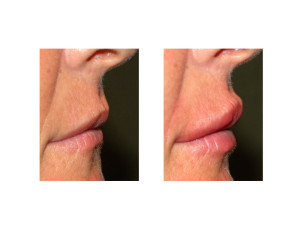 The Permalip implant is the best lip implant that I have seen in the past 25 years. It is nor perfect but it offers a simple and easily reversible method of lip augmentation for those women who are tired of repeat injectable filler treatments. Patient selection is critical as one has to have enough vermilion and lip tissue in which to place the implant with good soft tissue cover. Thus it is for patients who have very thin lip with little vermilion show unless they have had a prior or simultaneous subnasal or vermilion advancement lip procedure.
Dr. Barry Eppley
Indianapolis, Indiana