EXPLORE
Plastic Surgery
Dr. Barry Eppley

Explore the worlds of cosmetic
and plastic surgery with Indianapolis
Double Board-Certified Plastic
Surgeon Dr. Barry Eppley

Archive for the ‘liposuction’ Category

Case Study: Cankle Liposuction

Friday, May 10th, 2013

Background: Liposuction is a very versatile procedure that can be done just about anywhere on the body where there is fat. Subcutaneous fat exists under any skin area in the body and is amenable to be treated if the right cannula size is chosen. Very small cannulas are available today for fat extraction done at the 1.5mm to 2.0 mm inner diameter size which are effective even in the most minute of fat areas.ht line.

Fat lipodystrophy is most well known on the legs in the thigh area, particularly in the classic saddle bag or outer thigh region. But unsightly fat accumulations can also occur in other areas of the legs even below the knee. A thick calf that extends straight down to the ankles also has a classic moniker known as ‘cankles’. When there is no evident break or taper from the lower calf into the ankle and top of the foot, the drop from the knee to the ankle can appear just like a straight line. This makes the calf and ankle look like a combined structure when aesthetically and anatomically they are two distinctly different structures.

Case Study: This 52 year-old female wanted to have some liposuction done on her legs to give them a better shape. She had always had big thick legs but was most bothered by her legs below the knees which were unnaturally thick. From the middle portion of her calfs down to the ankles it was a straight line on their inner aspect. You might say her ankles were ‘fat’ compared to her calfs.

Under general anesthesia, she initially had a Hunstad solution infitrated along the entire ankle and inner and outer calf areas as well as the inner knees. Then using a 3mm cannula, the inner and outer ankles and the inner leg from the ankle up to the mid-portion of the calfs had liposuction done. The amount of fat aspirate obtained from both lower leg areas was 240ccs. She was wrapped at the completion of the procedure in foam covered with ace wraps from the ankles to the knees.

Her postoperative course was marked by a lot of swelling which was expected. She stopped wearing any compression stockings one month after surgery when they no longer provided more comfortable support. By three months after the procedure, she had a very visible difference in the shape of her lower legs with a clear tapering of the calf into the ankle area.

Small volume liposuction, such as the treatment of cankles, can be thought of as liposculpture which implies shaping rather than gross or high volume reduction. While the calfs and ankles are have relatively small amounts of fat compared to the abdomen, for example, it can still be selectively removed and even small amounts of removal can make a verty visible improvement.

Case Highlights:

1) Cankles is a well known description of lack of any definition between the calf and the ankle.

2) Small cannula liposuction can be safely done below the knee and a little fat removal in the right place can create a more defined calf and ankle transition.

3) Liposuction below the knee is associated with prolonged swelling that will takes months to see the benefits of the procedure.

Dr. Barry Eppley

Indianapolis, Indiana

Patient Testimonials: Male Chest and Abdominal Sculpting

Sunday, April 28th, 2013

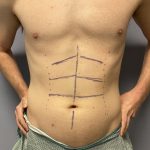
Chest and Abdominal Liposuction, Six Pack Abdominal Etching, Nipple Lifts

Dr. Eppley, thank you for your good work. My body looks awesome!  My six-pack is showing really well and I have the lines that I always wanted. The lipos got rid of that little lower stomach pooch and those pesky small love handles that I had. The nipple lifts gave my chest a big improvement. I’m getting lots of good comments and compliments again. Back on good diet and in gym. Still under pre-operation weight (was 157 pounds and now 152), but that should come up a little over time. I’m happy that I’m back to having 30”pants loose on me like a couple years ago. Still have just a little tube of tissue on the side of right chest, but interestingly it disappears if I raise back my right shoulder a bit. The entire process took me longer and was harder than I thought it would be…but it is all worth it now!

Richard W.

Columbus, IN

Commentary

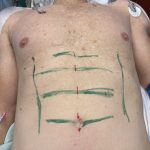
Body reshaping efforts for men almost always involves liposuction. While for many men these liposuction efforts are primarily about ‘debulking’ and simply trying to get rid of too much fat. But there is a subset of men who are fairly athletic and lean and are having liposuction to create better definition and refinement. This type of liposuction could well be called liposculpture as this is effectively what one is trying to accomplish. These athletic males are trying to be more than just lean but to have a ‘cut’ definition of the chest and the abdominal area. Small cannula liposuction when done in a linear fashion can create the 4-, 6- or 8-pack abs that are very hard to get for some men no matter how much they exercise. Pectoral definition can be achieved by liposuction of the lateral triangle just below the outer border of the pectoralis muscle to create a concavity to better show the muscular border. In some men, particularly those who are a little older, the nipples can drift lower on the chest wall and be a little ‘droopy. By doing a superior crescent nipple lift, they are very effectively moved up a little higher to remove the droop.

Dr. Barry Eppley

Indianapolis, Indiana

Requirements for a Safe Liposuction Experience

Sunday, March 31st, 2013


Another tragedy involving liposuction surgery was highlighted in a news story out of New York earlier this week. An alleged ‘plastic surgeon’ was charged with homicide in a model’s death in which he performed liposuction. The 51 year-old female suffered from heart disease and had heart transplant surgery in 2004 and was on anti-rejection medication. The patient collapsed in the doctor’s office during the procedure in which it was ultimately determined that she suffered a heart attack which was the cause of her death.

This tragic story has several relevant points that are likely not apparent to the casual observer. They merit reviewing because almost every time we see such a morbid liposuction event there is more to the story than this proves that ‘liposuction is a dangerous procedure’.

While the new story headline incriminates the doctor who performed this liposuction procedure as a plastic surgeon, nothing could be further from the truth. He was not a board-certified plastic surgeon…rather he was an internist with no formal plastic surgery training. He was ‘certified’ by the American Board of Anti-Aging Medicine…a board not yet recognized  by the American Board of Medical Specialties and certainly not one that conveys any expertise in plastic surgery.

The real negligence part of the story is not that liposuction was performed in an office setting under local anesthesia, that in and out of itself is common practice. The fact that the patient had a history of being a heart transplant patient is a major oversight that merited a cardiologic opinion on the adviseability of lipsuction in such a patient. There is the allegation, although it seems like it is factual, that the doctor did know of her heart history and falsified her medical intake forms after her death to eliminate any such references. This suggests not only a complete disregard or lack of understanding of her medical condition (certainly an internist would know better) but a severe breach of ethics as well.

While it is often perceived that lipoosuction done under local anesthesia is safer, it is not an innocuous procedure either. High doses of infused lidocaine to get the treated area adequately numb are well known to result in cardiac toxicity. Higher doses of lidocaine are often used in liposuction done under local anesthesia than when one is put to sleep for adequate pain control. In the patient with a cardiac history, infused lidocaine done awake or asleep can result in disastrous consequences if too high a level is achieved.

While liposuction can be a very low risk procedure, it requires good judgment which comes from adequate training to keep it so. This behooves potential patients seeking a cosmetic procedure to be sure they are seeing someone who is properly trained. While there are doctors with widely variable medical backgrounds who perform liposuction surgery, your safest bet is to look for a plastic surgeon who is board-certified by the American Board of Plastic Surgery and is a member of the American Society of Plastic Surgeons. While any licensed physician can buy liposuction equipment and learn the basics of the liposuction technique, that does not convey the knowledge and judgment of how to use it well and whether it should even be done at all.

Dr. Barry Eppley

Indianapolis, Indiana

The Inner Thigh Gap – Can It Be Created?

Monday, March 11th, 2013


The shape of the thighs has long been an aesthetic interest/concern for some women. The most common thigh deformity are saddle bags, those outward protrusions that violate a straight or gently convex curve from the hip down to the knee. But the inner thigh is also an area of thigh insecurity as well with bulges and sagging skin that obscures a smooth line upward into the genital area.

An often requested inner thigh goal is to have a space created between the inner thighs. Sometimes this is to get rid of rubbing or a chronic irritation from continuous tissue contact. Others seek a more ambitious aesthetic goal where one can see right through the inner thighs like a model going down the runway. Recent reports act as if this is a new cosmetic request (the thigh gap trend) but the reality is that it has been a long-standing concern for as long as plastic surgeons can remember.

While the goal of inner thigh separation is long-standing, the methods to try and achieve it are both old and new. Liposuction and inner thighs lifts are historic treatment strategies that are likely to make the most difference. New treatments such as Smartlipo and non-surgical approaches like Exilis and other energy-based treatments hope to achieve inner thigh reduction through fat cell shrinking and/or removal. It should not be expected that these energy-based treatments will be as effective at inner thigh slimming as surgery.

The reality of inner thigh surgical and non-surgical treatments is that they can be effective but rarely, if ever, can create an open inner thigh space. Unless one is thin enough that they naturally have a gap or are predisposed to one, it is very difficult to create it. One should expect inner thigh shape improvements with various treatments but the creation of a gap is not realistic for most patients.

Dr. Barry Eppley

Indianapolis, Indiana

The Risk of Revisional Liposuction in Body Contouring and Weight Loss

Monday, March 4th, 2013


While liposuction is the most commonly performed plastic surgery procedure around the world, it is exposed to the same basic risk of any other plastic surgery operation….the risk of dissatisfaction and the need for revision. There is no way to know the exact rate of revision for liposuction but surgeon estimates have it as high as 15% to 20%. Such estimates will vary widely amongst surgeons and is also influenced by the location and amount of liposuction performed. For example, liposuction of the neck would have a substantially lower risk of revision than that of the abdomen for example.

Reducing the risk of revision in liposuction and having a greater chance of after surgery satisfaction begins with good patient selection. While liposuction uses a cannula for fat extraction, it is not a magic wand nor is it a Photoshop tool. Some patients are better off continuing with diet and exercise or conisdering other procedures such as a tummy tuck or facelift. In rare cases even bariatric surgery may be more appropriate. The man who comes in with a large rotund belly and wants six inches off with liposuction doesn’t understand that fat extraction can only be done when it lies underneath the skin and not around the organs.

Liposuction is a method for body contouring and not a weight loss method per se. It unquestionably is most effective for thinner or more weight-appropriate people who have diet and exercise-resistant pockets of fat. In other words, liposuction is for fat collections that make one look disproportionate rather than someone who is simply overweight. (who often looks just proportionately big) Classic areas include the saddle bags and knees which one has had as long as they can remember and never changes no matter how much one diets and exercises. (congenital fat disproportion) Other good candidates include the abdominal and flank areas which have developed over the years and one wants some immediate body contouring results. (dietary fat disproportion)

Despite the ideal indications for liposuction, it can be used successfully as part of a weight loss program. One should have lost a significant amount of weight or at least 50% of their desired weight loss goal on their own. Ideally one should be within 15 to 20 lbs of their realistic weight target. Body charts based on height and weight are not always realistic for some people and one may have to readjust their weight target to their ‘physiologic’ weight, the weight that one can realistically maintain once reached without oppressive diet and exercise regimens.

Since fat is where many toxins are stored, a detox program before having liposuction can be very useful in the weight loss patient. This alone will result in a few lbs. of weight loss. Once liposuction is done, more weight loss will occur from the fat that is removed. Additional fat will be lost in the healing phase due to the catabolic effects of healing for up to six weeks after surgery. Longer-term appetite suppression may also occur due to altered leptin levels with the fat loss.

Liposuction has a useful role in fat reduction in a variety of body conditions. Having a satisfying result and limiting the potential need for a revisional procedure depends on good patient selection and education about what the procedure can and cannot do.

Dr. Barry Eppley

Indianapolis, Indiana

A Brief History of the Fundamentals of Liposuction

Sunday, February 24th, 2013

Liposuction is one of the most commonly done plastic surgery procedures around the world. It has seen more technical advancements in the past decade than in the prior four decades of its use. But despite these improvements in fat extraction, the most basic elements of liposuction have remained the same. The triad of an infusion solution and cannula extraction under negative vacuum pressure serve as the backbone of the procedure.

The history of liposuction is an interesting one and dates back, incredibly, almost one hundred years. The first effort of a liposuction procedure dates back to 1921 by a French surgeon, Dr. Charles Dujarer, who attempted to remove fat using a fine tube made of bamboo. After several years and a few patients, the bamboo tubes were replaced with gynecologic curettage cannulas. Then in 1924 a famous model in Paris had the procedure and due to infection and an injury to the femoral artery needed an amputation and she died as a result of her injuries weeks later. Not only did the surgeon lose his license but the liposuction never got after the ground and became a lost technique.

It did reappear again forty years later in the mid-1960s amongst gynecologists in Europe using abortion cannulas. They were used to curette the fat through small incisions and the fat was then extracted by applying external pressure to the tissues and suctioning the incisional opening. This predictably did not produce good results and were associated with a lot of tissue trauma and prolonged recoveries.The gynecologic connection continued, however, and the first true liposuction publication appeared in an Italian gynecologic journal in 1976 by  Dr. Arpad Fisher. The female patient population of gynecologists and their use of gynecological instruments for suctioning tissues made it a fertile ground for the liposuction concept.

Plastic surgery picked up these rudimentary elements of liposuction soon after and advanced them by applying two concepts; a blunt-tipped cannula and higher suction forces. This made the procedure less traumatic and more effective. These were introduced and promoted by the acknowledged father of liposuction, Dr. Yves Gerard Illouz, a French plastic surgeon. A co-worker of Dr. Illouz, Dr. Pierre Fournier, developed the first set of blunt-tipped liposuction cannulas available for widespread use. Plastic surgeons began making the trek to France to learn this new liposuction method and brought it back to the U.S. for the first time in 1981.

While blunt-tipped cannulas and adequate negative pressure suction were major improvements, the liposuction procedure still caused significant tissue trauma and substantial bruising. The next advancement and the last one of the triad of liposuction fundamentals was the introduction of the ‘wet’ technique. The concept of first introducing a wetting solution into the tissues that controlled bleeding and provided some local anesthesia was introduced in 1985 by dermatologist, Dr. Jeffrey Klein. By infusing a solution containing dilute amounts of epinephrine and lidocaine, the tissues become inflated or tumesced which also made the movement of the cannulas slide easier through them.

With the merging of tissue tumescence, blunt-tipped cannulas and suction extraction, liposuction as we know it today had arrived. This led to widespread acceptance of it by the late 1980s and an everyday body contouring method by the 1990s. While newer technological advancements in liposuction have emerged over the past few years, Ultrasonic and Laser-Assisted to name a few, the fundamentals of it have not changed. The fat extraction process has become more efficient, somewhat less traumatic and may creating some skin tightening abilities, but applying the three basic principles of liposuction is still what makes it work.

Dr. Barry Eppley

Indianapolis, Indiana

Plastic Surgery’s Did You Know? Liposuction and Triglyceride Levels

Friday, February 15th, 2013


Apparently liposuction does more than get rid of those unsightly bulges, it may be good for your health as well. Studies have now shown that those people with elevated triglyceride levels (greater than 150mg/dl) prior to liposuction with or without a tummy tuck showed a significant drop (43%) after surgery. Those patients with normal triglyceride levels before surgery showed no change. There was not a concomitant drop in cholesterol levels in those patients who had lower triglyceride levels so its long-term cardiovascular benefits, if any, are not known. It is also unknown if this drop in triglyceride levels is maintained long-term. While liposuction is not a treatment for weight loss or has proven benefits for a healthier heart, it is an interesting finding that certainly doesn’t hurt that it happens in some patients.

Understanding The Array of Liposuction Technologies

Monday, February 11th, 2013


Liposuction is one of the most commonly performed body contouring procedures done around the world. It is unique from all other plastic surgery procedures in that there are no significant incisions and putting tissues back together by suturing is a trivial part of the operation and has no impact on the final result. It is a blind procedure whose results are determined by the use of combined tactile and visual feedback as the fat is removed. Yet patients understandably desire and expect a precise sculpting outcome.

One of the main driving issues to raising patient expectations from generalized liposuction to a liposculpting standard has been the plethora of technologies now available to do it. Whatever the benefits of these liposuction technologies may be, their cost and generalized practice competition has led to considerable marketing efforts to promote them. This has led to patients wondering which one is better for their particular contour concerns.

One of the first laser technologies to emerge was the application of ultrasonic energy. Originally called Liposonix and now Vaser, the ultrasound produces both heat and cavitation that breaks up fat. This allows it to be removed easier. The heat that is generated has collagen stimulation and skin tightening effects. This development was followed by the application of laser energy through fiberoptic cables to create laser-assisted liposuction, most popularly known as Smartlipo. The laser energy creates a zone of heat which raises the temperature of the treated area above 45 degrees C, a temperature that breaks down fat cells. The generated heat also has some skin tightening effects. Power-assisted liposuction, known as PAL, works by reciprocating the cannula back and forth hundreds of times a minute. This reduces the workload for the surgeon and less traumatic for the patient. More recently Hydrasolve lipoplasty speeds fat extraction through the use of a pressurized stream of heated saline inside the liposuction cannula which generates enough heat to liquefy fat as it enters into it.

When a prospective patient reads articles or see advertisements for all of these various liposuction technologies, it is understandable why they would be confused. Each has similar claims/benefits that revolve around easier and more efficient fat removal, faster recovery and the ability to create some degree of skin tightening. As is human nature, the latest technology always seems or promises to be better than whatever came before.

Since there are no prospective comparative studies between any of these liposuction technologies that exist, or will likely ever be done, there is no scientific evidence that one is better than the other. Plastic surgeons may prefer or feel more comfortable with one particular technology, and that is extremely important, but that is not an endorsement of its potential superiority. The most important criteria in any liposuction procedure is the skill and experience of the surgeon in whose hands might be a certain liposuction instrument or machine. Technology will not make up for poor judgment or skill but does have the potential to make good results even better.

Dr. Barry Eppley

Indianapolis, Indiana

Typical Recovery and Results after Abdominal and Flank Liposuction

Wednesday, January 23rd, 2013


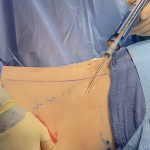
Liposuction is one of the most commonly performed of all body contouring plastic surgery procedures. It is also uniquely effective being able to reduce large volumes of fat over broad body surface areas. To no surprise the most common body areas treated with liposuction is the abdomen and lateral waistline. (aka flanks, love handles) These areas are also the largest single continuous body surface area treated that is not a flat surface and wraps around two ‘corners’. (waistline)

While abdominal liposuction is a frequent request, what one can expect after the procedure in terms of recovery and results is not well understood or appreciated by most patients. As a starting premise, liposuction is much harder to go through and recover from than the way it is frequently advertised and marketed. There is no such thing as ‘lunchtime’ or rapid recovery liposuction. While the procedure may be able to performed in an hour or two and may even be done under some form of local or sedation anesthesia, do not confuse the surgery process with how the recovery will go or how long it may take to see the final result.

No matter what technique of liposuction and anesthetic technique that is used, it is a very traumatic process to the subcutaneous tissues. This results in more swelling and bruising that one may anticipate and a much longer period of time until all the details of the final contours are seen. This is best illustrated by going through the sequence of a typical abdominal liposuction case.

This is a 38 year-old female who was an athletic horse rider (5’ 9”, 165 lbs) but had developed some abdominal and waistline fat that she could just not get rid of. Her abdominal skin did not have any significant stretch marks and was not loose or redundant. In short, she was an ideal candidate for liposuction…the type of patient plastic surgeons wish all liposuction candidates looked like before surgery.

Under general anesthesia and in a one hour procedure, she had a total of 2,050ccs of liposuction aspirate removed of which the vast majority was fat based on how it layered out in the canisters. (after one hour of sitting or decanting) She had foam placed over all treated areas and a wrap around garment applied at the end of surgery. She removed the foam the following day to shower and wore the binder regularly thereafter.

When see at one week after surgery, she had the very typical bruising over the treated areas. What is most noteworthy, however, and incredibly common is that some of the bruising migrated downward into the pubic region and into the lower back and upper buttocks. This surprises all patients and is the result of gravity and the compression of the binder which forces bruising ‘south’. (in men it can even be more impressive)

When seen 6 weeks after surgery, all of the bruising had resolved as well as much of the swelling. The improvements in abdominal and waistline contours could be fully appreciated. There remained some slight irregularities around the belly button area and some of the abdominal and back skin remained numb although that was improving. She had  returned to all normal activities including exercise and horseback riding.

This abdominal liposuction case is very typical and one can appreciate that near full recovery takes four to six weeks and the very fine details of the contour and skin smoothness will take up to three months after surgery to fully appreciate. Note that bruising may be more extensive that one would think and may drift into unexpected areas, taking weeks after surgery to fully clear. Numbness of the skin, some stiffness and an occasional twinge here and there with activity may take up to six months to return to normal.

Dr. Barry Eppley

Indianapolis, Indiana

Top Plastic Surgery Searches in 2012

Tuesday, January 1st, 2013


On the final day of 2012, it is interesting to look back and see what some of the trends and interests were in plastic surgery over the past year. While plastic surgeons may perform the surgeries, the interest of patients drive the number and type of surgeries that are done. For this reason, it is noteworthy to look at what procedures were most searched for online.

The popular plastic surgery website, Real Self, reported its top searches for 2012 based on over 50 million searches. The top 10 included tummy tuck, breast implants/augmentation, rhinoplasty, Brazilian butt lift, Botox, Coolsculpting, Breast Reduction, Cellulaze and Liposuction. The procedures that had the greatest increase in interest over the past year were the Brazilian butt lift (up 28%), Cellulaze (up 32%) and labiaplasty. (up 22%)

These search results, albeit just from one source but a very reliable one, provides insight into the public’s evolving interest in face and body modifications. Three of the historically popular and still highly performed procedures, tummy tuck, breast augmentation and rhinoplasty, remain on the top of the list. Not surprisingly, flatter stomachs and more shapely waistlines, larger breasts and nose reshaping are still highly desired. While they were far from being up on % increase in searches, it would be hard to do so when you have been so popular for decades.

The popularity of the Brazilian butt lift, a procedure that was largely unknown just less than a decade ago, is a reflection of society in general. Largely an ethnic procedure for Hispanics and African-Americans, it parallels the changing population mix of the U. S.  It is also an indication of the influence of celebrities on plastic surgery. (the Kardashian effect) While buttock implants have been around for awhile, the allure of using one’s own natural fat and getting some fat reduction in other body areas as part of the procedure is undeniably appealing. The large percent increases in interest in the procedure over the past two years is primarily a result of its ‘newness’. But I would wager five or ten years from now, buttock augmentation will be a permanent member of the all-time top 10 plastic surgery procedures of any year.

Coolsculpting and Cellulaze have made their way on the list because they are new body contouring technologies. Both have been approved for use less than five and two years ago respectively and offer non-surgical methods for common concerns about fat reduction and improvement in the appearance of cellulite. Whether they will be on the top ten list a few years from now will depend on how effective they turn out to be in widespread use.

Botox, one of the few drugs used for aesthetic changes, keeps it place in the top ten list and may well be the number one cosmetic procedure performed in the U.S. by number of treated patients. (amongst surgery and minimally invasive procedures) Despite the large number of treated patients, it is not searched as much as some of the other popular procedures largely because its effects and benefits are so well known.

Labiaplasty, reshaping of the external vagina, is gaining in popularity and public awareness. Once just done by a few gynecologists, it is becoming more widely practiced by plastic surgeons as well. As women become increasingly aware of its potential benefits, the interest in how and where it can be done is rising as well.  

Dr. Barry Eppley

Indianapolis, Indiana


Dr. Barry EppleyDr. Barry Eppley

Dr. Barry Eppley is an extensively trained plastic and cosmetic surgeon with more than 20 years of surgical experience. He is both a licensed physician and dentist as well as double board-certified in both Plastic and Reconstructive Surgery and Oral and Maxillofacial Surgery. This training allows him to perform the most complex surgical procedures from cosmetic changes to the face and body to craniofacial surgery. Dr. Eppley has made extensive contributions to plastic surgery starting with the development of several advanced surgical techniques. He is a revered author, lecturer and educator in the field of plastic and cosmetic surgery.

Read More


Free Plastic Surgery Consultation

*required fields


Pricing

The cost of any type of elective plastic surgery plays a major role in the decision to undergo the procedure(s).

Get Your Quote Here


My Plastic Surgery Story

Military Discount

We offer discounts on plastic surgery to our United States Armed Forces.

Find Out Your Benefits


Categories