EXPLORE
Plastic Surgery
Dr. Barry Eppley

Explore the worlds of cosmetic
and plastic surgery with Indianapolis
Double Board-Certified Plastic
Surgeon Dr. Barry Eppley

Archive for the ‘facial feminization surgery’ Category

Forehead Feminization with Combined Brow Bone Reduction, Browlift and Hairline Lowering

Sunday, April 21st, 2013


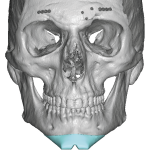
There are numerous surgical procedures to feminize a masculine facial appearance. They include jawline reshaping (chin and mandibular angle reduction), rhinoplasty, cheek reduction, tracheal shave and forehead reduction/reshaping. While every transgender patient’s face is different and may need just a few or all of these facial feminization procedures, the forehead is one of the top considerations for most patients. The female forehead has a very distinct shape with a rounded contour from the brows up to the hairline with no obvious bone break.

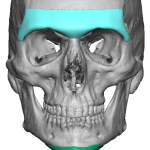
Forehead reshaping incorporates reduction of the prominence of the central glabellar region as well as the projection of the brow bones. The brow bones must not only be deprojected but should also have the tail of them near the lateral orbit reshaped to have more of a sweeping effect up and towards the temples. Since this procedure requires an open scalp approach, this creates the oportunity to lower the frontal hairline as well. Together this type of foreheadplasty has a significant impact on the gender identification of the face.

The prominent glabella and brow bones are always due to the pneumatization of the front sinus. In cases of minor protrusion, the outer table of the frontal sinus can be simply burred down. Unfortunately this rarely can be successfully done due to the thin bone thickness overlying the frontal sinus. A few millimeters of change is rarely enough to make a noticeable external change. Most patients require the anterior wall of the bone to be removed, reshaped and repositioned back into place with resorbable sutures or metal microplates and screws. This method sets back the bulging bony prominence while preserving sinus function. The outer brow bone areas that lie outside of the sinuses can be reshaped as desired by burring.

When significant brow bone reduction is done (flattening of the bone), there is the potential for an excess of overlying skin. Loose skin on the brows can result in sagging or overlying brow ptosis. This can be easily addressed at the time of the brow bone reduction by a comcomitant browlift using the transcoronal or hairline incision made for access to the brow bones. An alternative approach is a direct browpexy from the galea below the eyebrows to underlying bone holes or the fixation plates (if used) above the reshaped brow bones.

A final component of the feminizing foreheadplasty procedure is the potential to simultaneously lower the frontal hairline. A long forehead (> than 6.5 to 7 cms between the brow and hairline) is unaesthetic for any gender but is particularly so in the male to female transgender patient. If a hairline approach (trichophytic) is used, a simultaneous scalp advancement can be done by securing the galea of the advanced scalp by sutures to bone holes in the outer table of the skull. By bringing the scalp forward, the lifted forehead skin will need to be trimmed creating a combined forehead skin reduction and browlift.

Ultimate feminization of the forehead can be done by simultaneous brow bone reduction, browlift and hairline lowering.

Dr. Barry Eppley

Indianapolis, Indiana

Case Study: Tracheal Shave in the Transgender Patient

Saturday, August 13th, 2011

Background:The central prominence of the neck is well recognized as the adam’s apple. It is largely a male feature although it can be prominent in some women as well. It is composed of paired cartilages which surround the larynx and is designed to protect the delicate voicebox from injuries. While often referred to as the thyroid cartilages, a more accurate name would be the larynx cartilages as that is what it actually guards.

The name adam’s apple is often believed to be a reference to the observation that it looks like a chunk of apple stuck in the throat, relating to the biblical story of Adam and the fruit from the Tree of Knowledge. More likely, however, it is the result of a mistranslation of the Hebrew words, tappuach ha adam, which means ‘male bump’.

Those patients who seek adam’s apple reduction generally fall into two categories, transgender conversion from male to female and males who simply desire less of a central neck prominence. It is widely believed that most tracheal reductions are done in the transgender patient but this has not been my experience. I find it to be about a 50:50 ratio. The aesthetic neck goals for each group are slightly different. The transgender patient would prefer a completely flat neck profile which is more feminizing. The male patient can live with some reduction and a visible remaining small neck bump is still acceptable.

Case Study: This 53 year-old male-to-female transgender patient wanted her thyroid cartilage eliminated if possible. It had an approximate 2 cm central profile and was located unusually low in the neck with a very obtuse cervicomental angle.

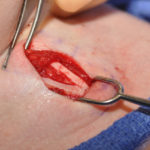
Under general anesthesia, it was approached through a 2.5 cm horizontal incision located directly over the prominence. After going through the strap muscles, the thyroid cartilage was identified and all soft tissues dissected off of it including the perichondrium. A scalpel was used to shave the wings of the thyroid cartilage down. At the anterior V of the thyroid cartilages, shaving was done until the cartilage became hard. A handpiece and burr was then used to thin out the central prominence done along the central box of the cartilages. The thyroid cartilages became thin In some areas but no complete through and through defects were created. The strap muscles were closed over the reduced areas but with minimal tension so as to not bunch up the muscles over the reduced area. The skin was closed with small dissolveable sutures. The difference in the neck profile was both immediate and dramatic. The incision was covered only with glue and tapes.

She could shower the next day and there were no restrictions from any activity. She reported minimal discomfort and swelling. By six weeks after surgery, most of the swelling had subsided. The scar already was very fine and nearly indiscernible.

Thyroid cartilage reduction is a simple but effective neck contouring procedure. While it is important to reduce the cartilage prominence as much as possible, it is critical to not destabilize the thyroid cartilage to avoid the risk of voice change due to alteration of the tension on the vocal cords. There is no exact way to know how much cartilage can be safely removed before this occurs so when in doubt, conservative reduction is best.

Case Highlights:

1) Tracheal shaves are done through a small horizontal neck incision with minimal recovery and discomfort.

2) Complete elimination of the thyroid cartilage profile is not always possible. The limiting factor is the thickness of the cartilage and the location of the vocal cords internally.

3) Adam apple reduction is largely done by cartilage shaving but more firm areas of cartilage may require mechanical burring reduction.

Dr. Barry Eppley

Indianapolis, Indiana

The Concepts of Facial Feminization Surgery

Wednesday, July 15th, 2009

Facial feminization surgery (FFS) is an assortment of plastic surgery procedures that changes a genetically male face to bring its features closer in shape to that of a female. FFS is sought after largely by transsexual women and psychologically it is often more important than sex reassignment for social integration. FFS works on both the bone and the overlying soft tissues and, as a result, has much of its origins from craniomaxillofacial surgery as well as traditional cosmetic plastic surgery. For this reason, those few plastic surgeons who perform FFS usually have such backgrounds.

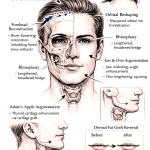
 I like to think of FFS as three potential zones of change… upper, middle, and lower face. Within these zones, the primary plastic surgery procedures include frontal hairline alteration/brow lift, forehead/brow recontouring, rhinoplasty, cheek/submalar augmentation, upper lip enhancement, jaw/chin modification, and thyroid cartilage reduction. To no surprise, many of these changes deal with facial prominences ….lessening the amount of bony and cartilage convexities. Each patient usually has one primary zone for change and two others for some modification. In essence, every patient has at least one dominant facial feature which must be changed onto which other procedures are complementary. While it is true that it takes many changes to create a  more convincing change of appearance, one or two of the procedures usually has a dominant effect.

FFS, philosophically, consists of a combination of reconstructive and cosmetic plastic surgery procedures. Changing the bony prominences, or changing the skeletal foundation of the face, is based more on the reconstructive heritage of the procedures. Modifying or lifting of soft tissues of the face encompasses more standard cosmetic procedures used for a primary anti-aging or more youthful effect.

Every FFS procedure has differing levels of difficulty and degrees of change. Some are easy to go through, while others are more extensive with prolonged swelling and social recovery. The procedures of tracheal shave, upper lip lift and cheek implants are very effective and relatively simple with little downside or complications. More difficult procedures are forehead contouring and brow reduction and the alteration of the chin and jawline. These have issues of surgical access and bone manipulation, of which makes for more swelling. Rhinoplasty and standard plastic surgery procedures such as facelift, blepharoplasty or browlift, falls between the two with a few weeks of relatively easy recovery.

The key to a successful FFS outcome is to plan a combination of facial procedures that can most effectively soften one’s appearance and make for a convincing change. There is no one standard set of procedures that will work for every patient. While some patients need just three or four, others may benefit by twice that many. Most patients have a good feel for what they think will be effective and a careful discussion and computer imaging is essential to create a reasonable working list of procedures. While some patients may want the most change possible by number of procedures, it is important to have a realistic outcome and work within one’s budget for maximal facial change.

Dr. Barry Eppley
Indianapolis, Indiana


Dr. Barry EppleyDr. Barry Eppley

Dr. Barry Eppley is an extensively trained plastic and cosmetic surgeon with more than 20 years of surgical experience. He is both a licensed physician and dentist as well as double board-certified in both Plastic and Reconstructive Surgery and Oral and Maxillofacial Surgery. This training allows him to perform the most complex surgical procedures from cosmetic changes to the face and body to craniofacial surgery. Dr. Eppley has made extensive contributions to plastic surgery starting with the development of several advanced surgical techniques. He is a revered author, lecturer and educator in the field of plastic and cosmetic surgery.

Read More


Free Plastic Surgery Consultation

*required fields


Pricing

The cost of any type of elective plastic surgery plays a major role in the decision to undergo the procedure(s).

Get Your Quote Here


My Plastic Surgery Story

Military Discount

We offer discounts on plastic surgery to our United States Armed Forces.

Find Out Your Benefits


Categories