EXPLORE
Plastic Surgery
Dr. Barry Eppley

Explore the worlds of cosmetic
and plastic surgery with Indianapolis
Double Board-Certified Plastic
Surgeon Dr. Barry Eppley

Archive for the ‘fat injections’ Category

The Fat Grafting Science Behind The Brazilian Butt Lift

Sunday, June 16th, 2013


The Brazilian Butt Lift is one of the most popular and talked about body contouring procedures in the past few years. Driven by celebrities, models and the desire for a certain look in clothes, a rounder and fuller buttock shape has taken on a new level of aesthetic desire and sensuality. While it is often viewed as having a heavy cultural and ethnic influence amongst African-Americans and Hispanics in the U.S., its awareness has also served to drive in women who simply have a congenitally flat buttocks with no roundness as well.

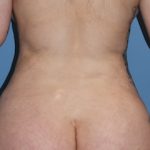
The main driving force in the desire for bigger buttocks comes from the most common procedure to achieve it…the Brazilian Butt Lift. (aka BBL) Using fat to enlarge the buttocks is both a natural approach and a method of recycling or redistribution. Using liposuction to harvest fat from undesired body places, it is then processed and injected where someone wants it in the buttocks. In essence, every BBL is two procedures in one both of which work to create an improved torso shape. The appeal of this dual approach has led to making it a sought after aesthetic procedure.

But despite the tremendous appeal of the BBL buttock augmentation procedure and its widespread use, much of the science behind it remains undeveloped. The success of the BBL is in making the injected fat survive. But how to best do that is unknown and the techniques touted are based on largely subjective observations. There are no published studies as of yet that have looked at the various methods of buttock fat injection or have even compared them.

The fundamental technique question is whether smaller or larger amounts of fat should be injected in a single treatment session. In essence, what is the appropriate amount of fat to inject during surgery that will survive. There are two schools of thought, pump in as much as you can in a single session (maximum infusion)  or place smaller amounts in multiple sessions. (seeding)

Since it is commonly believed that only about one-third to one-half of injected fat will survive, the maximal infusion approach takes a volume overload concept to overcoming low fat cell survival. Of course every patient wants the most fat put into their buttocks as possible and this can be seen in many internet forums where patient talk and compare about how much fat was injected into their buttocks.  The disadvantage to this approach is that big globs of injected fat may preclude the rapid establishment of vascular ingrowth and nutrition to the fat/stem cells. So while good volume results may be initially seen, lack of significant fat survival will lead to poor results months later.

The seeding approach is when smaller amounts of fat are injected, much of it into the muscle, and it takes time to see these ‘seeds’ grow. Like planting seeds into a garden the analogy is that multiple seeding sessions are needed to acquire the best growth. Smaller amounts of seeding theoretically makes it more likely that nourishment will be established to the fat cells quickly and survival will be much better, even if the actual volume is lower. How much volume that is will depend on the patient’s buttock size but a 300cc to 500cc injection volume per side is reasonable.

While the lower volume seeding approach seems to make the most scientific sense, there are practical issues that preclude its use in many patients. The cost of multiple injection sessions makes fat seeding the buttocks impractical for many patients. This is why the maximal infusion BBL approach is done much more commonly.

While the fat grafting science of buttock augmentation is slowly being developed, the marketing of the BBL procedure is way out in front it. Fundamentally the Brazilian Butt Lift is neither Brazilian nor does it cause a buttock lift. It causes no more of a buttock lift than does a breast implant cause a breast lift. It is a volume enhancer. But more is not always better and one should beware of BBL procedures that tout high volume infusions. Besides fat survival issues, high volume may mean fat transfers that contain other components such as tumescent fluid, fat and free lipids. While early after surgery photos may show a big volume buttock change, much if not all may be lost months later.

Dr. Barry Eppley

Indianapolis, Indiana

The Stem Cell Facelift Revealed

Sunday, April 28th, 2013


Many treatments have been touted over the years to create a facelift-like effect from topical creams to devices in lieu of having the actual surgical procedure. Today’s ‘alternative facelifts’ have taken on a very different approach and it is done through largely an injectable approach. These are all about adding volume to the face, plumping it out in select sunken facial areas. In many ways these are facial reinflation methods which work best for those patients who have lost volume and have a little loose or saggy skin.

These volumetric facelifts are comprised of two basic approaches. The first is the generic liquid facelift which completely uses synthetic injectable fillers and promises nothing more than a limited time period of benefit. The now more appealing, and the group that has caught the most press and is also heavily marketed, is the autologous injection techniques which promise more than just a short-term effect…they promise a rejuvenation of tissues as well.

These autologous injection techniques use either blood products such as platelet-rich plasma (PRP, e.g., the Vampire Facelift) or one ‘s own fat which is obtained by liposuction. Because our fat stores are now known to contain large amounts of stem cells, these type of liposuctioned-derived injections have become known as ‘stem cell facelifts‘. They have become heavily touted on the internet and many patient testimonials as to their rejuvenative benefits can be found online.

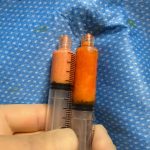
But what is a stem cell facelift actually? In reality, it is a bit of a misnomer. It starts with liposuction to harvest fat, usually from the abdomen, which is then processed during the procedure to get rid of most of its fluid contents. (blood, tumescent fluid, free fatty liquids) What happens next varies by the doctor doing it. Some will proceed to inject the fat concentrate while others may further process the fat to obtain a greater cellular concentrate of the material which presumably has more stem cells per injected volume.

For those just taking concentrated fat and injecting it (aka fat injections), any stem cells that are in the fat are inadvertently carried along with it. How many stem cells and how active they are after being injected into the face is anyone’s guess. This is a stem cell facelift in the loosest use of the term.

To those who do a stem cell preparation step with the fat (usually a mechanical process that separates the stem cells from the fat and then they are injected along with the fat), this is a purer form of a stem cell facelift. Such higher concentrations of stem cells are purported to induce skin rejuvenation allegedly because of the growth factors that are produced by the stem cells. But no one really knows for sure.

While the appeal of the stem cell facelift is undeniable, does it really work? The regenerative properties of adult stem cells has been vigorously studied for decades in a  wide variety of medical conditions. But their use in aesthetic medicine is very new and, as a result, the medical evidence supporting their effectiveness is presently very weak. The marketing claims are high, but almost all the clinical evidence of its effectivenss is anectodal….and very short-term.

To really answer the question of the effectiveness of stem cell facelifts, split-face clinical studies would have to be done. Patients would have to submit to one-half of their face being injected with fat and the other half with fat that contained concentrated stem cells with postoperative assessment of appearance and skin improvement. Such studies are hard to conduct although patient recruitment would likely not be difficult.

Stem cells have a lot of regenerative potential but whether that applies to aesthetic conditions like facial aging remains to be seen. I like the concept very much but it remains a clinical procedure that is in the earliest stages of development. And as often happens in many developing aesthetic techniques, the marketing and promotion of it gets way ahead of the actual science to support it.

Dr. Barry Eppley

Indianapolis, Indiana

Fat Injections for the Treatment of Dry Mouth From Irradiation

Thursday, April 25th, 2013


Radiation for a variety of head and neck cancers is well known to affect all tissues in its path. Since the parotid gland frequently is involved in radiation portals, it receives unintentional radiation and suffers the side effects of such exposure. This almost always causes some degree of dry mouth or xerostomia. When xerostomia is significant enough, it can have a major impact on the patient’s quality of life.

Radiation-induced xerostomia does not really have an effective treatment other than palliative therapies. A wide variety of salivary stimulants exist from mechanical, chemical, electrical and pharmacologic agents to actual salivary substitutes. But dry mouth from irradiation has significant and historically irreversible gland fibrosis and any form of salivary stimulation is not going to be effective. Some recent studies have shown that acupuncture can provide some relief in irradiated parotid gland xerostomia but its effectiveness and mechanism of action has not been fully studied.

Multiple experimental studies have shown that various growth factors, such as IGF-1, have the capability to partiallly reverse radiation-induced salivary gland dysfunction. Irradiated animals have shown improved salivary flow rates within thirty days after an injected treatment and normal flow rates within three months thereafter. The mechanism of action is the restoration of functioning acinar cells and their proliferation and improved amylase production.

Unfortunately the availability of commercially-produced growth factors for injection treatments does not currently exist. But every patient has their own store of growth factors and a myriad of other regenerative materials such as stem cells… and it lies right beneath the skin in some of the most obvious areas….their own fat.

Autogenous fat injections have burgeoned in popularity, not only because of the ready availability of fat to harvest, but also because of its ease of putting it just about anywhere by blunt-cannula injection. Fat has been shown to have a rich store of various growth factors and stem cells. Numerous experimental studies and large volume of clinical work has shown its improvement of irradiated tissues, particularly in the breast. The quality of the tissues has improved by both revascularization and cellular proliferation.

It would be seem very logical and safe to consider fat injections into the irradiated parotid gland in the treatment of dry mouth symptoms. Could fat injections bring the irradiated parotid gland partially back to life? Its experience elsewhere in the body suggests that the potential is there. A small amount of fat, 3cc to 5ccs of concentrate, is all that would be needed to be placed into the body of the gland as well as into the overlying and surrounding subcutaneous tissues. Most likely a series of fat injections spaced months apart would produce the best chance of success and some level of increased salivary production.

Dr. Barry Eppley

Indianapolis, Indiana

Fat Injections for the Treatment of the Double Bubble Deformity in Breast Augmentation

Sunday, April 21st, 2013


Breast augmentation is the ‘simple’ procedure of placing an implant to increase the size of the breast. It does so by pushing out the overlying soft tissue and creating a bigger mound. While the increase in breast size is always completely predictable, the final shape that the breast will achieve is not.

The breast may not necessarily mimic the shape of the implant that is pushing it outward. One’s breast has its own natural shape controlled by the amount of skin and the thickness of the underlying breast tissue. Thus when pushed outward any irregularities and asymmetries in the breast will ultimately be seen.

This is particularly true in such deformities as the tuberous breast or the breast with the very short nipple to fold distance. When an implant is placed in this type of breast shape, the lower pole of the breast is tight and the original inframammary fold remains, creating a crease across the enlarged lower pole. This creates what is known as a ‘double bubble’ deformity.

The double bubble deformity is a well recognized problem in certain breast augmentation patients. When recognized during surgery, and it often is, release of the lower quadrant of the breast is done by making releasing cuts or sections in the breast tissue. With this manuever the double bubble will improve immediately or will relieve itself in the early postoperative period. This is most easily done when a lower breast fold or an inferior areolar incision is used. It can also be done, although less effectively so, through a transaxillary incisional approach by an endoscopic technique.

Another treatment option for the double bubble breast augmentation deformity that fails to improve with the aforementioned techniques is fat grafting. Fat grafting helps correct the double bubble by providing additional tissue to the lower breast pole and adds a remodeling effect. By injecting autogenous fat into the constricted and tight lower pole, some degree of immediate soft tissue expansion occurs.The additional cellular material (fat and stem cells) also provides a matrix for tissue regeneration to aid the postoperative stretching of the tissues so that scar is not the only tissue formed.

Fat injections for the breast double bubble breast deformity can be done either at the time of implant placement or for the refractory double bubble problem secondarily. That is a judgment that is made during surgery. The fat injections are done by placemen just under the skin by a small cannula technique.

Dr. Barry Eppley

Indianapolis, Indiana

Contemporary Thoughts on Fat Grafting in Plastic Surgery

Sunday, April 14th, 2013

Reshaping faces and body through a ‘recycling’ approach by fat transfers is not necessarily a new technique. Fat grafting has been around for over 100 years but never gained much popularity until the past decade. As new techniques and research have revealed insights into how to improve the survival of fat grafts, the regenerative capabilities of the fat cell and its accompany growth factors and stem cells has become realized. But it is a very technique-sensitive procedure that is still plaqued by cell survival and volume retention issues.

In a recent published article in the March/April 2013 issue of the magazine MedEsthetics, Dr. Barry Eppley and other physicians skilled in fat transfers were interviewed about how to achieve safe and aesthetically fat grafting outcomes. On many important fat grafting issues, Dr. Eppley made the following statements.

HARVESTING FAT

‘The fact that fat is a natural and that most everyone would love to give some up does not make injectable fat grafting a completely reliable treatment method. It is important to understand that the biologic behavior of fat cells and the stem cells that accompany them is not well understood. The techniques we use are based on what we know today – and that will likely change significantly a decade from now.’

‘Fat that is being removed for transfer must be handled differently than fat that is being removed and discarded. Most doctors believe that low-pressure vacuum extraction perserves fat cell structures and improves their viability after transfer. Whether this is done through syringe extraction or a traditional liposuction machine that generates less then 720mm/HG (- 1 atm) negative pressure depends on how much fat is needed.’

PREPARING FAT FOR TRANSFER

”There are several techniques currently employed to prepare harvested fat for re-injection, all of which strive to separate the liquid fractions – blood, free lipids and injectate – from the cellular component.These include straining and washing, free-standing decanting, machine centrifugation, hand-held separation using centripetal force and low-pressure forced staining using low-micron filters. Much debate surrounds which, if any, of these offers a superior number of viable fat cells for transfer.’

INJECTING FAT

‘Placing the fat grafts into small aliquots, say 0.1cc for the face and .5cc to 2ccs for the body, is well known to allow for the best survival rates. Fat graft retention is related to how quickly the fat cells can be nourished by blood vessel ingrowth and the delivery of oxygen. Bog globs of fat are hard to get perfused, while small droplets interspersed about the tissues allow the best opportunity for nutrient perfusion.’

LONGEVITY OF RESULTS

‘The longevity of fat grafts remains a topic of debate. The retention of fat grafts, both short- and long-term, is not a completely well known issue. It is believed, and considerable experience shows, that what survives at three months after injection is what will be ‘permanent’. But whether this same fat survives five or ten years later is not precisely known, and it may depend on what specific condition is being treated.’

A NEW APPRECIATION OF FAT

‘Fat as long been reviled as the unsightly side effect of weight gain or natural genetics, but is a critical component of many of the body’s key functions. What was once thought to be a useless and unwanted tissue has ironically turned out to be a depot of regenerative material. Plastic surgery has just scratched the surface of what fat has to offer, and a whole new generation of research and clinical experience will take us much further than what we know today.’

Injections for Neck Fat Reduction

Thursday, March 21st, 2013


The removal of fat without liposuction has led to a wide variety of non-surgical treatment approaches. These include numerous energy-based treatments which are applied externally. While one can debate the merits of the various devices and their technologies, they all have limits in terms of effectiveness and the speed at which results are seen. This has led to the pursuit of other non-surgical approaches.

Like Botox and fillers an injectable approach is a cross between non-invasive treatments and invasive surgery like liposuction. There is prior history of using injections for fat reduction and it dates back to a decade ago when the concept of Lipodissolve was very popular. At that time mixtures of phosphatidyl choline (PPC) and deoxycholic acid (DCA) were used in wide scale clinical use in clinics throughout the U.S. for fat reduction all over the body. Due to a variety of reasons, financial and lack of an FDA studied and approved agent, Lipodissolve literally ‘dissolved’. But the concept remained that some fat reduction could be achieved by injection although it was unclear what the active agent actually was. (PPC vs DCA)

As a remnant of that unregulated clinical experience, one company (Kythera) picked up on it and elected to go through the proper regulatory process of clinical study and approval. They focused on DCA as the active agent for an injectable approach and have labeled it as ATX-101. This injection approach has been going through the clinical trial process and some of their results were reported on at the annual American Academy of Dermatology meeting. At this meeting, a report was given on 165 patients at 21 clinical locations who were treated for excessive submental fat (double chin).

Patients received up to 6  treatments (grid delivered microinjections) spaced one month apart. At three months after the last treatment, almost 90% of the patients achieved a visible improvement. Patients said they felt less bothered by their double chin, were less self-conscious, and felt they looked like they had lost weight. Almost all patients experienced no skin laxity in the neck as the fat was lost. Laboratory studies showed no changes in the patient’s blood lipid levels as the fat was broken down. Almost every patient experienced swelling and some minoir bruising for up to a week after the injection, which is a well known immediate and temporary effect of this subcutaneous injection agent.

This report shows that ATX-101 is well along the clinical study process and will one day be available for widespread clinical use. It appears that they are a few years from that however. But this report mirrors what I saw many times when using Lipodissolve injections in the neck or any else over the body. For small fat areas it proved to be fairly effective. The issue with it is that the process is slow and it has its own recovery (swelling) which is quite visible in the neck. For many patients the length of the treatment process and the recurrent swelling from repeated injections will be less appealing than having liposuction surgery. But ATX-101 will be useful for some select patients and will carve out its own niche in fat reduction treatment options.

Dr. Barry Eppley

Indianapolis, Indiana

Options for Natural Cheek Augmentation

Tuesday, March 19th, 2013


One of the key features of an attractive and youthful face is the cheek area. The desire for fuller cheeks, however, is driven more than just by that of model and celebrity faces. Part of the aging process is losing volume (fat) in the cheeks and temple areas, creating more hollowed or gaunt type look. For those that start out with thinner faces, this process is more accentuated even earlier in the aging process. This form of facial aging can not be treated by any form of a facelift or tissue shifting approach. It requires restoration of facial volume.

So it is no surprise that plastic surgeons over the years have used every available option in their armamentarium to reshape and lift the cheek area. While once only able to be treated by synthetic implants up to the early 1990s, injectable fillers of differing compositions for cheek enhancement became a dominant force over the past two decades as they have surged in popularity. The use of autologous fat in just a few short years has also become now a major tool for use in the cheek.

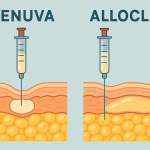
The single greatest advantage to synthetic injectable fillers for cheek enhancement is its immediate result. The hyaluronic acid-based fillers, such as Restylane or Juvederm, offer the greatest margin of safety because of their lack of inflammatory response and assured resorption profiles. Other fillers such as Radiesse and Sculptra offer longer results but a somewhat higher risk of soft tissue reactions to their particulated content. Composition aside, the biggest disadvantage to fillers is that they are temporary. (which is also their advantage) This makes them expensive to maintain over time if one likes the result. But they are actually a low cost approach to doing a trial cheek enhancement that is completely reversal. Using a microcannula delivery technique, injectable fillers can now be delivered painlessly and without bruising.

On the surface, fat carries with it many of the same features as synthetic materials because it is injected. But beyond being injectable, it is a very different filler material. Because it is harvested from each individual patient, there is no chance of any inflammatory reaction and a very low risk of infection. It’s other tremendous advantage is that there is no limit on the volume that can be injected (in the small face) and its inherent composition of stem cells has its own list of theoretical advantages. In addition, it is done for a set procedure price rather than by a cc cost for synthetic fillers. It is similarly injected by small cannulas so placement can be very exact without bruising. The best fat placement is down at the bone level and in the muscle, where survival is better. But with all these advantages comes two distinct disadvantages…it is a minor surgical procedure and there is no assurance as to how much fat will survive. For these reasons, fat grafting is often advocated when the patient is in surgery for other procedures (e.g., facelift, lkipsouction etc) or the patient has been previously qualified by having had successful cheek augmentation with synthetic fillers.

Implants offer the one permanent method of cheek enhancement. With no external scarring as a result of being placed from inside the mouth, implants are not only permanent but can provide the most dramatic of cheek augmentation effects. The most difficult aspect of using cheek implants is selecting the proper style and size. With dozens of implant options the choices can be overwhelming and there is no clear-cut quantitative way to know what effect the implant will create in any particular patient. It can also be surprising how much change can occur in the cheeks from what appears to be a relatively small implant.The cheek is a very volume-sensitive area. So it is always better to ‘undersize’ or choose a size below what you think you should use in many cases. The disadvantages to cheek implants are infection, displacement and asymmetry. Fortunately infections are very uncommon and displacement can be circumvented by securing the implant position with small self-tapping screw fixation. Avoiding asymmetry is a matter of experience and matching carefully the position of the implant in reference to various bony landmarks.

With three cheek augmentation options available, how does any patient know what is best for them? Cheek augmentation is a lot more art than it is science and appreciating the underlying bony anatomy, the overall facial shape and what look the patient is after is key. But you have to take the whole patient into analysis not just the cheeks. Thin people with low body fat may do poorly with fat grafting, the devout non-surgery patient can only have synthetic fillers, or those seeking the most efficient and long-term method may opt for implants. Good cheek results defy a cookie-cutter approach and the most natural outcomes come from knowing how to use all three…occasionally even blending two of the techniques together.

Dr. Barry Eppley

Indianapolis, Indiana

Brow Augmentation by Fat Injections

Monday, March 18th, 2013

One of the reasons that fat grafting has become so popular in plastic surgery is its versatility. Because of small cannula delivery techniques, fat grafts can literally be placed just about anywhere in any amounts. This has led to fat grafting becoming a near universal method for soft tissue augmentation and, more selectively, bony augmentation. While there are issues with how well fat grafting works (how much fat survives), its ease and precision of placement makes it appealling nonetheless.

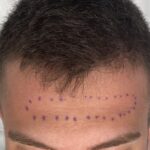
The role of aesthetic facial fat grafting is to add volume providing a rejuvenation effect. This can be done in all regions of the face, although it is more commonly done in the midfacial and perioral regions The upper face, consisting of the forehead and brow, is well known to be treated with it mostly being done for temporal hollowing in the lateral forehead. The flatter surfaces of the forehead are a far different challenge as providing a significant augmentative effect that is smooth is virtually impossible with injection fat grafting. Brow augmentation, however, is a much smaller area and creating an enhanced ridge is am easier shape to achieve and maintain.

Isolated brow augmentation is done for different reasons that a total forehead augmentation. It is almost exclusively done in men who want a stronger and more masculine appearance through the creation of a more prominent brow ridge and visible brow break into the forehead. It may also be attempted because of the desire to have a bit of a browlift or to camouflage skeletonization of the orbital rims. To determine if fat grafting is a good option, one should first have a trial of an inexpensive injectable filler to ensure that any injection approach can create the desired brow look.

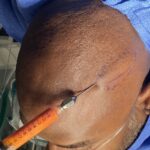
In fat grafting to the brow, there are two main considerations. First the typical volume needed is around 2 to 5cc per brow. Although the fat harvest must usally be twice this amount to get a good concentrate, such low volumes makes it possible for even thin patients. Second, like in all fat grafting, a even linear distribution of the fat is needed throughout the brow. Small microcannula delivery through a small entrance nick inside the midportion of the eyebrow allows access to the entire brow. It is important to avoid traumatizing the supraorbital neurovascular bundle whose location can be felt as a notch on the lower end of the brow bone.

While there are more precise and completely predictable methods of brow augmentation using bone cements, these require an open scalp approach and a resultant scar. This hardly seems justified when the amount of brow augmentation needed is relatively minor or isolated just to the brow ridge. Despite the unpredictability of fat injection survival, its simplicity makes it an appealing option for brow enhancement.

Dr. Barry Eppley

Indianapolis, Indiana

Fat Grafting for HIV Lipoatrophy

Sunday, March 10th, 2013

Lipoatrophy is a well knownside effect that can occur in patients who have been treated with antoretroviral therapy for HIV. The devastating facial changes that occur with progressive loss of facial fat has a very negative impact on the quality of life for those so affected. Two basic treatment strategies  have been used for facial volume improvement including the historic use of synthetic fillers (poly-L-lactic acid, Sculptra) and, more recently, fat transfers.

Fat grafting has significant advantages over the use of any synthetic filler for a variety of aesthetic and medical conditions, including lipoatrophy. Despite the appeal of fat grafting, there are understandable concerns about how well it will work and how durable it might be. In a disease condition like facial lipoatrophy in HIV, one can not help wonder how could injected fat hold up when the underlying condition that is being treated is a fat wasting process.

In the March 2013 issue of Plastic and Reconstructive Surgery, an article was published entitled ‘ Autologous Fat Grafting and Injectable Dermal Fillers for Human Immunodeficiency Virus-Associated Facial Lipoatrophy: A Comparison of Safety, Efficacy, and Long-term Treatment Outcomes’. A literature review was done of 19 published studies which comprised 724 patients, 549 which were treated by synthetic injectable fillers and 175 by autologous fat injections. Patient satisfaction and effectiveness was similar between the two injection treatments. The use of Sculptra was associated with a reinjection rate 3X that of fat and had a subcutaneous nodule formation of 22%.

This literature review states that fat grafting was both effective in the majority of facial lipoatrophy patients and usually only required a single treatment. Where should the fat be harvested from for the procedure? The authors of this paper indicate that sites of hypertrophy such as the abdomen or the neck (buffalo hump) are convenient because they offer not only a very visible target but also treat another part of the overall syndrome.

In an accompanying discussion to this paper, two important points were brought out. First, patients need to appreciate that facial fat loss is progressive to the point that wasting of all native facial fat will eventually occur. So even though fat grafting is done, and all injected fat may even survive, postoperative facial volume may still occur to some degree. Second, donor site harvests for fat should come from non-wasting fat areas such as the mounds along the anterior mammary ridges and their corollaries on the back.

Dr. Barry Eppley

Indianapolis, Indiana

Patient Testimonials: Facial Fat Injections

Sunday, February 17th, 2013


Just want to thank you…for two actually three reasons

First… It was a 100% HIT… That’s exactly where I wanted the fat grafts placed and needed it and I think you actually filled in the atrophic scar!! My learning experience with where to place it is that no matter where I think I need it, higher is better than lower as the youthfulness part comes from loss higher first then lower so replacing higher instantly youthens.

Second… Doing it under local…So much better!!! I would rather do two or three small timer hits under local than a major hit under general any day… Got to get up, walk out and fly home!

Thirdly, thank you and your staff for getting me… Ms impulsive and impatient… in so promptly!

Thanks again!

Tonya M

Atlantic City, NJ

Commentary

Fat grafting over the past decade has brought in an entirely new treatment option for facial contouring and rejuvenation. Using your own fat, which was once merely discarded after liposuction, has become recognized as the safest and most effective method for larger volume facial fills. Almost everyone has some fat available for harvest that can be processed and put in the face. With specific innovative techniques, fat can be harvested from the stomach, hip, inner thighs or knees and injected into the face for a variety of aesthetic issues from softening deep folds and lines, filling in acne scars, and augmenting weak skeletal features. But the greatest use of facial fat injections is in the aging face. The ability to restore loss volume in the face and reinflate a sagging hollow appearance can not be done very well or economically with most off-the-shelf synthetic injectable fillers. Your own fat has numerous unique advantages over any foreign material injected into your face. New advances in harvesting, concentrating and injecting your own fat has made it an important part of facial restoration and anti-aging treatments today. No longer is lifting and tightening alone the only way to turn back the hands of time on one’s facial appearance.

For the patient who does not have significant loss skin but has only lost volume (facial deflation) as in this patient’s testimonial, fat injections are an ideal treatment. No longer does one have to wait until the facial aging is so severe that major facelift surgery is warranted. Many fat injections can be done under local anesthesia and ‘spot fills’ can be selectively done to treat the earliest signs of facial volume loss.

Dr. Barry Eppley

Indianapolis,Indiana


Dr. Barry EppleyDr. Barry Eppley

Dr. Barry Eppley is an extensively trained plastic and cosmetic surgeon with more than 20 years of surgical experience. He is both a licensed physician and dentist as well as double board-certified in both Plastic and Reconstructive Surgery and Oral and Maxillofacial Surgery. This training allows him to perform the most complex surgical procedures from cosmetic changes to the face and body to craniofacial surgery. Dr. Eppley has made extensive contributions to plastic surgery starting with the development of several advanced surgical techniques. He is a revered author, lecturer and educator in the field of plastic and cosmetic surgery.

Read More


Free Plastic Surgery Consultation

*required fields


Pricing

The cost of any type of elective plastic surgery plays a major role in the decision to undergo the procedure(s).

Get Your Quote Here


My Plastic Surgery Story

Military Discount

We offer discounts on plastic surgery to our United States Armed Forces.

Find Out Your Benefits


Categories