EXPLORE
Plastic Surgery
Dr. Barry Eppley

Explore the worlds of cosmetic
and plastic surgery with Indianapolis
Double Board-Certified Plastic
Surgeon Dr. Barry Eppley

Archive for the ‘eyelid lift’ Category

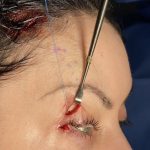
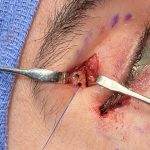
The Transconjunctival Lower Blepharoplasty Fat Transposition for Tear Troughs

Tuesday, May 21st, 2013

Hollowing or tear troughs of the lower eyelid are a common aesthetic periorbital concern. Numerous treatment approaches are used ranging from hyaluronic-acid based injectable fillers to the placement of synthetic implants. One autologous approach is the use of a lower eyelid blepharoplasty technique known as fat transposition. By relocating herniated lower eyelid fat into the tear trough area, a volumetric fill is achieved.

The lower blepharoplasty fat transposition method is a fairly simple technique. The herniated fat is close by and it is easily teased out and moved over the lower orbital rim. Fixing the relocated fat by sutures is done to the surrounding periosteum. An interesting question is whether the fat should be placed above or below the periosteum.

In the May 2011 issue of the journal Facial Plastic and Reconstructive Surgery, an article was published entitled

Transconjunctival Lower Blepharoplasty With Fat Repositioning: Retrospective Comparison of Transposing Fat to the Subperiosteal vs Supraperiosteal Planes’. Over a two-year period, 40 patients (27 women, 13 men, average age 58 years old) operated on by a single surgeon were retrospectively evaluated of which 20 patients had transconjunctival lower blepharoplasty with fat repositioning to the subperiosteal plane and the other 20 patients to the supraperiosteal plane. The aesthetic results and complications between the two techniques were compared.

They reported that the subperiosteal technique was more meticulous and less disruptive of normal anatomy and resulted in less bleeding. Supraperiosteal fat transposition surgery was faster but lead to more bruising, swelling, and with more evident temporary contour irregularities along the orbital rim. All patients had a high level of satisfaction. No differences were seen in the overall aesthetic results. The paper’s authors concluded that transconjunctival lower blepharoplasty with fat repositioning can be performed safely and effectively, whether fat is translocated to the subperiosteal or the supraperiosteal plane. Aesthetic results were similar between the two transposed fat locations.

Filling the tear trough with fat from the lower eyelid is an effective approach that has few complications, particularly without lower eyelid skin manipulation. (transconjunctival approach) While the subperiosteal location is a bit more tedious to perform, it offers better camouflage to the fat and a better place to engage suture fixation.

Dr. Barry Eppley

Indianapolis, Indiana

Case Study: Combined Browlift and Eyelid Lifts in Severe Periorbital Aging

Wednesday, April 17th, 2013

Background: The aging process around the eyes is classic. The near continuous motion of the eyelids creates loose skin and, with enough time and motion, the eyebrows will fall over the supraorbital rims and sag downward.. For many patients today, they have eyelid surgery early in life and never progress to see the extreme aging changes that can occur around the eyes.

But in its most extreme form, eyelid aging will develop hooding where the loose and excessive skin will fall down and even over the eyelashes. The eyebrow can even lie completely under the brow bone further accentuating the hooding effect of the loose upper eyelid skin. While such severe changes are usually seen in the elderly, it can occur in younger patients due to their natural genetics.

When there is a large amount of loose upper eyelid skin, it is tempting to think that a dramatic change can occur with its excision alone. But this does not take into account the powerful negative effect of a low brow position and its influence on obscuring the vertical space between the lashline and the brow. Without such a space a supratarsal fold can not be created no matter how much eyelild skin is removed.

Case Study: This 57 year-old female wanted to improve the aging appearance of her eyes.  She has severe upper eyelid hooding, a low eyebrow position and significant obstruction of her upper visual field. While she initially resisted the idea of a browlift with her blepharoplasties, she eventually resigned herself to the fact that failing to deal with her eyebrow position would limit how much of a blepharoplasty result would be seen.

Under general anesthesia, a pretrichial (hairline) browlift was initially performed with a beveled incision along the frontal hairline. Eleven mms of forehead tissue was removed from the center of the hairline tapering out into the temporal area. The browlift was secured into position with suture fixation through outer cortical skull bone holes and sutures to the galea. An upper and lower blepharoplasty was then done, removing skin only in the upper eyelid and skin and fat from the lower eyelid.

Her postoperative course had the typical swelling and bruising around the eyes which ensues with some expected temporary foehead and frontal scalp skin numbness. She looked fairly normal at three weeks after surgery and completely normal by 6 weeks after surgery. She not only looked more refreshed by had a dramatic improvement in her field of vision.

With severe periorbital aging, oen has to consider a more comprehensive surgical approach around the eyes. This would include a browlift as well as the four eyelids. the choice of browlift is based on the existing length of the forehead and the degree of brow ptosis.

Case Highlights:

1) Severe upper eyelid hooding and brow ptosis produces an combined aesthetic and functional obliteration of the eyes.

2) When the brow is low, even aggressive upper eyelid skin removal will not produce an adequate result.

3) A combined browlift and 4-lid blepharoplasties is needed to open up the eyes in severe aging changes.

Dr. Barry Eppley

Indianapolis, Indiana

Case Study: The Rejuvenative Effects of Blepharoplasty (Eyelid) Surgery

Tuesday, February 5th, 2013

Background: The constant movement of the eyelids and their thin skin makes for early and inevitable signs of aging. The eyelids almost always shows the signs of age first. It is also easily observed since the eyes are the fundamental focal point of human conversation. The signs of periorbital aging are always associated with such patient complaints as ‘I look tired’, ‘I look older than I feel’ and ‘My eyes feel heavy’.

Despite the relatively small amount of upper eyelid skin that naturally exists, it is incredible how much excessive and loose skin can be created. Often it appears that there is at least twice as much skin present than would normally exist in the upper eyelid as one ages. The amount of fat that comes sticking out (herniated) from below the eyeball to make up the lower eyelid bags can be equally impressive.

Case Study: This 55 year-old female wanted to improve the appearance of her tired and aging eyes. She had so much upper eyelid skin that it had fallen down onto her lashlines, partially obscuring her vision. Her lower eyelids had large bulging bags and wrinkled skin with numerous brown spots.

Under general anesthesia, a large amount of upper eyelid skin was removed. More skin was removed laterally (near the outer corner of the eye) than medially. (near the inner corner of the eye) On the lower eyelids, a skin-muscle flap was raised and the protruding medial, central and lateral fat pads were removed. The lower eyelid skin was conservatively trimmed of excess skin and the orbicularis muscle and skin resuspended out laterally.

Her postoperative course was typical for eyelid surgery with substantial swelling and mild bruising for the first ten days after surgery. Sutures were removed at one week after. By two weeks she looked nearly normal and by three weeks after the procedure she looked completely normal and non-surgical in appearance. Her last follow-up at three months after surgery showed a refreshed and rejuvenated periorbital appearance.

Blepharoplasty surgery has one of the highest patient satisfactions of all the rejuvenative facial plastic surgery procedures. Despite the small size of the eyelids, comparatively small amounts of skin and fat removal can make for a dramatic change in appearance. Every blepharoplasty patient’s goal is to look refreshed, maintain a natural appearance and avoid complications. This is done by not removing too much eyelid skin, particularly on the lower eyelid.

Case Highlights:

1) Aging of the eyes occurs by hooding of the upper eyelid skin and bulging of lower eyelid fat. Both eyelids develop increased wrinkles and skin rolls.

2) An upper blepharoplasty removes excess skin and recreates an upper eyelid crease and sulcus

3) A lower blepharoplasty removes or relocates herniated fat and removes a conservative amount of skin with corner of the eye tightening.

Dr. Barry Eppley

Indianapolis, Indiana

Case Study: Upper Blepharoplasty (Eyelid Lifts) Under Local Anesthesia

Saturday, January 12th, 2013


Background: Some of the earliest signs of facial aging affect the eye area. The frequent sphincteric closure of the eyes and their thin skin ensures that aging will appear first on one’s face.  One of the inevitable eye changes is the development of extra skin on the upper eyelid. Due to the constant opening and closing of the upper eyelid, which moves a lot more than the lower eyelid, the development of stretched out skin is inevitable.

When it becomes significant enough, the extra skin will hang over the natural crease of the eyelid and eventually can hang down onto the lash line. This is known as upper eyelid hooding. The removal of this hooded upper eyelid skin is the primary objective of upper eyelid blepharoplasty, also known as eyelid tucks or lifts. With this skin removal, the overhang is removed and the natural crease or inward fold of the upper eyelid is seen again. While part of the underlying orbicularis muscle has historically been part of an upper blepharoplasty, contemporary techniques now seek to preserve it and to only remove skin.

Given the small area that eyelids occupy, it is not an uncommon request to ask if it can be performed under local anesthesia. While the use of local anesthesia for a blepharoplasty does not shorten one’s recovery from the swelling and potential bruising of the surgery, it does save anesthesia fees and the short-term issues related to having been put to sleep. The infiltration of local anesthesia can penetrate the thin tissues of the eyelid very effectively for a profound numbing and vasoconstrictive effect.

Case Study: This 50 year-old female wanted to remove her excessive upper eyelid skin. It was making her eyes feel heavy and gave her a tired appearance. She was happy with how her lower eyelids looked and only want the upper eyelid skin removed. She had numerous surgeries perform in the past under local anesthesia, including her first breast augmentation, and felt comfortable with a local anesthetic approach for the much smaller eyelid area.

In a surgical suite setting, markings of the amount of skin to be removed were done with her opening and closing her upper eyelid to ensure that the complete skin overhang would be removed. Then 1cc of 2% xylocaine with 1:100,000 epinephrine solution was injected into each upper eyelid. Ten minutes was allowed to achieve its maximal effect which is evident by skin blanching. The marked skin was then excised, removing just a very small strip of muscle with it. Closure was done with a combination of dissolevable and permanent sutures. Only antibiotic ointment was used for dressing.

She experienced some swelling and no bruising. Her sutures were removed a week later and she missed only a few days of work. When seen at one month after surgery, she had a more open and refreshed look to her eye area.

Blepharoplasty surgery can be very successfully done under local anesthesia. But it can not be so effectively used on the lower eyelid because of constant eyelid movement with the inability of the patient to not look at the ongoing surgery. Upper blepharoplasty is done with the patient’s eyelid closed and done from above or to the side of the patient, both maneuvers which prevent the patient from potentially seeing what the surgeon is doing. Thus lower eyelid surgery or combined upper and lower blepharoplasty surgery is best done under sedation or general anesthesia.

Case Highlights:

1)      A blepharoplasty (eyelid lift) is very effective for eliminating hooding and skin overhang of the upper eyelid.

2)      An isolated upper blepharoplasty can be comfortably done under local anesthesia for many patients.

3)      Recovery from upper blepharoplasty can be very rapid and one looks reasonable in 7 to 10 days after surgery.

Dr. Barry Eppley

Indianapolis, Indiana

Rejuvenation of the Aging Lower Eyelid and Cheek

Wednesday, December 19th, 2012


There are many signs of facial aging but most people are usually concerned with what happens around the eyes first. The classic presentation of periorbital aging is a progression of tissue changes including excess lower eyelid skin, protruding orbital fat (bags), lower eyelid instability and the falling of the adjacent cheek tissues. (malar descent) While the upper and lower eyelid ages similarly in any person, the scope of the lower eyelid is actually bigger if you include the surrounding cheek regions. Thus the lid-cheek region is a frequent target for facial rejuvenation efforts.

Traditionally, these aging changes were managed by a standard lower blepharoplasty operation which involved an elongated lower eyelid incision and removal of skin and fat. While this basic operation still works well for many lower eyelid concerns, it is known to have potential lid malpositioning problems with risks of ectropion (lid sagging) and separation of the globe-lid intimacy. The precarious suspension support of the lower eyelid is prone to being disrupted by incisional placement, delamination of the lower eyelid tisues with lack of orbicularis muscle integrity near the lid margin, unrecognized weakness of the lateral canthal tendon and over-resection of lower eyelid skin.

One lower eyelid rejuvenation trend that has become commonly used over the past decade, partially as a response to the risk of ectropion, is the transconjunctival approach. Avoiding skin resection and an external lid incision, herniated orbital fat can be removed or repositioned through button hole sized incisions on the inside of the lower eyelid. While protruding orbital fat was once uniformly removed, it is now frequently being preserved and used as a filler for tear troughs, nasojugal grooves and creating rim augmentation to smooth out the lid-cheek junction. Because the blood supply to the overlying lower eyelid skin is preserved, skin resurfacing for wrinkles can be done with lasers or chemical peels.

One evolution of lower eyelid rejuvenation, which is the opposite of a transconjunctival blepharoplasty, is the extension into simultaneous cheek rejuvenation as well. These so-called cheek or midface lifts are a collection of procedures whose technical differences can be as diverse as the surgeon who performs them. Lifting up sagging cheek tissues through a full lower blepharoplasty incision and securing to some location along the zygomaticorbital bone, or even higher to the temporal and forehead regions, allows them to sit back up or higher on the cheek bone. But because it is a more invasive and extensive procedure with much wider tissue dissection than a lower blepharoplasty, it ironically has an even higher risk of ectropion and lower lid scarring problems if not executed to technical perfection.

While it can cause it, these cheek lifts can also be used to treat lower eyelid retraction problems as well. Lifting and supporting the surrounding cheek tissues can relieve the tension on the repositioned lower eyelid at the lateral orbital wall. Releasing the lower eyelid scar, retightening or remaking the lateral canthus and some cheek tissue release and resuspension can be very effective for getting the outer aspect of a retracted lower lid back up against the globe.

Dr. Barry Eppley

Indianapolis, Indiana

Dry Eyes After Blepharoplasty (Eyelid Lift) Surgery

Thursday, October 25th, 2012


Blepharoplasty or eyelid lifts are one of the most common types of anti-aging facial surgery. Their results are usually so significant that they have earned the moniker of best ROI (return on investment) in the face. Changing that tired look to a refreshed one can be a significant change which just makes one look more alert and fresher. While the procedure usually causes some significant swelling and bruising, there is usually little pain other than some tightness.

But unlike tightening the neck and jawline, removing excess skin and fat around the eyes and tightening them always runs the risk of causing some eye symptoms. The eyelids do play a vital role in eye protection and lubrication which is easily overlooked…until some change in their closure function occurs. Eyelid lifts do temporarily interfere with eyelid closure, particularly when all four eyelids are done simultaneously, and this can cause some decrease in their lubrication function.

While dry eyes are a known risk in blepharoplasty surgery, how frequent does it usually occur? Such was the focus of a study published in the  October  2012 issue of the Archives of Facial Plastic Surgery from a large blepharoplasty population out of one surgeon’s practice in Indianapolis Indiana. From nearly 900 patients who had eyelid lifts done over a 10 year period, the incidence of dry eyes both before and after surgery was followed. Around 25% had some degree of dry eyes after surgery and another quarter of the patients also reported swelling of the lining of the eyelids known as chemosis. Often these two occurred together in patients who had all four eyelids done together as opposed to just uppers or lowers eyelids. Most of these eye side effects were temporary and routinuely managed by eye drops and/or ointment.

This study shows that dry eyes are not rare after eyelid lift surgery and is a direct result of disrupting the blinking action caused by the orbicularis muscle. When the blink reflex is decreased, particularly when eyelid closure may be incomplete, the cornea lacks adequate protection from the inadequate spread of the tear film. This results in dry eye symptoms and swelling of the eyelid lining (chemosis) as it strives to regain competence of globe protection.

Dry eyes do not happen to everyone after blepharoplasty surgery and some patients have signs of increased risk beforehand. A loose or lax lower eyelid surgery is the most recognizeable one as well as anyone that reports a history or active dry eye problem. This study interestingly showed that the risk is higher in patients on hormone replacement therapy although the exact reason is unknown.  (more women over 50 have the procedure than men)  Aggressive surgery can also cause the problem when too much skin is removed from the lower eyelid, internal canthal suspension procedures are done or aggressive midfacial lifting techniques are simultaneously performed.

While dry eyes after blepharoplasty is usually a temporary problem, it is not pleasant when the patient is going through it if it is significant. Avoidance is always the best treatment and that comes with recognizing the high risk patient and avoiding aggressive lower eyelid surgery which is almost always is the culprit. This may mean less skin removal on the lower eyelid or using an inner eyelid approach (transconjunctival) instead.

Dr. Barry Eppley

Indianapolis, Indiana

Case Study: Blepharoplasty for Puffy Eyes in Men

Tuesday, August 28th, 2012


Background:  The eyes may be the window to the soul but there are also good indicators of how the face is aging externally. Aging first starts around the eyes and continues to progress as one gets older. This occurs because of the frequent motion of the eyelids and the orbicularis muscle that surrounds them. It develops quickly not only because of the muscle activity but also because the skin is thin and not very resistant to wrinkling and loss of elasticity.

The aging changes seen in the eyelids are classic with the development of excess eyelid skin and hooding, protruding lower eyelid fat and skin rolls and wrinkles that radiate outward in the crow’s feet area. These aging periorbital features are no different between men and women with the exception that men can develop more upper eyelid hooding due to thicker skin and more significant lower eyelid fat herniation.

While how the eyes age may not be gender different, when they appear for surgical correction frequently is. Men tend to appear much later in the aging process and at an older age. Thus their eyelid aging changes are frequently more advanced. Women tend to appear in the 40s and 50s when the eyelids aging is more moderate. Conversely, men appear more frequently in their 50s and 60s with more severe manifestations.

One of the great fears of men undergoing any facial rejuvenation surgery is that they will appear unnatural or have an operated look. They all seem to point to certain celebrities, such as Kenny Rogers, for how they do not want to look like after surgery. They are very interested to know how that postoperative look/problem is going to be avoided.

Case Study: This 65 year-old male wanted to improve his tired look. He had thick Mediterranean skin with few wrinkles and little sagging. But his eyes look heavy with excessive upper eyelid skin and a large amount of herniated fat in the lower eyelids. His lower eyelids were very puffy and were more swollen in the morning or if he was very tired. He only wore reading glasses and did not wear contacts.

Under general anesthesia, he underwent upper and lower blepharoplasties. A fair amount of skin was removed from the upper eyelids with a small strip of orbicularis muscle. More was removed from the temporal aspect than from the central and medial aspect of the eyelid. The lower eyelids were treated by aggressive removal of the medial, central and lateral fat pockets which had significant protrusion. Only a few millimeters of lower eyelid skin was removed with suspension of the orbicularis muscle at the lateral canthal area. All dissolveable sutures were used with the exception of the lateral canthal extensions of the upper and lower eyelid incisions.

Like most men he developed a significant amount of swelling and bruising, particularly of the lower eyelids. It took about two weeks before he looked non-surgical and a full three weeks until he looked perfectly normal. The redness of the eyelid incisions took six weeks to become unnoticeable.

The key to a natural look in male blepharoplasty is to avoid over-resection of tissues, particularly skin. Too much skin removal creates a tight look and is prone to lower eyelid retraction. (ectropion) It is much better and more natural looking if there is still a few wrinkles left behind and a little aging present. This approach also lowers the risk of dry eyes in the older male patient who is at a greater risk for this problem.

Case Highlights:

1)      Aging of the face first begins around the eyes and progresses eventually to upper eyelid hooding and herniated lower eyelid fat pads.

2)      Men frequently delay eyelid rejuvenation surgery until the process is advanced with severe lower eyelid bags and very heavy upper eyelids.

3)      Successful and natural-looking eyelid surgery in men avoids over-resection of tissues and a wide-eyed surprised look.

Dr. Barry Eppley

Indianapolis, Indiana

Fractional Laser Periorbital Rejuvenation of the Eyelids and Brows

Wednesday, April 18th, 2012

The eyes may be the window to the soul but they are also a measure of aging. Because of the expressive movement of tissues around the eye and the thinness of the skin, this area shows the first sign of aging changes on the face. The sphincteric action of the orbicularis oculi muscle generates an array of radiating wrinkles to the side and below the eye and exerts a downward pull on the eyebrow. Because we look at this area with great frequency, often the first thing we look at in a mirror, the development of wrinkling is quickly discovered.

Surgical removal of eyelid skin (blepharoplasty) and elevation of the eyebrows (browlift) are well known and effective strategies for periorbital aging. But they are best used in moderate to advanced stages of aging. In addition, some people simply don’t want surgery whether it is because of the recovery or the cost.

The use of lasers for facial wrinkle reduction is well known and has been around now for over two decades. But their use around the eyes and on the eyelids where the skin is thinner is the use of lesser depth laser treatments known as micropeels but with more restricted depths of penetration come less results as well.

The newer fractional laser treatments offer a paradigm shift is how laser energy is delivered. Rather than being ablative to 100% of the treated skin, the fractional laser treats but a portion of the surface. Rather than producing a complete layer of burn tissue, columns are created instead. This leaves a lot of uninjured skin between the vertical columns which allows for faster healing and less risk of scarring. But each column does deeper down into the dermis, creating a collagenous remodeling effect.

When fractional laser treatments are applied in the periorbital area, significant improvements have been reported in numerous clinical studies. Measurable improvements have been seen in reduction of wrinkles, skin tightening and eyebrow elevation. This was found to be true in all skin types, including those with darker pigmentations. The results come exclusively from the changes in the skin and such problems as fat herniation, significant malar and brow sagging and orbicularis muscle hypertrophy will not be improved by this or any form of laser resurfacing.

The caveat to success with fractional laser periorbital rejuvenation, and being able to treat the eyelids directly, is the use of low energies and multiple treatments. This allows for both safety with minimal risk of any adverse scarring and very quick recoveries in the order of a few days. Spaced about six weeks to eight weeks apart, a series of three or four treatments is needed to get the best results. One should anticipate a single maintenance treatment per year. It is also important to use a good topical regimen daily with both exfoliative and regenerative agents such as retinoic acid and ascorbic acids.

The use of the fractional laser offers a new treatment option for the aging eyelids and brows. Some have termed this the fractional eyelid lift or the ‘Madonna Lift’. But names aside, this laser treatment provides an intermediary step before surgery that can serve as an effective treatment for those with early sign of aging or as a delay manuever before blepharoplasty surgery is done later.

Dr. Barry Eppley

Indianapolis, Indiana

Case Study: Blepharoplasty in Dry Eyes and Lax Lower Eyelids

Monday, January 23rd, 2012

Background:Aging of the eyes is both an unavoidable eventuality for everyone and the first and most noticeable place on the face that it occurs. The classic findings are heavy or extra skin on the upper eyelids and bags on the lower eyelids. This combination makes for a tired or older appearance that is recognized by everyone since most of how people see and remember our face is in the eye area.

While these findings are typical periorbital signs of aging, why do they occur? Since most of eyelid closure comes from movement of the upper eyelid, its thin skin is prone to become lax and wrinkled. It eventually falls down into the eyelashes obliterating the supratarsal fold and making the upper eyelid heavy. The bags on the lower eyelids come from herniated fat. As the lower support structures between the tarsusand the lower eye socket edge weaken, fat that is normally under the eye as a supportive cushion protrudes forward. As it bulges past the vertical plane of the infraorbital rim, it appears a bag-like protrusion. This combined with the development of wrinkled and sagging skin give the lower eyelid its baggy and sagging appearance.

Case Study: This 55 year-old female from Indianapolis Indiana wanted to make her facial appearance fresher and less tired. She felt her eyes were her biggest problem and wanted to get rid of her loose skin and bags. She had an eye history of having had Lasik surgery two years previously and had some mild dry eyes since. On examination her lower eyelid was lax with a delayed snapback test.

Under general anesthesia, she underwent upper and lower blepharoplasty. On her upper eyelids, excess skin and a small strip of orbicularis muscle was removed along her existing supratarsal crease line. No fat was removed. On the lower eyelids the three fat pockets were removed and a small strip of skin excised. (3mms) A canthopexy procedure was performed because of her lax canthal tendon. The skin was closed using an orbicularis muscle suspension technique prior to a superolateral sweep for the skin closure.

Her skin sutures in the lateral canthal area were removed one week later. It took her a full three weeks for all swelling and bruising to completely resolve. She did return to work ten days later and felt comfortable enough to do so with a little make-up. She had no problems with tearing or dryness of her eyes in her recovery.

While blepharoplasty surgery can make a big difference in the appearance of one’s eyes, it is important to recognize that eyelid function must not be disrupted. Management of the lower eyelid is usually the key to preventing postoperative problems. Not removing too much skin and providing tendinous and muscular support onthe lower eyelid will minimize the risk of ectropion or lower eyelid retraction.

Case Highlights:

1) Aging eyes have extra upper eyelid skin and lower eyelids bags which bother the owner the most.

2) The emphasis of blepharoplasty surgery is removal of skin in the upper eyelid and fat removal in the lower eyelid.

3) Successful and uncomplicated blepharoplasty surgery is based on judicious skin and fat removal with management of a lax lower eyelid if necessary.

Dr. Barry Eppley

Indianapolis, Indiana

Case Study: Upper Blepharoplasty and Browlift For Vision Obstruction

Thursday, November 3rd, 2011

Background:  Aging is a lifelong process that is both relentless and progressive. In the face, the earliest signs of aging occur around the eyes. Beginning with wrinkles and eventually ending up with sagging eyelid skin and brows, the eyes and its surrounding structures (periorbital region)  show the range of manifestations that occur with the aging process. Because the eyes are the most visible area seen in every human interaction, their appearance has an influence on the perception of how one is perceived by others. But aging can also affect the main function of the eyes which is to see clearly.

In the latter stages of periorbital aging, usually ages 60 and beyond, the issue of aging goes beyond merely that of wrinkles. Upper eyelid skin becomes so excessive that skin hangs down on the eyelashes, creating not only a heaviness but impinging on one’s upper visual field. Without even knowing it, one loses how much light enters the eyes and the world becomes ‘darker’  and smaller in scope. and  The amount of upper eyelid skin rolling over onto the lashes is made even greater if the eyebrows have also dropped. Sagging eyebrows push the upper eyelid skin lower, dragging the level of the upper eyelid down creating a pseudoptosis appearance.

Case Study: This 69 year-old female presented with heavy eyes and an almost squinting appearance. She felt she looked tired and had a constant feeling of skin on her eyelashes. She regularly pulled up on her brows and eyelids to lift up the overhanging skin. Her eyelashes were completely covered by upper eyelid skin and were not visible. Her eyebrows were slightly below the brow bones. Visual field testing showed that almost all of her upper fields were obscured.

Under general anesthesia, an upper periorbital rejuvenation surgery was done. The first step in her procedure was to do a browlift. Because of her already long forehead, an open browlift was done using a hairline or pretrichial approach. Approximately one centimeter of skin was removed in the midline tapering out into the temporal areas. After the browlift, an upper blepharoplasty was done removing a large amount of skin and a small amount of orbicularis muscle. Her total procedure time was 90 minutes and she was discharged to home a few hours later.

Her frontal hairline and upper eyelid sutures were removed one week after surgery. Her swelling at that point was still discernible with some small amount of bruising. When seen just three weeks after surgery, she looked completely ‘non-surgical’. Her biggest comments were in how everyone told her how much more refreshed she looked and that she could see so much better. She noted how much brighter everything looked with some much more light being seen. She has to start wearing sunglasses again when outside because of the brightness.

Case Highlights:

1) Opening up the aging periorbital region through upper eyelid tucks and a browlift can make a dramatic difference in one’s appearance and how it is perceived.

2) When considering an upper blepharoplasty (eyelid tuck), consideration must be given to the position of the eyebrow and the possible need of a browlift.

3) A good periorbital rejuvenation result makes one look refreshed and less tired but does not make one look like a different person.

Dr. Barry Eppley

Indianapolis, Indiana


Dr. Barry EppleyDr. Barry Eppley

Dr. Barry Eppley is an extensively trained plastic and cosmetic surgeon with more than 20 years of surgical experience. He is both a licensed physician and dentist as well as double board-certified in both Plastic and Reconstructive Surgery and Oral and Maxillofacial Surgery. This training allows him to perform the most complex surgical procedures from cosmetic changes to the face and body to craniofacial surgery. Dr. Eppley has made extensive contributions to plastic surgery starting with the development of several advanced surgical techniques. He is a revered author, lecturer and educator in the field of plastic and cosmetic surgery.

Read More


Free Plastic Surgery Consultation

*required fields


Pricing

The cost of any type of elective plastic surgery plays a major role in the decision to undergo the procedure(s).

Get Your Quote Here


My Plastic Surgery Story

Military Discount

We offer discounts on plastic surgery to our United States Armed Forces.

Find Out Your Benefits


Categories