EXPLORE
Plastic Surgery
Dr. Barry Eppley

Explore the worlds of cosmetic
and plastic surgery with Indianapolis
Double Board-Certified Plastic
Surgeon Dr. Barry Eppley

Archive for the ‘buttock implants’ Category

Evaluating the Intramuscular Technique for Buttock Implant Augmentation

Sunday, April 14th, 2013


Synthetic implants are the original method of buttock augmentation. While supplanted in numbers by the Brazilian Butt Lift (fat injections), buttock implants are still a good option for the properly selected patient. Implants offer assured permanent buttock augmentation and are the only option for those patients who have inadequate fat stores for liposuction harvest.

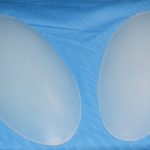
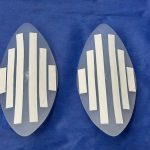
Buttock implants have an undeserved reputation of a high incidence of postoperative complications. If put in by an inexperience surgeon, a very large implant is placed or a purely subcutaneous implant position is used, complications will likely ensure. But a properly sized implant (350cc or less) placed in an intramuscular position is associated with a lower risk of potential complications.

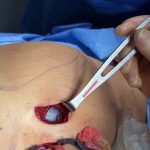
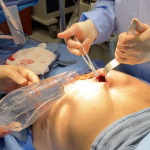
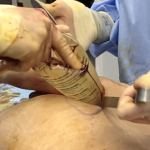
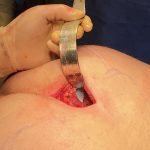
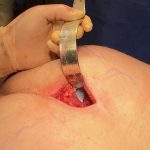
This newer intramuscular technique for buttock augmentation is interesting because of the implant position. Unlike breast implants which are placed completely under the muscle, the intramuscular technique for buttock implants splits the gluteus maximus muscle. This buttock technique is very technique-sensitive and it takes some good experience to avoid going too deep under the muscle or going too superficial and perforating the outer surface of the muscle.

But does the intramuscular technique with the pressure of an implant cause any long-term problems? This was the intent of a study published in the February 2013 issue of the journal Plastic and Reconstructive Surgery entitled ‘ Intramuscular Technique for Gluteal Augmentation: Determination and Quantification of Muscle Atrophy and Implant Position by Computed Tomogtraphic Scan’. Twenty-three women who had buttock implants of either a round or oval base were studied by computed tomogtraphic (CT) scans to determine implant position and the degree of muscle atrophy by using CT scans done before and at 3, 6 and 12 months after surgery. All patients showed some muscle atrophy which ranged from 2 to 5% on either muscle side. All oval implants had rotated from a vertical orientation to an oblique direction.

These study results convincely show that the intramuscular technique results in a minimum of muscle atrophy with no physical sequelae as a result. All buttock implants stayed within the created pocket without displacement or migration.

While the intramuscular implant technique does have more of a recovery and is harder to technically do, it is a very safe technique that produces good long-term buttock augmentation results.

Dr. Barry Eppley

Indianapolis, Indiana

Buttock Implant Augmentation – Surgical Technique, Outcomes and Complications

Friday, April 12th, 2013

Enhancement of the buttocks has become a very popular cosmetic procedures whose numbers are far greater today than they were just ten years ago. Much of this increase has been seen with the use of fat injections, known as a Brazilian Butt Lift. Offering a natural method of buttock augmentation and getting the dual benefit of liposuction reduction of the harvest areas, fat injections are in high demand particularly amongst African-American and Hispanic patients.

But not everyone who wants buttock augmentation has enough fat tissue to harvest and must consider the use of synthetic implants as an alternative treatment option. There are also some Brazilian Butt Lift patients that have had unsatisfactory amounts of buttock enlargement due to loss of the injected fat or marginal donor tissue when the procedure was performed.

Even though the number of buttock implants pales in comparison to the number of fat injections performed annually, more implants are placed today than ever before. You can call the increased use of implants as riding the wave of the buttock augmentation trend. But despite their increased use, there are few studies that have ever looked at how well they perform and what their complication rates are. It is understandably presumed that buttock implants have higher rates of potential complications that fat injections but the actual numbers is not really known.

In the April issue of the journal Plastic and Reconstructive Surgery, an article appeared entitled ‘ Buttock Augmentation with Silicone Implants: A Multicenter Survery Review of 2,226 Patients’. Based on a survery results obtained from 19 plastic surgeons that regularly perform buttock implants, their surgical technique and complications rates were obtained. Over two-thirds of the plastic surgeons favored an intramuscular location for implant placement and were evenly split over a single or dual gluteal cleft incision. Surgical time averaged under 3 hours and most plastic surgeons used drains for several days after surgery. The total number of complications were reported were near 40% with the most common one being incisional separation. Seromas and infections occurred in less than 4% of patients for each type of fluid accumulation. Implant removal was done in less than 4% of the patients due to infection, seroma or chronic pain.

Despite buttock implants being perceived as having a high rate of complications and patient dissatisfaction, no real data has ever been amassed to support that belief. In fact, this article demonstrates that the complications rates from buttock implants is very similar to breast implants. Interestingly, no differences in complication rates were seen between intramuscular or subfascial implant placements.

While the recovery and potential complications with buttock implants is higher than that of fat injections, it can be perfromed safely and effectively using a variety of management strategies. These include not using too large of an implant, good incisional closure techniques, the use of IV and irrigating antibiotics, draining the implant site for days after surgery and keeping physical activity restricted in the immediate after surgery period.

Dr. Barry Eppley

Indianapolis, Indiana

Postoperative Instructions: Buttock Implants

Monday, March 11th, 2013


1. Buttock implants are associated with a significant amount of pain in the first few days after surgery. Take your pain medications (narcotics) as needed. That would be 2 to 3 tablets every 3 to 4 hours as needed.

2.  You will have an above the knee compression girdle placed on right after the surgery that you will wear home. The garment is there for comfort so wear it afterwards every day if it feels better on. You may remove the garment and shower the next day after surgery.

3.  The incision between your buttocks will be covered with glued on tapes. There is no care needed for it. It is ok to get it wet and it will likely get loose in the first week after surgery.

4. The tapes on your incisions will be removed by Dr. Eppley at your first follow-up visit. Most of the sutures will be dissolvable and underneath the skin. There will be several support sutures on the outside which will be removed two or three weeks after surgery.

5. Sitting on your buttocks will be uncomfortable and should be avoided for the first few days after surgery. It will likely be more comfortable initially to lay on your stomach or back. While you can’t hurt the implants by sitting on them, it will be a few days until that feels more comfortable.

6. Wear whatever clothes feel comfortable. Initially loose clothing like sweatpants is best.

7. Numbness of the skin around the buttocks is normal after this kind of surgery. Normal feeling will return in a few weeks after surgery.

8. Avoid exercise of any kind for four weeks after surgery so breakdown (opening) of the incisions can be prevented. Too much activity too soon is the main reason why problems with healing of the incisions occurs.

9.   You may drive when you feel comfortable and can react normally and are off pain medication. It is all about how comfortable sitting on your buttocks is before you can drive.

10.  If any redness, tenderness, or drainage develops after the first week of surgery, call

Dr. Eppley and have your pharmacy number ready

Consent for Plastic Surgery: Buttock Implants

Sunday, March 10th, 2013


Every plastic surgery procedure has numerous issues that every patient who is undergoing a procedure should know. These explanations are always on a consent form that you should read in detail before surgery. This consent form, while many perceive as strictly a legal protection for the doctor, is actually more intended to improve the understanding of the buttock implant augmentation procedure. The following is what Dr. Eppley discusses with his patients for this procedure. This list includes many, but not all,of the different outcomes from surgery. It should generate both a better understanding of the procedure and should answer any remaining questions that one would have.

ALTERNATIVES

The alternatives to increasing buttock size without implants are fat injections.

GOALS

The goal of implants is to improve the shape and overall size of the buttocks.

LIMITATIONS

Buttock implants will not significantly lift the buttocks and is designed to improve volume (size) and change their shape, usually affecting the upper and middle portions of the buttocks.

EXPECTED OUTCOME

Expected outcomes include the following: temporary pain and swelling of the buttocks, a temporary unnatural firm feel of the augmented buttock, and numbness of the skin overlying the buttock which usually resolves. It may take several months before the final shape and appearance of the buttocks is achieved.

RISKS

Complications may include bleeding, infection, buttock implant asymmetry, differing positions of the implants, hardening of the implants (capsular contracture), pain with sitting, pain with exercise, inadequate shape or size of the buttocks, or chronic fluid build-up around the implant (seroma) Replacement or repositioning of the implants may be necessary should infection, asymmetry, or hardness of the implants develops.

ADDITIONAL SURGERY

There are many variable conditions to risk and potential surgical complications that may influence the long term result from buttock implants. Should complications occur and additional surgery needed, this will generate additional costs.

Dispelling Common Myths of Buttock Enhancement

Monday, January 14th, 2013


The desire for fuller and more uplifted buttocks is one of the most popular body contouring requests in the past few years. When it comes to the buttocks, the issues mainly consist of its size and shape as well as the texture of the overlying skin. Implants, fat injections, liposuction and cellulite treatments are available for the cosmetic improvement of the buttocks. But because of their relative newness of buttock enhancement procedures, there are many misconceptions and myths about them. Here are some of the most common butt myths.

Liposuction can help get rid of cellulite on the buttocks. The search for an effective cellulite treatment has been ongoing for years and to say that it is elusive is an understatement. The buttocks is a prime location for the cottage cheese look of the skin. Over the years such treatments as Endermologie and VelaShape have been promoted but their effects are short-term and any improvement requires regular maintenance treatments. Liposuction surgery, however, is exactly what you don’t want to do. Liposuction removes the superficial layer of fat and removes the support from the overlying skin…this has the high likelihood to make the appearance of cellulite even worse. The newest cellulite treatment, Cellulaze, may offer improvement of buttock cellulite on a more sustained basis but long-term results (years) remain to be reported.

Fat injections are a better option for buttock enlargement than implants. The most popular method today for increasing the size of the buttocks is fat injections. Known as the Brazilian Butt Lift, its popularity is because it requires simultaneous liposuction for the fat harvest and a a result one also gets some body contouring through  abdominal and flank reduction. (the largest sources of excess fat in most people) Fat injections also make the recovery from the surgery much easier as the real recovery is from the liposuction harvest sites not the buttocks. All of this makes fat injections so much more appealing than the intramuscular placement of implants which have a much longer recovery. With the exception of one thing…the survival of fat injections is unpredictable while implant produce a reliable and permanent means of buttock augmentation.

Sitting on buttocks that have been injected with fat will cause it to resorb. The take of fat injections into the buttocks depends on some of the fat getting an adequate blood supply (nutrition) and perhaps some of its stem cells that accompany it becoming fat cells themselves. This is a process that takes several weeks after surgery. But once the fat cells take, the y should be permanent provided one takes does lose a lot of weight later. But sitting on the buttocks over time is not going to cause the fat to resorb anymore than one’s natural fat there would. But it is important in the first few weeks after surgery to avoid prolonged sitting so as to not induce pressure on the newly implanted fat which may have a negative effect on its survival.

The buttocks can be enlarged and lifted by exercise. The gluteus muscles (maximus and minimus) are large-sized and occupy a significant part of the buttocks depending upon their natural size. Like any muscle, it can be toned and enlarged. So to say that exercise can make your buttocks bigger is true…but only by a minimal amount. Strengthening and toning of the gluteal muscles can definitely be done and this may provide a degree of a ‘buttock lift’ but not actual enlargement of the buttocks.

Dr. Barry Eppley

Indianapolis, Indiana

Avoiding Complications from Buttock Implants

Tuesday, December 4th, 2012


Buttock enhancement is one of the most popular cosmetic body procedures and the fastest growing operation due to its relative newness.  The most common method of buttock augmentation today is fat injections but the most predictable is that of inserting an actual implant. Implants do not resorb and provide a permanent result but they take greater surgical skill and experience to place properly and have a complication-free result.

The level of surgical difficulty of buttock implant augmentation was most recently illustrated by a story published in the New York News and video posted online. In this video, a women is shown revealing her buttock and demonstrating how she could rotate and flip her buttock implants with simple manual manipulation. Rotating the implant  from its round outer convex side to its flat inner side created quite a buttock deformity, clearly not the result she was hoping to get.

While the buttock implants were not infected or had any wound healing complications, how does such a result happen. In short, this case demonstrates numerous points about the use of buttock implants and how to use them properly…or in this case improperly.

First, the highest rate of long-term success of any synthetic implant placed in the body is when they are placed into deeper tissues. Having a thicker and more vascularized soft tissue is always a friend of an implant. The very fact that she can move or flip her implants around indicates that they are in a subcutaneous pocket. While this is the easiest place to put buttock implants, it is far from the best. The best location for buttock implants is in an intramuscular pocket. It is harder surgery to do and the recovery is longer, but the results are much better with lower risks of such problems as infection, fluid collections and implant displacement. Having breast implants in a subcutaneous pocket is one thing, but when you have to sit on your implants takes on a different level of stress on them.

Secondly, the size of her buttock implants is enormous. Big buttock implants, larger than 350cc or 400cc, can not be placed in an intramuscular pocket no matter how large the patient is. While patients often ask for large implants or the largest available, they do not really understand what they are asking for. It can be very impressive how much difference a 300cc or 350cc implant can make in an intramuscular location. While large buttock implants are manufactured (up to650cc), and they obviously are made based on surgeon demand, I see little reason for them. A very large buttock implant  not only stretches out the skin but causes fat tissue atrophy, potentially leaving the implant merely covered with skin. When this happens the implant can have great mobility, rotating around the pocket like a ball bearing.

Thirdly, and an unknown factor in this case, is the recovery process. It is critically important to let the tissues around the implant heal so a stable pocket is obtained. This is as true above the muscle as it is inside the gluteal muscle. The recovery from buttock implants should not be confused with that of breast implants. It is easily two to three times longer, particularly as it relates to significant physical activity. One should be prepared to have a recovery process that includes a month of no exercise and limited sitting. Patinets should not undergo the procedure unless one has a real commitment to the healing process. Getting a good capsule around the implants is a key to preventing the exact problem illustrated in this video.

Implants are the most reliable method of buttock enlargement but requires an experienced surgeon and a committed patient to get an uncomplicated and satisfying result.

Dr. Barry Eppley

Indianapolis, Indiana

The Reality of Buttock Augmentation Options

Saturday, November 10th, 2012


Buttock augmentation has become an extremely popular body contouring procedure. But unlike another body part, the breasts which are much more frequently augmented, the buttocks can not just be made to any desired size. I frequently get requests for patients who want a really ‘big butt.’ While what constitutes a large buttocks is open to interpretation and is at least partially based on the body frame of the patient, such requests indicate an understandable misconception of what is possible with the various buttock augmentation procedures.

From that perspective, an overview of the various options available for buttock enlargement will help put into perspective the various advantages/disadvantages of these procedures. Always remember that every plastic surgery procedure is about aesthetic tradeoffs.

Synthetic Injections Almost more than any other buttock procedure, the use of injectable materials get a lot of press…and for all the wrong reasons. These are essentially illegal buttock procedures performed by persons of dubious backgrounds and medical education. (or lack thereof) These back street injections may consist of silicone liquid or even caulking compounds and, not surprisingly, have an incredibly high rate of complications. This is the cheapest and fastest way to get larger buttocks but at the price of such problems as infection, chronic pain, and even death. Enough said. This is not a valid buttock enlargement method.

Fat Injections Known as the Brazilian Butt Lift, this is the most common method of buttock augmentation today. It is popular because it provides a simultaneous body contouring benefit from the fat harvest for the injections. Usually the abdomen and flanks are aspirated by liposuction and get smaller as the buttocks get bigger. But it is not the most effective method of buttock augmentation despite its popularity. The survival of fat after injection is a challenge and far less usually survives than is injected. At best, a 50% survival rate can be expected and final buttock size increases are usually modest rather than dramatic. Because many patients want and need liposuction for fat reduction, this is a good time to recycle the ‘waste’. In addition, fat injections are done to the buttocks because other procedures are being performed and this is a good opportunity to take a chance on the procedure. (coincidental buttock augmentation) While fat injections may not offer the most ideal buttock size, it does have the lowest risk of any complications because of its natural material.

Implants. FDA-approved buttock implants made from silicone gels have been around for over  a decade. While never achieving the popularity of breast implants, they do offer an assured and long-term augmentation result. Despite its guarantee of permanent volume addition, it is the least popular method of buttock enlargement. This is because it is the most invasive buttock procedure with a significant recovery and costs.

When it comes to placing buttock implants, there are two methods based on their location to the gluteus maximus muscle The best place to put implants is inside the muscle, known as an intramuscular pocket. This has the lowest risk for potential implant-related complications and takes an experienced surgeon to do it. But good muscular coverage of the implant limits its size to around a 300cc implant with a moderate buttock size increase result. The recovery is the hardest due to the splitting of the muscle fibers. The other location for buttock implants is above the muscle. (subfascial) Much larger implants can be placed, up to 600cc, and the recovery is less than when placed inside the muscle. But there are higher risks of infection, fluid collections and implant shifting than when the implant is placed inside the gluteal muscle. Subfascial buttock implants can result in large augmentation results.

Different methods of buttock augmentation have different outcomes, risks and recovery associated with them. Therefore, those seeking a really big buttock augmentation that is permanent should have buttock implants placed above the muscle. Fear of implants and their recovery is why fat injections are preferred…not because they produce the biggest result.

Dr. Barry Eppley

Indianapolis, Indiana

Implants or Fat Injections for Buttock Augmentation

Monday, October 15th, 2012


Attention to the size and shape of the buttocks has always been an important part of body aesthetics. But fashion trends, Hollywood and societal awareness has driven the demand for aesthetic buttock surgery to new levels in the U.S. over the past few years. As a result, buttock enhancement is one of the most rapidly increasing aesthetic procedures, outstripping the percent increase in breast implants and tummy tucks over the past two years. While the overall numbers are still small by comparison to these two body reshaping operations,  the percent increase in patient demand and surgeries performed is impressive.

Buttock reshaping like that of the breast consists of two fundamental approaches; volume addition and lifting/tightening by tissue excision. It is augmentation with the desire for a larger and more round buttocks that has driven the increase in buttock enhancement surgeries. Utilizing either synthetic implants or the patient’s own fat, fuller buttocks are in particularly amongst certain ethnic groups.

Much of the increase in buttock augmentation procedures has been because of the popularity of fat injections. Getting the dual benefit of reduction of the donor harvest areas (usually the abdomen and flanks) and using a natural tissue, the appeal of buttock enlargement by fat injections is understandable. In addition, fat injections are a simpler technique to do and master. Therefore a much larger number of plastic surgeons perform it than the traditional use of synthetic implants.

But implants have one significant advantage over fat, their volume is stable and often more than that which can be achieved by fat injections in many cases. When it comes patient satisfaction, however, what do patients say about comparing the two? From the September 2012 issue of the American Journal of Cosmetic Surgery, a study was reported comparing buttock augmentation using bothi techniques. Over a three year-period, over 125 buttock augmentation procedures were performed with a heavy preference for implants. (96 vs 33 patients)  The satisfaction rate was 76% for implants and 70% for fat injections.  Complication rates for implants were seromas (17%), capsular contracture (13%) and incisional wound dehiscence. (14%)  Complication rates for fat injections were primarily lumps and dents. (33%) The authors conclude that buttock augmentation with implants led to higher patient satisfaction rates.

While this study finds higher satisfaction rates with buttock implants, I do not think it is that simple. The study was conducted in a practice that had a preference and long history of using body implants. But besides that issue, there are different indications for these two procedures for buttock augmentation. Buttock implants are usually reserved for those patients who do not have adequate fat for harvest and have no other option. Because of only having an implant option, they take the higher risk of infection, seromas and capsular contracture. (although these rates reported in this study are higher than what I typically see)  Fat injections are done in those patients who have adequate fat deposits and want the secondary benefit of reduction/contouring of the trunk region. With proper education and preoperative counseling they are aware that the volume retention and contour with fat injections is both variable and unpredictable. But they view the secondary benefit as being worth the risk of the primary procedure.

In buttock augmentation, it is never as simple as one treatment is better than the other. It is important to weigh the benefits and risks of implants and fat injections for buttock augmentation in each patient and their unique body shape that surrounds the buttock region.

Dr. Barry Eppley

Indianapolis, Indiana

The Increasing Popularity of Buttock Enhancement

Thursday, September 27th, 2012


While the overall number of plastic surgery procedures continue to slowly rise each year, some procedures have increased more than others. One such procedure is buttock augmentation, up nearly 40% last year.  Plumping procedures have always been popular in plastic surgery and the buttocks represents the biggest body part to plump of them all.  Whether it is higher, rounder or just smoother, there is a growing number of people who want a better one.

While increasing buttock size has been around for some time, the use of implants to do it limited the number of people who wanted to undergo it. One should not confuse the surgery and the recovery process of buttock implants with that of breast implants. While very effective and permanent, it is a harder procedure to go through with more discomfort and a longer recovery.  After all, having to sit on your implants after surgery is much different than having them merely placed onto the front part of your chest.

What has led to a dramatic increase in buttock augmentation is two main factors. In an ever increasing multi-cultural society, the buttocks is a greater focus of body aesthetics and shaping. Amongst Black, Latino, gay and transgender people, the size and shape of the buttocks takes on increased emphasis. Add to that the exposure that certain Hollywood stars, such as Kim Kardashian and Jennifer Lopez, have placed on a shapely derriere and the public is sure to follow. The second factor for the procedure increase is the method now most commonly used to do it, fat injections.

Fat injections offer a more appealing alternative to the use of implants for buttock augmentation, not only because it is a more natural material but also because of the concomitant benefit of fat reduction and body contouring achieved at the same time. Getting fat for the injections requires a liposuction harvest and a generous amount to do it since the fat must be concentrated for injection. This always results in a significant body contouring effect, usually on the abdomen, flanks and along the upper back. This alone can make the buttocks look bigger or more shapely because the body is reduced around them. In essence, buttock augmentation with fat is a redistribution effort.

While buttock fat injections is an obvious plumping procedure, it has gotten a more commonly known name that is really a misnomer  and even a bit misleading.  Called the Brazilian Butt Lift and other such lifting names, it is not really a lift at all. It is no more of a lift than one would consider a breast implant as a breast lift. To some degree, there is a mild lifting effect from filling out the skin but it is primarily a volumizing effect.

It is also the one operation where being a little overweight is beneficial providing more donor fat to harvest. There are even some patients who gain weight for the procedure although I do not advocate that approach. At the least, it is not an operation like a tummy tuck or liposuction where you want the patient to have done everything beforehand to be as lean as possible to get the maximum benefit.

For those patients who do not have enough fat, however, buttock implants are the only way to do it. The good news is that buttock implants today are far more advanced with gel-like softness and a large number of sizes and shapes to use. Employing an intra-muscular plane of insertion, results are better and the risk of implant-related complications such as infections and fluid collections much reduced.

Dr. Barry Eppley

Indianapolis, Indiana

Buttock Implants, Silicone Lip Injections and Facial Threadlifts – Three Procedures To Avoid?

Wednesday, August 24th, 2011

In today’s world of internet and TV shows, plastic surgery is a frequent topic of great interest to the public. While I have seen very few of such shows, I do hear of them from time to time as patients ask me specific questions on procedures that they have been presented on them. Today one of my patients asked me about a show on Dr. Oz that appeared last week. She stated it was about the ‘three plastic surgery procedures you should not have’. These included buttock implants, silicone lip augmentation and facial threadlifts.

One of the two established ways to increase buttock size is either the placement of an implant or by fat injections. The popularity of buttock augmentation today is primarily due to the use of fat injections. Known as a Brazilian Butt Lift, it offers the simultaneous benefit of unwanted fat reduction elsewhere since donor fat is needed. But before fat injections, buttock implants were the only option. The use of such implants is actually very successful and it offers permanent volume retention. But it was never widely popular because the recovery is significant due to the submuscular placement of the implant. On the Dr. Oz show it was stated that you shouldn’t have this procedure because you can not sit for weeks after surgery. This is not true. The buttock implant is actually not placed on where you sit, the lower buttocks or ischium. It actually sits higher in the upper half of the buttocks region so you never actually sit on the implants.

Lip augmentation has become both possible and very popular due to injectable fillers. Largely done through the use of hyaluronic acid-based fillers, the increase in lip size is both immediate and very visible. Its only downside is that the results are not permanent and lasts only as long as the material’s properties permit. (between four and eight months) Silicone oil is a permanent injectable soft tissue filler but it is not FDA-approved. It also has a long history of known soft tissue problems that date back from the late 1960s. It is true that the material today (Silikon 1000) is a medical-grade material which is FDA-approved for eye fluid replacement. Some injectors use it employing a micro-droplet technique that purportedly eliminates the soft tissue problems of the past. I would have no doubt that a better material and injection technique is much more likely to be successful. But when the successful use of any permanent implantable material is highly technique-dependent, a significant rate of complications will ensue. Stay with the more temporary injectable fillers which have a proven track record of safety.

Threadlifts were very popular in the mid-1990s as a minimally invasive facial rejuvenation procedure for lifting of the brow, cheeks and neck. It has faded in use because it was realized that it could only produce a limited lifting effect and the results were not long-lasting. More traditional soft tissue excision and lifting procedures (e.g., Lifestyle lift, Quicklift etc) are more effective and offer a much better value. As one ages, it is possible that the subcutaneous linear location of these threads could become obvious due to fat atrophy and tissue thinning. Apparently the show stated that the removal of these implanted threads, if needed, was very difficult. I have removed numerous of these threads over the years and have not found their removal difficult or a particular problem. The reason to avoid threadlifts is because they do not work well. Because these facial threads are no longer manufactured, avoiding this procedure is no longer a concern.

Dr. Barry Eppley

www.eppleyplasticsurgery.com

Indianapolis, Indiana


Dr. Barry EppleyDr. Barry Eppley

Dr. Barry Eppley is an extensively trained plastic and cosmetic surgeon with more than 20 years of surgical experience. He is both a licensed physician and dentist as well as double board-certified in both Plastic and Reconstructive Surgery and Oral and Maxillofacial Surgery. This training allows him to perform the most complex surgical procedures from cosmetic changes to the face and body to craniofacial surgery. Dr. Eppley has made extensive contributions to plastic surgery starting with the development of several advanced surgical techniques. He is a revered author, lecturer and educator in the field of plastic and cosmetic surgery.

Read More


Free Plastic Surgery Consultation

*required fields


Pricing

The cost of any type of elective plastic surgery plays a major role in the decision to undergo the procedure(s).

Get Your Quote Here


My Plastic Surgery Story

Military Discount

We offer discounts on plastic surgery to our United States Armed Forces.

Find Out Your Benefits


Categories