
EXPLORE
Plastic Surgery
Dr. Barry Eppley

Explore the worlds of cosmetic
and plastic surgery with Indianapolis
Double Board-Certified Plastic
Surgeon Dr. Barry Eppley

Posts Tagged ‘dr barry eppley’

Capsular Contracture Rates in Breast Augmentation

Thursday, May 23rd, 2013

Despite the success and high patient satisfaction with breast implant surgery, it is not a complication-free operation as it uses a device to achieve its effect. Historically the most well known breast augmentation complication was hardening of the breast (capsular contracture) due to excessive circumferential scar formation around the implanted spherical device.

While once the risk of capsular contracture formation was signfiicant, it dropped precipitously when only saline implants were available and most breast augmentations were done in a submuscular location. It is a complication that I do discuss with my breast augmentation patients but whose incidence in my experience that is far less significant than many other potential aesthetic complications.

But what is the real risk of capsular contracture around breast implants in more recent times? In the May 2013 issue of the Aesthetic Surgery Journal, that very question was addressed in a published paper entitled ‘Capsular Contracture Rate in a Low-Risk Population of Primary Breast Augmentation’. Looking at over 800 patients whom underwent first-time placement of breast implants over a ten year period, the authors reported on their incidence of seeing capsular contracture. Their overall incidence was just under 3% with follow-ups that averaged just over one year. The highest incidence was seen in smokers with essentially a 5% rate vs 2% in non-smokers. In surgeries where antibiotic irrigation was used the rate ws decreased from 4% to roughly 0.5%. The greatest association of capsular contracture occurrence was seen in the use of saline implant which were nearly 8X more likely (4.5% vs 1.5%) to have it develop than in silicone implants.

The authors conclude that early capsular contracture rates in breast augmentation can be less than 1%. Using a silicone gel implant placed under the muscle with antibiotic irrigation is associated with the best chance of avoiding this breast implant problem.

Capsular contracture is one breast implant problem that most patients don’t really think or, quite frankly, can really grasp what it is all about. That is not entirely their fault since this scar problem is yet to be well understood by plastic surgeons. We know that it is very real and has always been associated with higher rates of occurrence when the implant is placed above the muscle or develops a hematoma or an infection. It is surprising that in this study the use of saline implants had a higher occurrence since, historically, it was usually seen more in silicone implants. (albeit those that had ruptured)

Dr. Barry Eppley

Indianapolis, Indiana

The Dangers of Black Market Buttock Injections

Wednesday, May 22nd, 2013

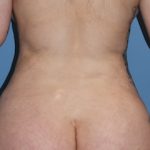
Having a larger and more shapely buttocks is a very popular beauty trend today. Numerous celebrities have helped drive this societal desire which has strong ethnic appeal, particularly in African-American and Hispanic women. Plastic surgery can help achieve that look through two specific buttock enhancement procedures using either your own fat (Brazilian Butt Lift) or actual buttock implants. But these procedures can cost anywhere from $6500 to $9500.

While safe and generally effective, some people are driven to try and achieve a larger buttocks through an illegal and dangerous method. There is a whole world of black market buttock injections going on in which almost every week (or at least it seems like it) some woman somewhere in the country has suffered major complications or death from having had these injections.

No one knows for certain what black market injections consist of as it is a very secretive world. Most of these appear to consist of industrial grade silicone oil which should not be confused with medical grade silicone which is more pure and a lot more expensive…not to mention FDA-approved. But cases have been reported where compounds such as hardware store caulking materials have been used for injection.

Why would anyone subject themselves to such an injection procedure? The reason is obviously cost. For a few hundred dollars one can have their buttocks injected often done in a hotel room by appointment. Who is doing it and what they are injecting appears to be overlooked by the promise of an instantly bigger buttocks at a very cheap price. It has also become clear to me that some women don’t understand that injecting anything into the buttocks or elsewhere is a medical procedure not a beauty treatment.

But such a decision can have serious complications. Infection, tissue necrosis, pulmonary embolus and death have been commonly reported. At the least, the body’s reaction to the material often leads to pigmentary changes at the injection sites, hard knots and lumps, scar contracture and even significant buttock deformities. The number of actual complications that occur from these injections is not known as many affected patients will nor surface or report problems to physicians. I know of two deaths right here in Indianapolis over the past two years that never even made the news.

What many women who have been injected are also not aware is that this is an irreversible problem. While these compounds are dispersed troughout the buttock tissues, they can never be removed…short of a partial buttock amputation procedure. There is no plastic surgery procedure to remove, not even liposuction.

Black market buttock injections is a disturbing trend that shows no sign of abating. For those who want buttock augmentation, stay with the established plastic surgery approach. Put your buttocks and your life in the hands of board-certified plastic surgeons who have spent much of their life perfecting cosmetic procedures that offer the greatest effectiveness and safety.

Dr. Barry Eppley

Indianapolis, Indiana

Case Study: Transaxillary Silicone Breast Augmentation

Monday, May 20th, 2013

Background: The use of the transaxillary (armpit incision) for breast augmentation has been historically limited to the use of saline implants. Because saline implants are inserted deflated, they are rolled into a tight ‘burrito’ and inserted through an incision that is usually no bigger than an inch or 2.5 cms. in most cases. This creates a ‘scarless’ breast augmentation as defined by not having a visible scar on the breast.

The use of the Funnel device for inserting breast implants has created a whole new way of looking at the options. Besides creating a true ‘no touch’ technique for the implant, it has made the use of a smaller incision for silicone breast implants possible. This has now made it possible to use the transaxillary incision for silicone breast implant insertion.

Case Study: This is a 26 year-old female who wanted silicone breast implants but did not want a lower fold incision if possible. She had a small but good breast shape with no sagging or ptosis, an ideal candidate for a transaxillary breast augmentation method.

Under general anesthesia, 3 cm long incisions were made below the border of the pectoralis muscle in a high armpit skin crease. Blunt instrument dissection was used to make the desired implant pockets and air-filled sizers were initially used to check the size and symmetry of the eventual implant positions. After the sizers were removed, a Funnel device was used in which 400cc high profile silicone Sientra implants were easily ‘squirted’ into the pockets. The skin incisions were then closed in two layers with resorbable sutures.

Her postoperative course was typical for any woman that has had a transaxillary breast augmentation. There was upper arm tenderness on movement and upper chest fullness. She was placed on a Rapid Recovery Breast Augmentation program which included beginning arm exercises the night of surgery. By three weeks after surgery, she had a complete recovery with good breast implant positioning and softness beginning to return to the breasts.

The Funnel device now makes it possible to place most ‘standard’ sized silicone breast implants through an armpit incision. It is critical during the procedure, however, that the implant pocket be as perfectly developed as possible prior to insertion. Unlike saline, there is no reversibility and limited capability for additional implant pocket adjustment once the silicone implants are placed.

Case Highlights:

1) The historic restriction of having to place silicone breast implants through a lower fold or nipple incision can now be obviated.

2) Using a Funnel device, silicone implants can be inserted through an armpit incision of under 3.5 cms in length.

3) There are limits of silicone implant size that be inserted through a Funnel using a small armpit incision which has been up to 500ccs in my experience.

Dr. Barry Eppley

Indianapolis, Indiana

Mini-Mommy Makeover Procedures

Sunday, May 19th, 2013

The concept of a Mommy Makeover plastic surgery procedure is about combining abdominal and breast reshaping in one operation. The breast and abdominal components are not new and include many well known procedures such as tummy tucks, breast implants, liposuction and breast lifts in whatever combination each individual women needs. While the effects of a Mommy Makeover can be dramatic, breast and abdominal procedures are major surgery with significant recovery as well.

But there are numerous other procedures of lesser magnitude that could also be lumped into the Mommy Makeover category and consist of a variety of ‘nips, tucks and sticks’ that create effects that mothers would also like. Here are some of the most noteworthy.

BOTOX  For reduction of those facial expression lines that come from the stress of balancing mother and wife roles, Botox injections are probably the most common injectable Mommy procedure.

Vi/PERFECT PEELS With only a few days of redness and flaking, these medium-depth facial peels are essentially painless to go through and provide a real boost to one’s complexion. A few of these a year will keep a mother’s skin radiant and glowing.

C-SECTION SCAR REVISION For those women that don’t need a tummy tuck and have a noticeable c-section scar with just a little pooch above it, widely cutting out the scar can produce a flatter upper pubic area. This scar revision can be combined with some lower abdominal liposuction for an additional and wider flattening effect.

UPPER LIP PLUMPING Some well placed Restylane or Juvederm injections into the upper lip has an instant youthful volumizing effect. This is particularly evident if the cupid’s bow and philtral columns are accentuated.

NIPPLE REDUCTION Breast feeding can elongate the nipple which can be a source of embarrassment and out of proportion to the size of the areola. Under local anesthesia, the nipple length can be reduced by half or more.

EARLOBE REPAIR Fixing stretched out ear ring holes or complete tears through the lobe can allow old or new ear rings to be comfortably worn again.

BELLY BUTTON REPAIR (Umbilicoplasty) Pregnancies can change an innie belly button to an outie due to a small hernia through the umbilical stalk attachment. Tucking the peritoneal fat back through the hole and reattaching the stalk of the belly button back down to the abdominal wall will recreate that an old inne look again.

EXILIS For those stubborn fat areas that just won’t go away despite some diet and exercise, this non-surgical fat treatment can easily fit into a busy mom’s schedule. It takes a series of treatments to see the effects but there is no downtime with 30 minute in-office treatment sessions.

These mini-Mommy Makeovers provide changes that do not require major surgery or recovery and can fit into anyone’s hectic schedule.

Dr. Barry Eppley

Indianapolis, Indiana

Patient Satisfaction and Long-term Stablity of the Endoscopic Browlift

Saturday, May 18th, 2013


Elevation of low or aging brows can be done by a variety of browlift procedures. But since its introduction in the mid-1990s, the endoscopic browlift has remained a popular method. Its appeal is in the much smaller incisions and the lack of scalp morbidity, such as scar widening and alopecia and persistent numbness that occurs from a transverse scalp incision regardless of whether it is at or way back in the hairline.

The advantages of the endoscopic browlift has never been an issue of debate, the reduction or elimination of complications. What is not as clear is whether it offers similar aesthetic benefits as more open traditional browlift operations…is it effective and does it have lasting effects? Given how long the endoscopic browlift has been around, one would assume that the clarity of its aesthetic effectiveness is well established and documented. While plastic surgeons, including myself, find it to be very effective in the properly selected patient its longer-term stability is less clear.

In the May 2013 issue of the journal Facial Plastic and Reconstructive Surgery, a published study shows that the majority of patients who had endoscopic browlift procedures were satisfied with its long-lasting results. The study reviewed 143 patients over a 13 year period based on questionnaires of satisfaction and postoperative complaints as well as before and after pictures of eyebrow-to-eye measurements.

The study showed that the vast majority of patients were women (96%) who had an average age of 60 years and was rated successful by 93% of patients with 96% saying they would recommend the bprocedure. Three-fourths( 64%) said they looked younger and less tired. Some scalp numbness and itching persisted 3 to 6 months after surgery. Photographic analysis found that brow elevation was maintined to at least 2 years after surgery with an average elevation of over 5mms.

The endoscopic browlift significantly reduces the mobidity of scalp scars with a high patient acceptance rate. This study shows that there is long-term stability of the brow elevation. Thus scalp mobilization (epicranial shift) does work in lieu of forehead or scalp tissue excision. This study did not assess what happens to the frontal hairline, however, which I know moves back (lengthens) as the brows are lifted. For those patients that already have a long forehead, the open hairline browlift will need to be used instead.

Dr. Barry Eppley

Indianapolis, Indiana

Product Review: MiraDry for Axillary Hyperhidrosis

Saturday, May 18th, 2013


Excessive sweating is a not uncommon problem that can result in the need for frequent antiperspirant applications and even constant clothes changing. Known as axillary hyperhidrosis, it is an embarrassing and very problematic problem for those so affected. The historic treatments have been strong astrigents which often are minimally effective or with limited duration of effect. The introduction of Botox injections was a revolutionary treatment for axillary hyperhidrosis that is dramatically effective even though its effect are only temporary and fairly expensive.

The new miraDry treatment, however, offers a lasting non-surgical solution as an office treatment. The miraDry is a device that delivers electromagnetic energy, similar to a microwave, to the underside of the skin where the sweat glands reside. The device delivers controlled energy waves to permanently shrink the sweat glands. Because the device involves the creation of heat, the underarms must first be numbed.

Get lasting results with a quick, non-invasive procedure performed in your physician’s office. The miraDry procedure uses the only non-invasive technology that is FDA cleared to provide lasting results. The procedure uses precisely controlled energy to eliminate underarm sweat glands. Because the sweat glands don’t grow back once eliminated, the results are dramatic and lasting.

The miraDry technique involves two procedures that are spaced 3 months apart to achieve the best results. Because the sweat glands don’t grow back after the treatments a partial to complete reduction in overactive sweating is achieved. This is an FDA-approved device and treatment in which the clinical studies showed an average 82% reductionin sweating.

There is no downtime after ther procedure. Patients may resume all normal activities right after the treatment. There usually is some mild soreness and swelling in the treated areas which takes about a week to go away. Temporary numbness of the armpits is also common which will take longer than the swelling to go away. These are all expected reactions from a device whose effects are based on ‘microwaving’ the sweat glands.

Dr. Barry Eppley

Indianapolis, Indiana

Case Study: Gynecomastia Reduction by Horizontal Excision and Nipple Transposition

Friday, May 17th, 2013

Background: Gynecomastia is a common male problem that affects men of all ages. While it is most commonly recognized in teenagers after puberty, it actually affects middle-aged and older men almost as frequently…and often not less aesthetically bothersome. The older man with obvious breast tissue jiggling in their shirt is a well known phenomenon that is quite easy to find.

When gynecomastia becomes significant, the enlarged breast tissue creates a visible mound. If it is large enough or in an older man where the chest skin is more lax, an actual breast ptosis can occur. This is where the breast mound actually hangs off of the chest wall laying on or over the inframammary fold. While this is bothersome enough for a woman, it is particularly unsettling in a man. No amount of weight loss or exercise will solve this significant ‘man boob’ problem.

The most frequently used gynecomastia surgery techniques include liposuction of all types and open excisions done through an areolar incision. But this more advanced degree of gynecomastia is not going to be corrected by even a combination of areolar excision and liposuction. This is because neither can adequately treat a significant part of the gynecomastia problem…extra or loose skin.

Case Study: This is a 47 year-old male who wanted to get rid of his ‘breasts’. He was also an athletic male who used to work out a lot but had not done so over the past several years. He had gained weight, he developed breasts and his chest dropped. This was a great source of embarrassment for him.

Under general anesthesia, overall liposuction of the chest was initially performed removing about 250cc of aspirate per side. A horizontal elliptical excision of skin was then removed along his inframammary folds but staying below the nipple-areolar complex. Incisions were then made around the areolas and the upper chest skin flap undermined. This allowed the remaining breast mound carrying the nipple-areolar complexes to be pushed upward as the chest skin flap was brought down and closed along the inframammary fold. The skin overlying the buried nipple-areolar complexes was removed and the complexes brought out and sewn to the skin in a more elevated position.

His postoperative course included the use of a drain in each chest for five days. All incision lines had been taped and they were removed a week later. He wore a compression wrap for several weeks after surgery. He went on to heal uneventfully with a dramatic change in the appearance of his chest, being flatter, absent of a breast mound and the nipples back in an elevated and more aesthetically pleasing location.

Gynecomastia surgery that includes wide horizontal excision and nipple-areolar transposition is one of the most extensive treatment methods. But when a large and hanging breast mound exists, this is the only effective approach. While it involves bigger incisions, the recovery time is not much longer than most other gynecomastia surgeries.

Case Highlights:

1) Large gynecomastias that involve breast mounds that hang off of the chest wall with a low nipple position will not respond to traditional gynecomastia treatment methods.

2) Breast tissue and skin must be removed but traditional breast reduction methods in men introduce unacceptable amounts of chest scarring.

3) A horizontal excision of breast tissue and skin with superior nipple transposition can effectively lift and flatten the chest with an acceptable scar location and a preserved nipple in large male gynecomastias.

Dr. Barry Eppley

Indianapolis, Indiana

Aesthetic Augmentation to the Hips/Upper Outer Thighs

Thursday, May 16th, 2013


The use of implants for body augmentation has been around for over fifty years. Breast implants are the most well known and account for the majority of all body contouring implants placed. But there are a variety of other body site implants that are recognized by most even if they occupy a small number of all body implantations performed. Implants exist for the chest, buttocks, arms and calfs. The numbers of these implant sites is increasing along with the array of implant options that are available for them.

One would think that just about every body site that could be augmented or implanted has been…but this is not true. One new area for body augmentation is that of the hips or thighs. Depending upon how you define this location, the goal is to have more curvature to the upper outer thigh. This seems ironic since most plastic surgery efforts are spent trying to reduce fullness in this area by liposuction. But there are women (and transgender females) that want a more curvaceous look to their outer thighs which is naturally very straight.

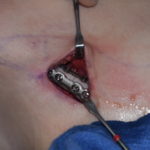
Upper thigh or hip augmentation can be done with a very soft silicone implant placed beneath the fascia overlying the outer thigh muscles. The surgical approach for the implant’s insertion is a 3 to 3.5cm horizontally oriented incision over the trochanteric region. The underlying fascia identified over the vastus lateralius muscle and opened where a blunt instrument is used to make the pocket. The implant itself is unique as no standard hip implant exists due to the newness of the application and the rarity of its request. I modify other existing body implants, most commonly contoured silicone carving blocks of sizes about 16 cms. long, 9 cms wide and 2 cms thick to fit into the pocket. Since they lie under the fascia and on top of the muscle, their contours are not seen on the overlying skin.

Other than some tightness of the outer thighs and the potential for infection or seroma (fluid collection), the risk of complications is fairly lower. The anatomy in this area has no major blood vessels or nerves. The muscle is not entered or violated so this hastens recovery. The only nerve of consequence is the lateral femoral cutaous nerve which supplies feeling to the lateral thigh, but its course is above and in from of the location of the incision. Recovery is fairly short in terms of returning to normal activities but strenuous activity and exercise requires waiting a full month after surgery.

The hip or upper thigh implant provides a curve or fullness to the upper outer thigh. These relatively thin slightly convex silicone implants are placed subfascially on top of the muscle to augment an otherwise straight leg line. For those women who have little fat to give for fat injection hip augmentation, an actual preformed implant is an alternative body contouring option.


Dr. Barry Eppley

Indianapolis, Indiana

The Importance of Skeletal Support in Midface Lifts

Monday, May 13th, 2013


Rejuvenation of the aging face has well established methods for correcting the upper (browlift) and lower face (lower facelift/necklift) that produces consistent and satisfying results. But the face does not age in just individual subunits and the midface has similar aging issues that are uniquely different. Sagging cheeks, lower eyelid hollowness and lines and folds under the eyes present challenges for successful rejuvenation.

The development of midface rejuvenation techniques has historically lagged behind that of the upper and lower face. Only in the past decade has the concept of midface lifting emerged. The vector of the midface lift is different than that of a facelift being more vertical than oblique in orientation and more closely resembles the direction of a browlift. But it has been associated with significantly more complications and dissatisfaction than either browlifts or facelifts.

The factors that contribute to midface rejuvenation complications are several fold. First, most midface lifting techniques go through the lower eyelid and require resuspension after the tissues are lifted. This places the lower eyelid at risk for sagging or ectropion due to the tension placed on it and the very delicate suspension system of the lower eyelid which is easily disrupted. Secondly, where to attach the lifted cheek tissues to is limited and adequate bony support may be lacking.

As a result of this midface conundrum, a wide variety of open and endoscopic midface lifting techniques has developed. There is no consistent midface rejuvenation technique and this has lead to a lot of confusion on the part of both surgeons and patients alike.

To aid surgeons in midface analysis and in the selection of the most successful rejuvenation strategy, a paper on this topic published in the March 2013 issue of the journal of Facial Plastic and Reconstructive Surgery. A retrospective review was done on 150 patients who had midface rejuvenation procedures done by a single surgeon. The procedures included cheek implants, fat injections, limited and full midface lifts and facelifts. The vast majority were women (93%) with an average age of 51 years as would be expected. About one-third of patients had more than one treatment for their midface aging. Patient dissatisfaction in this study was 14%. Fat grafting alone had the highest rate of dissatisfaction of all treatments. The rate of patient dissatisfaction was associated with malar hypoplasia (skeletal deficiency) and loss of skin elasticity.

What makes midface rejuvenation unique from a facelift is that the degree of skeletal support is significant. No matter how well the cheke tissues are lifted, failure to achieve an aesthetically pleasing or a sustained result is doomed if the cheek bone does not have adequate projection to support it. The use of cheek volumizing through implants is needed in such cases. When the cheek skin has poor elasticity, pulling up alone again is inadequate and adding skeletal support needs to be considered.

Dr. Barry Eppley

Indianapolis, Indiana

The Role of the SMAS in Today’s Facelift Surgery

Monday, May 13th, 2013


Facelift surgery is well known to lift, remove and tighten skin that is recruited from the jowls and neck. In its most simplest form, a facelift chases sagging and loose skin from the neck and jawline back to where its removal offers the best incision placement and resultant scar creation…in and around the ears. In its infancy, facelift surgery was all about just removing skin and the wrinkles that it contained, hence the original name of rhytidectomy. (the removal of rhytids or wrinkles)

But for decades the lifting of an aging face has gone deeper to involve more than just skin. A layer under the skin, known by the acronym SMAS (submusculoaponeurotic system), has been lifted as well. The ability to provide deep lifting to the SMAS of the face increases the longevity of a facelift’s effects and helps reduce skin surface irregularities such as abnormal looking pull lines and other facial distortions.

The concept of SMAS modifications in facelifts has undergone a tremendous amount of scrutiny from anatomic dissections published in journals to endless roundtable discussions at innumerable plastic surgery meetings. Some plastic surgeons endorse its most extensive use and  these procedures are generally called ‘deep-plane facelifts’. Other plastic surgeons have an opposite approach and use minimal to no manipulation of the SMAS in their facelifts based on the premise of a quicker and less complicated surgery. It is this group of facelifts that have the most diverse number of monikers such as Lifestyle Lifts and Quicklifts to name a few.

The trend in SMAS facelifts today has trended back now to the concept of less is more. The raising of an extensive SMAS flap, once the gold standard in facelift surgery, is not so today. SMAS techniques are more about limited deep undermining or more simple lifting and tightening it by sutures alone. (imbrication) The more rapid and safer execution of this part of a facelift is a big reason for this trend. There is very little chance of nerve injury and the bulk or volume of the face is preserved. This is particularly advantageous in the thin patient with little SMAS thickness anyway.

In the past I would do a SMAS elevation underneath the facial skin is thick or heavier patients and do only a SMAS imbrication in thinner patients. But in looking at the results months later it was impossible to tell the difference between the two SMAS techniques. So today I just perform a good SMAS imbrication on all facelift patients. Their recovery is quicker and the results appear to be just as good.

The time saved from doing deep SMAS lifting is now spent on other adjunctive facial procedures that add more benefits to the overall facelift procedure. This is usually fat injections around the mouth and nasolabial folds and skin resurfacing with the fractional laser or chemical peels.

Dr. Barry Eppley

Indianapolis, Indiana


Dr. Barry EppleyDr. Barry Eppley

Dr. Barry Eppley is an extensively trained plastic and cosmetic surgeon with more than 20 years of surgical experience. He is both a licensed physician and dentist as well as double board-certified in both Plastic and Reconstructive Surgery and Oral and Maxillofacial Surgery. This training allows him to perform the most complex surgical procedures from cosmetic changes to the face and body to craniofacial surgery. Dr. Eppley has made extensive contributions to plastic surgery starting with the development of several advanced surgical techniques. He is a revered author, lecturer and educator in the field of plastic and cosmetic surgery.

Read More


Free Plastic Surgery Consultation

*required fields


Pricing

The cost of any type of elective plastic surgery plays a major role in the decision to undergo the procedure(s).

Get Your Quote Here


My Plastic Surgery Story

Military Discount

We offer discounts on plastic surgery to our United States Armed Forces.

Find Out Your Benefits


Categories