
EXPLORE
Plastic Surgery
Dr. Barry Eppley

Explore the worlds of cosmetic
and plastic surgery with Indianapolis
Double Board-Certified Plastic
Surgeon Dr. Barry Eppley

Posts Tagged ‘clarian north medical center’

The Natural Lip Augmentation Result

Tuesday, May 13th, 2008

The upper and lower lips are one of the five main facial features that makes up and helps define the most recognizeable central third of the face. In today’s society, full lips are viewed as healthy and sensual, thin or wrinkled lips cast the opposite image. While the lips are paired, they are not identical due to their embryological origins. The upper lip is uniquely different than the lower as it has a central cupid’s bow or two-peak wave form which differentiates it from the smooth and continuous lower lip. That is a key aesthetic difference and very important consideration in any form of lip augmentation.

 
While injectable fillers are the most common form of lip augmentation, they are not for everyone and every form of injectable filler is not for lips. Patients who have thin lips can not be injected and end up with full pouty lips. The pink part of the lip will only stretch so much before it begins to look distorted, too full, and unnatural. Results like this are evident everywhere on TV and in the movies. Injections will not make a well-defined cupid’s bow nor make the height of the lip bigger either. While it acceptable to try a small amount of injectable filler in a thin lipped patient, and I frequently do, it is best to not overdo it. Let the patient decide whether the result is worth it. I always place injectable fillers in layers and ask the patient to give me their opinion with each new layer. Enough is when they tell me so. Surprisingly, no injectable filler is formally approved by the FDA for injection into the lip even though it is common practice. Only the hyaluron-based fillers such as JuvaDerm, Restylane or Perlane should be used in the lip as they flow in smoothly and have little risk of a foreign-body reaction….and they are completely reversible with time. The particulated fillers such as Radiesse and ArteFill should not be used in the lip as they do have risks of lumpiness and potential reaction to their particle component. As for silicone oil…be very wary. Not only is it not FDA-approved for any injectable application at this time, its track history from the 1960s and early 70s is not reassuring. (even if this is a newer more purified form)

 
For those thin-lipped patients, some consideration may be given to lip lifts and advancements if careful thought is given to the permanent scar. While these are powerful lip procedures and can do wonders in increasing the size of the pink part and in making a well-defined cupid’s bow, they do produce a fine line scar at the junction of the pink lip and skin. If the patient is certain they can live with that trade-off and has a high lipstick use frequency, this may be the procedure for them. That decision becomes a little easier in the older female where the thinning of the lips and the development of vertical wrinkles on the lip requires more than a simple lip fill with an injectacble can do. If the procedure is done well, it can look fairly natural. If the lip is advanced too much or the peaks of the cupid’s bow made too sharp, it can look very unnatural.

 
Often patients who have had temporary lip injections desire a more permanent fix. Options include fat injections and synthetic implants. Since fat has to be harvested from the patient in a sterile fashion, I always do this procedure in the operating room and is a strong consideration when the patient is going to be there for other plastic surgery procedures anyway. There really is very little to lose by doing it in that setting. While the take of fat grafts is definitely variable, some patients will do well with it. The test is what it looks like at three months after surgery, not in the first few weeks. If fat takes well, it will last longer than any synthetic injectable but it may not last forever as the lip does continue to age. Therefore, further fat inejctions may eventually be necessary. Permanent lip implants (Advanta) have been around for over a decade and in the right ‘qualified’ patient can do well. Qualifying a patient is one who has had lip injections and is really ready to accept a permanent implant over a temporary filler. My experience with Advanta, a soft spongy tube, has been quite good even though all patients will definitely be able to feel it.

 
Two of the most important things in creating natural lip results is that they must not be too big or have treatments which result in them ending up stiff or irregular. We touch the lip area very frequently so we are quite attuned to how it feels And the lips need to be soft and flexible to support easy and painless movement.

 
A good artistic sense in shaping the lips (they enhance the face but should be the focal point), consideration of the many lip treatment options, and preservation of soft flexible lips are needed to get the most natural lip augmentation results.

 
Dr. Barry Eppley
http://www.eppleyplasticsurgery.com
http:.//www.ologyspa.com
Clarian North Medical Center, Carmel, Indiana
Clarian West Medical Center, Avon, Indiana
Indianapolis

Breast Augmentation Costs in Indianapolis

Tuesday, May 13th, 2008

Breast augmentation remains one of the most popular plastic surgery procedures overall and one of the most commonly performed plastic surgery procedures for women under the age of 35. Breast augmentation is a fairly ‘standard’ procedure in terms of how it is performed and the time it takes to perform it. In my hands, a primary breast augmentation procedure takes one hour to complete, from entering the operating room to being awake headed to the recovery room. Much of the cost of breast augmentation is, therefore, fixed including the cost of the breast implants themselves (silicone gel breast implants cost more to purchase than saline breast implants) and the use of the operating room and the anesthesiologist’s charges.

 
Because breast augmentation costs are predictable, many plastic surgeons freely publicize their fees to perform the procedure. When seeing a breast augmentation fee stated, make sure the fee you are seeing is all-inclusive. Often times, touted breast augmentation fees only list the surgeon’s fee and you have to read the fine print to see the additional costs of the breast implants, operating room, and anesthesia. If the fee has an asterik (*) by it, you automatically know that the listed fee is only a tease and misleading.

 
Because breast augmentation is a very predictable operation in terms of costs and execution, unlike most other plastic surgery procedures such as facelift, liposuction, etc., the listing of breast augmentation costs for any practice is not unreasonable. Also, one of the most common questions that patients have about breast augmentation surgery is the cost. It is often the first and only question they may have when making a phone call to your office or an e-mail inquiry to your website. For these reasons I, like many plastic surgery practices, prefer to publicize my fees for breast augmentation. In my practice, the all-inclusive costs for silicone gel breast augmentation is $5,999 and $4,799 for saline breast augmentation.


Dr. Barry Eppley
http://www.eppleyplasticsurgery.com
http://www.ologyspa.com
Clarian North Medical Center, Carmel, Indiana
Clarian West Medical Center, Avon, Indiana

Rippling in Silicone Gel Breast Implants

Tuesday, May 13th, 2008

There are two good reasons why patients choose silicone gel breast implants over saline…and one of those is that silicone breast implants have significantly less rippling or wrinkling than saline. This is of great aesthetic importance to those women with very little breast tissue and thin or stretched out skin where the outline of the breast implant can clearly be felt and often even seen. This is most evident in the inferior (lower) and lateral (side) poles of the breast implant where the chest muscle does not provide coverage.

 
The phenomenon of breast implant rippling is actually present in both saline and silicone filled implants. The exact reason wrinkling of the breast implant occurs has to do with how well the filler material coats the inside of the implant and bonds to it as well as its own viscosity. Water (or saltwater) flows easily and does not ‘stick’ well to the inside wall of the breast implant shell, resulting in implant buckling and folding. This is a normal finding with saline breast implants and its presence is not abnormal or the plastic surgeon’s fault. This is why we usually overfill the saline breast implant to generate increased pressure on the inside which lessens the amount of wrinkling that can occur. In the short-term this works but, over time, the plastic bag of the implant stretches a little and relaxes, creating some rebound wrinkling if you will. Silicone gel, a much thicker (viscous) material and with slightly more weight, coats the inside of the implant shell better and is more effective at lessening wrinkling.

 
The point is….silicone gel breast implants have less wrinkling, usually substantially less, but it may not always be zero. I have had several women who have small amounts of rippling in the lateral (side) pole of the breast. Usually it is only one or two small ripples, which would be less than that which would have been present had they been saline implants instead. I can’t say at this point whether this subtle rippling phenomenon in silicone implants is less evident in high profile (projection) versus medium or low profile style implants. I think it is more reflective of the lack of breast tissue between the overlying skin and the breast implant, an anatomic issue in which no type of breast implant can completely overcome.

 
Dr. Barry Eppley
http://www.eppleyplasticsurgery.com
http://www.ologyspa.com
Clarian North Medical Center, Carmel, Indiana
Clarian West Medical Center, Avon, Indiana
Indianapolis

Surgical Frown Correction – The Corner of the Mouth Lift

Monday, May 12th, 2008

Many female patients today seek rejuvenation procedures which involve making the mouth area look better or less aged. As women age, some will lose lip volume, develop upper and lower lip wrinkles, and have the corners of the mouth draw down. This often creates a sad, mad, or unhappy appearance to the lip area. Most commonly, lip injections with hyaluronic fillers such as Juvaderm, Restylane, or Perlane are done to enhance the size of the lips, help fill out some of the fine wrinkles which are around the pink part of the lips, and raise up the mouth corners to some degree. While these forms of injectable treatments are effective and non-invasive, they are not permanent.

 
The corner of the mouth lift is a surgical option that has lasting effects. It is an old procedure that has been around for many decades. The corner of the mouth lift should be more popular than it is given that it is a minor procedure that can be performed alone in the office or as part of many other facial rejuvenation procedures. By taking a small triangle of skin from just above the drooping mouth corner, the downhanging mouth corner can be turned up quickly and easily. It is a very powerful procedure for such a small removal of skin and one must be careful not to overdo it by raising the corner of the mouth too far up and having too long of a scar. It does create a very small scar at the corner of the mouth but it is nearly indetectable if done right.

 
The key to a good corner of the mouth lift result is making the mouth corner level, and not more, and keeping the scar small that does not wander far from the corner of the mouth. Many facelift patients mistakenly think that the facelift will pull up the corner which is a misunderstanding. That is why some facelift patients with ‘frowns’ needs a concurrent corner of the mouth lift procedure.

 
I have found this procedure to be well accepted and most patients are surprised when I mention it as they have never heard of it. As an in-office procedure, it works well with lip injections and lip lifts and advancements. The frown that runs down into the ‘marionette lines’ will usually need filling of the deeper marionette line with injectable synthetic fillers, fat grafts, or a soft gore-tex implant, depending upon whether the procedure is done in the office or the operating room. For those patients with chronic irritation due to salivary overflow (a condition known as angular cheilitis), a corner of the mouth may even be curative as it rearranges the angulation of the ‘spout’ and creating a more competent lip dam effect.


Dr. Barry Eppley
http://www.eppleyplasticsurgery.com
http://www.ologyspa.com
Clarian North Medical Center, Carmel, Indiana
Clarian West Medical Center, Avon, Indiana
Indianapolis

The Reality of Scar Revision in Plastic Surgery

Monday, May 12th, 2008

Scar revision is both a frequently performed and a common consultation in plastic surgery. Scars can occur from trauma or surgery and can be very distressing for some patients. While time makes many scar better, some scars go on to be raised, wide, or stay very red without improving. On the face, scars can be quite conspicuous if their orientation does not parallel the relaxed skin tension lines of the face. While many scars can be improved by plastic surgery techniques, there are some fundamental principles of scar revision that every patient must understans and be willing to accept.
First and foremost, no scar can be completely removed, there will always be some telltale signs of its existence. In plastic surgery, we don’t have any erasers that can completely make it go away. I don’t care what you see on the internet or on any doctor’s website. (the overexposed or picture with bright lights can make it look washed out and absent) Or to put it another way, we are physicians not magicians! Scar revision, no matter how it is done, is about lessening its appearance, not complete elimination. Whether a scar revision procedure is worth it depends on if the patient can accept some degree of improvement only. I usually think it is worthwhile if the scar can be improved by 50%, anything over that is a bonus and a fortunate development.

 Secondly, getting the final result in scar revision takes time. Usually much more time than one would prefer to spend, but this fact is inescapable. I always tell patients, think of stepping back a step to eventually move forward two steps. One step back…six to 9 months to step forward…and in children this will usually be longer. I have no celebration about scar revision results until we are out close to a year. If it really looks better then, call the band for the victory parade!

 Thirdly, scars are all different and not every scar can be improved. Scars that are very wide, raised, or persistently red after some time have a better chance for improvement than others. While many different types of scar revision treatments exist (visit http://www.scarscription.com for an overview of scar treatments), the reality is that most scar revisions involve some form of cutting them out and reclosing them. Many of the other methods of scar revision, such as the laser, are adjunctive treatment methods that complement surgical excision but are not primary treatment methods.

 Lastly, all bets are off when it comes to the nastiest of scars….keloids! Many patients think they have keloids but they do not. Keloids are raised overflowing scars which keep on growing and cause significant pain and distortion. They are bad actors and few treatments even work, let alone work well. This doesn’t mean we don’t try, but the failure rates are horrendously high.
It is my job as a plastic surgeon to guide each patient and help them determine if scar revision is worth the effort. Sometimes it is…and sometimes it is not. The consideration for scar revision must be done on an individual basis.


Dr. Barry Eppley
http://www.eppleyplasticsurgery.com
http://www.ologyspa.com
Clarian North Medical Center, Carmel, Indiana
Clarian West Medical Center, Avon, Indiana
Indianapolis

Complication Differences Between Face vs. Body Plastic Surgery

Monday, May 12th, 2008

Plastic surgery encompasses a wide variety of procedures for the face and body. From nose jobs to breast implants, we perform a broad scope of body changes. While the vast majority of these procedures do very well and patients have an uncomplicated after surgery course, some patients will experience complications. The occurrence of complications in plastic surgery, of the minor variety, are not rare. Major complications in plastic surgery, fortunately, are very rare.


Interestingly, there is a vast difference in the occurrence rate and types of complications between plastic surgery of the face and that of the body. While patients understandably place a greater emphasis on procedures done to their face, the actual rate of significant complications from facial plastic surgery is quite low. There are several reasons for this that include; the tremendous blood supply to facial tissues which is quite resistant to infection and allows most wounds to heal quite quickly (including the clearing of bruising and swelling), cosmetic surgery of the face is really ‘superficial’ surgery and does not enter any major body cavities or cause major pain and surgery on the face does not disrupt the body’s physiologic functions (like temperature control and fluid shifts) like body plastic surgery does. For these reasons, facial plastic surgery procedures do not pose the same systemic risks as body plastic surgery such as deep vein thromboses, pulmonary embolisms, and infection. Most complications in the face, short of bleeding and hematomas, are mainly about appearance, symmetry, and scarring. Not that these are not significant, but they rarely are life-threatening or invoke major medical problems.


Body plastic surgery, conversely, carries with it bigger risks in my opinion. First, body plastic surgery is ‘bigger’ and involves more surface area of the body than the face. Whether it be liposuction or a tummy tuck, large body areas are being opened or manipulated. As a result, the issues of blood loss, adverse temperature changes, and fluid shifts are real potential issues and expose the patient to greater medical risks such as fluid collections (seromas) and blood clots. Second, the blood supply below the neck to any one body part is not as great as any part of the face. Therefore, infection rates for body plastic surgery are definitely greater than that of the face. While patients are more tolerant to small differences or asymmetries on the body as opposed to the face, the chances of more significant differences is also likely because the surgery site is much bigger and the changes being made are bigger. No where are these issues more evident than in bariatric plastic surgery, the extreme end of body plastic surgery,  where big skin cutouts, long incisions, and extended operating times test the ability of any patient to heal in an uncomplicated manner.


Potential complications are part of any form of plastic surgery and fortunately most are relatively minor and are often just a bump (aggravating as that is) along the way of recovery. However, body plastic surgery is associated with longer recoveries (for many of the procedures) and higher rates of complications such as wound dehiscences, seromas, and asymmetry between body parts. This is in contrast to plastic surgery of the face where the surgical sites by comparison are smaller and healing is much quicker and less complicated.


 Dr. Barry Eppley

http://www.eppleyplasticsurgery.com

http://www.ologyspa.com

Clarian North Medical Center, Carmel, Indiana

Clarian West Medical Center, Avon, Indiana

Indianapolis

Implants and Implant Reactions in Plastic Surgery

Saturday, May 10th, 2008

Next to orthopedic surgery, plastic surgery as a medical specialty uses a significant number of implants and implant materials to help achieve its surgical outcomes. Whether it is breast implants or an injectable filler, the use of synthetic or foreign materials is common in plastic surgery. Often when a plastic surgery patient needs an implant for their procedure, they will ask the question….’What if my body rejects the implant?’…..or…..’What are my chances that I will react (adversely) to the implant?’ This understandable concern is reflective of a basic misunderstanding of how the body reacts to implanted foreign materials and what type of complications can develop.
In reality, the rejection of an implanted synthetic material (that has been evaluated and approved for human implantation by the FDA), in the most scientific sense, does not happen. A true rejection reaction in humans is an autoimmune response to an ‘implant’ that is composed of live or organic material. Therefore, you will develop a rejection or autoimmune reaction, for example, in any type of organ transplant which is from other human or animal origins. Your body’s cells mount a massive response to what it recognizes as foreign or an invading organic source. The body is quite smart and protective as this type of response is necessary for survival.
Synthetic implants are composed of inorganic materials, which do not cause a true allergic or autoimmune response. These are not live materials and were never composed of living organic materials. As a result, they can not elicit an allergic response. They may never become part of you or integrate into your body’s tissues, but they can safely occupy a space to do their job. Synthetic implants, while not causing allergic responses, can cause a different set of problems which patients mistakenly interpret as ‘rejection’.
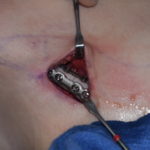
Synthetic implants can get infected, exposed, or migrate, all of which are complications of the surgical implantation process not due to rejection. If bacteria inadvertently get on the surface of the implant, an infection can later develop. Most implant infections occur within weeks of the surgery as it takes time for the bacteria to multiply and become evident. Synthetic implants can migrate or move from their location where they were surgically placed if the implant material is very smooth or the tissue pocket into which it is placed is very big. This potential migration can be eliminated if the implant is secured into its desired location by some method such as sutures or metal screws. Implant exposure can result from migration of the implant, getting close to the original incision through which it is placed. Or implant exposure can result from not having enough good tissue closed over it or tissue that breaks down over the implant due to too much pressure that the implant exerted on it or the overlying tissue is of poor quality and it doesn’t heal well and then breaks down, thus exposing the implant.
The patient will understandably interpret these synthetic implant complications as ‘rejecting the implant’. In reality, the patient’s body has little to do with the development of these complications. They are more a function of surgical technique and not due to a patient’s immune response to them. The risk of these potential implant complications can be reduced by pre-surgery antibiotics, a properly sized implant that does not stress the surrounding tissues, and careful surgical implantation technique.
Dr. Barry Eppley
http://www.eppleyplasticsurgery.com
http://www.ologyspa.com
Clarian North Medical Center, Carmel, Indiana
Clarian West Medical Center, Avon, Indiana
Indianapolis


Dr. Barry EppleyDr. Barry Eppley

Dr. Barry Eppley is an extensively trained plastic and cosmetic surgeon with more than 20 years of surgical experience. He is both a licensed physician and dentist as well as double board-certified in both Plastic and Reconstructive Surgery and Oral and Maxillofacial Surgery. This training allows him to perform the most complex surgical procedures from cosmetic changes to the face and body to craniofacial surgery. Dr. Eppley has made extensive contributions to plastic surgery starting with the development of several advanced surgical techniques. He is a revered author, lecturer and educator in the field of plastic and cosmetic surgery.

Read More


Free Plastic Surgery Consultation

*required fields


Pricing

The cost of any type of elective plastic surgery plays a major role in the decision to undergo the procedure(s).

Get Your Quote Here


My Plastic Surgery Story

Military Discount

We offer discounts on plastic surgery to our United States Armed Forces.

Find Out Your Benefits


Categories