EXPLORE
Plastic Surgery
Dr. Barry Eppley

Explore the worlds of cosmetic
and plastic surgery with Indianapolis
Double Board-Certified Plastic
Surgeon Dr. Barry Eppley

Archive for the ‘scar revision’ Category

Mini-Mommy Makeover Procedures

Sunday, May 19th, 2013

The concept of a Mommy Makeover plastic surgery procedure is about combining abdominal and breast reshaping in one operation. The breast and abdominal components are not new and include many well known procedures such as tummy tucks, breast implants, liposuction and breast lifts in whatever combination each individual women needs. While the effects of a Mommy Makeover can be dramatic, breast and abdominal procedures are major surgery with significant recovery as well.

But there are numerous other procedures of lesser magnitude that could also be lumped into the Mommy Makeover category and consist of a variety of ‘nips, tucks and sticks’ that create effects that mothers would also like. Here are some of the most noteworthy.

BOTOX  For reduction of those facial expression lines that come from the stress of balancing mother and wife roles, Botox injections are probably the most common injectable Mommy procedure.

Vi/PERFECT PEELS With only a few days of redness and flaking, these medium-depth facial peels are essentially painless to go through and provide a real boost to one’s complexion. A few of these a year will keep a mother’s skin radiant and glowing.

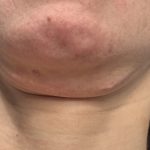
C-SECTION SCAR REVISION For those women that don’t need a tummy tuck and have a noticeable c-section scar with just a little pooch above it, widely cutting out the scar can produce a flatter upper pubic area. This scar revision can be combined with some lower abdominal liposuction for an additional and wider flattening effect.

UPPER LIP PLUMPING Some well placed Restylane or Juvederm injections into the upper lip has an instant youthful volumizing effect. This is particularly evident if the cupid’s bow and philtral columns are accentuated.

NIPPLE REDUCTION Breast feeding can elongate the nipple which can be a source of embarrassment and out of proportion to the size of the areola. Under local anesthesia, the nipple length can be reduced by half or more.

EARLOBE REPAIR Fixing stretched out ear ring holes or complete tears through the lobe can allow old or new ear rings to be comfortably worn again.

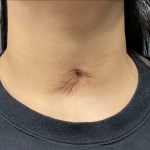
BELLY BUTTON REPAIR (Umbilicoplasty) Pregnancies can change an innie belly button to an outie due to a small hernia through the umbilical stalk attachment. Tucking the peritoneal fat back through the hole and reattaching the stalk of the belly button back down to the abdominal wall will recreate that an old inne look again.

EXILIS For those stubborn fat areas that just won’t go away despite some diet and exercise, this non-surgical fat treatment can easily fit into a busy mom’s schedule. It takes a series of treatments to see the effects but there is no downtime with 30 minute in-office treatment sessions.

These mini-Mommy Makeovers provide changes that do not require major surgery or recovery and can fit into anyone’s hectic schedule.

Dr. Barry Eppley

Indianapolis, Indiana

The Need For Scar Revisions of Dogbite Injuries in Children

Monday, April 29th, 2013


One of the most common traumatic facial injuries to deal with in children as a plastic surgeon are dogbites. There are a lot more common than most people think and, fortunately, are usually minor and result in no significant scarring. They often are just ‘nips’ and don’t require any major reconstructive surgery.

But having been at a University for many years before entering private plastic surgery practice, I had the unfortunate opportunity to see more than my share of major dogbite injuries to the face…the vast majority being in children. I reported my pediatric dogbite experience in the March 2013 issue of the Journal of Craniofacial Surgery over a ten year period while covering a major children’s hospital. From 1995 to 2005, I treated over 100 major dogbites the face, scalp and neck in children that required surgical repair in the operating room. The average age of the patients was 6 years old and was fairly evenly split between boys and girls. In most cases the dog was known to the patient or family and was classified as ‘provoked’. The most common dog breeds were Pit Bull, Chow, German Shephard and Doberman Pinscher. Most injuries could be primarily closed but a few did need skin grafts or other reconstructive surgery.

Contrary to popular perception, only one patient developed an infection. Surprisingly, only one patients was left with a permanent facial nerve weakness. In more than three-fourths of the patients, scar revisions were needed and another third needed more than one scar revision.

More than one-third of these dogbite cases involved legal action, either against the dog’s owner or their insurance companies. Because of the high litigation rate and possible denial of insurance claims for subsequent reconstructive procedures, I would advise all plastic surgeons and the families to keep meticulous records, including photographs, of the dog bite injuries.

Like many traumatic injuries dog bites to the face often require repeated plastic surgery procedures to obtain the optimal aesthetic outcome. One should not try and be too clever at the time of initial injury repair with complex closure decisions as the tissue quality often precludes the optimal aesthetic result from the primary repair.

Dr. Barry Eppley

Indianapolis, Indiana

Postoperative Instructions for Scar Revision

Wednesday, February 6th, 2013


Scar revision is most commonly done by surgical excision of the scar and putting it back together as either a straight line or a geometric or broken line closure pattern. The type of scar revision used depends on the location of the scar, its size and dimensions and the patient’s skin characteristics.

The following postoperative instructions for scar revision are as follows:

1.  Most scar revision have little if any discomfort. Most patients only use Tylenol or Ibuprofen for just a few days after the procedure. You may also feel free to use ice packs on the scar revision area for discomfort relief if you desire as long as they do not directly contact the skin to avoid a thermal injury.

2. In most cases of scar revision, the area will be covered with glued-on flesh-colored tapes. These are to be left on until Dr. Eppley removes them during your first postoperative visit. Some spotting of blood may appear on the tapes and this is normal.

3. In some cases, the area will not be taped and left open. Antibiotic ointment may be used three times a day to keep the sutures soft and moist.

4. Whether you have tapes or visible sutures, it is also ok to have them get wet when you shower. You may shower as normal the following day.

5. If the scar revision is on your face, you may wash your face and get the tapes or suture lines wet. Shaving and make-up application may be done around the area.

6. Physical activities after scar revision depend on where the scar is located. If it is on your scalp, face or neck, you should be able to do any activity that feels comfortable afterwards. If it is on your body, then just think carefully about whatever you are planning does not put undue stress or pulling on the incision lines for up to a month after surgery.

7. You may eat and drink whatever you like right after surgery.

8.  The application of topical scar therapies such as ointments and tapes can begin three weeks after the procedure.

9.   Avoid extreme sun exposure or the risk of sunburn on the scar revision areas for up to six months after the procedure.

10. If any scar revision redness, increased tenderness, or drainage develops after the first week of surgery, call Dr. Eppley and have your pharmacy number ready.

Consent for Plastic Surgery: Scar Revision

Wednesday, February 6th, 2013


Every plastic surgery procedure has numerous issues that every patient who is undergoing a procedure should know. These explanations are always on a consent form that you should read in detail before surgery. This consent form, while many perceive as strictly a legal protection for the doctor, is actually more intended to improve the understanding of surgical scar revision. The following is what Dr. Eppley discusses with his patients for this procedure. This list includes many, but not all,of the different outcomes from surgery. It should generate both a better understanding of the procedure and should answer any remaining questions that one would have.

ALTERNATIVES

Alternatives for improving the appearance of a scar could include more time for scar maturation, dermabrasion, laser resurfacing, injectable fillers, fat injections, collagen and stem cell injections and the use of make-up for camouflage.

GOALS

The goal of scar revision is to improve the appearance of the scar(s). This could include physical changes such as narrowing, correction of depressed or elevated surface contour, red or brown color reduction, or line of scar direction.

LIMITATIONS

The limitations of scar revision is in how much the appearance of the scar can be actually improved. Age of the scar, the scar pattern, where on the face or body the scar is located and the patient’s skin color and elasticity all play a factor in limiting how well the appearance of the scar can be improved.

EXPECTED OUTCOME

Expected outcomes include the following: temporary swelling and bruising around the scar revision site, temporary numbness of the surrounding skin, temporary increased redness or discoloration of the scar, elevation/firmness of the scar, and that it can take up to one year after scar revision to see the final result. It is important to understand that no scar can be completely removed and scar revision is about scar reduction not scar elimination.

RISKS

Significant complications from scar revision are very rare. More likely risks include infection, wound separation, suture reactions, worsening of the appearance of the scar, and failure of long-term scar improvement. Any of these risks may require revisional surgery for improvement.

ADDITIONAL SURGERY

Should additional surgery/therapies be required to do additional surgical scar revision, laser resurfacing, pulsed light treatments or topical scar therapies, these will generate additional costs

Plastic Surgery’s Did You Know? Scar Treatments

Monday, November 26th, 2012


Scars are a common problem that occur from a variety of events including injury, various skin conditions and surgical procedures. Removal of these scars is a frequent patient request from plastic surgeons. While scar treatments have been a part of plastic surgery for a very long time, one thing about them has always been true… scars can be reduced in appearance but they can never be completely removed. There is no such thing as scar removal. Every strategy for scar treatments is about reducing their appearance and how to make them less visible. Plastic surgeons wish they had a magical technique that could simply wipe away scars but that does not exist. The emergence of laser technologies makes it seem like this would be the definitive solution. While in some cases lasers can be helpful for scar treatment, they do not eliminate them and are frequently overpromoted for what they can achieve. Compared to surgical scar revision, lasers (and its distant cousin dermabrasion) actually plays only a secondary role in effective scar reduction. The actual cutting out of scars, if possible based on scar type, and the rearrangement of surrounding healthy tissues still remains the cornerstone of effective scar reduction therapies. Surgical scar revisions may include simple linear excisions or more complex forms such as z-plasties  and a wide variety of geometric tissue rearrangements. Once these are done, the use of lasers may put the finishing touches for maximal scar appearance improvement.

Treatment of Self-Inflicted Cutter Scars

Saturday, November 17th, 2012


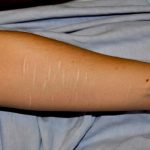
Scars come in a wide variety of patterns that often identify the cause of the original injury. One of the most identifiable scar patterns is that from cutting. Most commonly seen on the arms, cutting is a form of self-mutilation that is almost exclusively seen in teenagers and young men and women. Using sharp objects such as razor blades and knives, self-harm is done by making a series of superficial to medium-depth skin cuts on the arms or legs. Psychologists state that this behavior is an outward expression of inward torment and even suicidal thoughts. Clearly it is self-destructive behavior.

What was once a very rare scar pattern for a plastic surgeon to see, it is now becoming more common. According to recent estimates in the U.S., one in every 200 teenage girls between ages 13 and 19 have cut themselves…a rather startling statistic even if it is only a half percent. More females do this behavior than men in a 60:40 ratio and my experience confirms that with more young females seen.

The injury patterns seen in cutting pose unique challenges for potential scar revision. It is the forearm and upper arm scars that bring young people in as they are hard to explain and impossible to hide in many cases. The sheer number of cuts can easily number in the dozens to even hundreds. They often are very fine, many of which parallel each other or have criss-crotching patterns. While a few may be wide because they were deeper cuts, most are much finer because the initial cuts barely passed into the dermis of the skin.

The revision options for most scars almost exclusively include excision and laser resurfacing. But cutter scars can not really be improved by either. The scars are usually too fine to result in much change by excision and re-closure. Even if a few of the bigger ones can be improved by being narrowed, that does little to change the look of the overall scar pattern. Laser resurfacing seems like such an obvious method of improvement but it is not as simple as wiping the scars away. Laser resurfacing only goes so deep but never as deep as the scar tissue. Even though the scar may appear fine line, they go all the way into the dermis. No matter how many of the top layers of the skin that are removed by the laser, it just unmasks more of the scar.

What does work for cutter arm scars if traditional methods of scar revision will not? I have found only two methods that can change the entire look of most or all of the scar area. These are dramatic scar treatment methods that are not appropriate for most patients, but for the right person they may be acceptable. One approach is a full-thickness excision of the scarred area and replacement with a thick split-thickness skin graft. This will leave an eventual patch appearance but that certainly changes the way it looks and is more explainable to public scrutiny. (I had an injury and needed a skin graft) The other approach is to use the laser to create a deep burn over the area. This will replace all the fine line scars with one large hypertrophic burn scar. This creates a lot more scar but does offer another more explainable injury pattern.

Both treatment approaches certainly do remove the emotional and psychological memories of the cutter scars…even if their replacements would be judged as ‘worse’ scars.    

Dr. Barry Eppley

Indianapolis, Indiana

Plastic Surgery’s Did You Know?

Monday, August 6th, 2012


When most people think of scar revision they usually think of two things; elimination of the scar and the use of lasers to do it. The reality is that both of these perceived principles of scar revision are wrong. Scars may be able to be improved but they can almost never be removed. Plastic surgeons wish this was possible but it is not. Once the skin has been injured and healed by scar, it will be forever changed. It is merely a question of how much reduction can be obtained and how much less visible it can be. Secondly, while lasers have a role to play in scar revision it is less significant than excisional techniques. Lasers are not magical wands that work like erasers. They are most effective in prophylactic treatment of early scars and incisions. They will make little difference in well-established mature scars, particularly those that have visible surface contour issues. (wide, deep, raised) Revision of significant scars requires excision and closure, often using geometric rearrangement techniques. Laser resurfacing may then be done after to get the best camouflaged appearance.

Plastic Surgery’s Did You Know? Z-Plasty Scar Revision

Sunday, May 13th, 2012

There are many techniques for scar revision in plastic surgery but one of the most well known is that of a Z-plasty. It is a technique for either improving the appearance of a scar (by changing the line of tension) or improving its function by contracture release. (elongating the scar) It is based on the use of two triangular skin flaps cut along a central portion of the scar. Based on the angles that the Z limbs are cut determines how much scar lengthening occurs. It was first described in 1856 and was initially used for scar problems around the eyelids and mouth, for which it is still useful today. While the geometry of a Z-plasty has a lot of appeal, it is an infrequent scar revision technique that is useful only for specific type scars. There are many other scar revision methods that are more widely used.  

Combined Fractional Laser and Topical Steriods For Hypertrophic Scars

Saturday, January 21st, 2012

Scar therapy consists of a wide variety of possible treatments from injections, lasers and light devices and surgical excision. There is no one type of scar treatment which is uniformly effective for all scars. There are simply too many types of scars and differing skin types and body locations for any uniform approach to improving the appearance of scars.

While scar revision by excision still remains a mainstay for many scar patients that I see, it is not effective for scars that involve large surface areas. Broad hypertrophic scars, particularly from burns and other forms of trauma, pose unique challenges for improvement. While in some cases complete excision and skin grafting may be useful, patients may either not want that approach or want to try non-surgical methods first.

One non-excisional treatment approach, and the only that I find effective for established scars, is that of combined laser resurfacing and topical steroids. When referring to laser resurfacing, I am not talking about a uniform ablative approach but specifically that of fractional CO2 ablation. This ablative CO2 laser creates channels from 400 to 600 microns or more deep into the dermis/scar. Such channels provide many points of entry for topical agents such as steroids. The early introduction of intradermal steroids helps to control the inflammation that the laser causes as well as suppresses collagen synthesis to reduce scar thickness  

This scar treatment approach can be done under either topical or local anesthetic. Usually topical is better because wide hypertrophic scars are typically hard to inject under and get good pain relief. Numerous topical anesthetic creams are available but ones that contain a combination of benzocaine, lidocaine and tetracaine penetrate and work the best. Once adequately anesthetized, the broad scar is treated by the fractional CO2 laser to create intradermal pores. Thereafter, the steroid triamcinolone acetonide suspension (kenalog) is applied over the laser-treated area. Different concentrations of the steroid can be used from prepared concentrates of 10, 20 and 40mg/cc. In some cases, intralesional steroid injections may be given as well if the scar is very thick. The topical steroid suspension is held into place over the scar treated area by a clear adhesive dressing for 24 hours.

Few wide hypertrophic scars respond well to a single treatment and a series of fractional laser resurfacing and topical steroids is needed to get the best result. Typically it requires three or four sessions spaced four to six weeks apart.

This combined laser and steroid treatment is fairly novel but makes biologic sense with its multimodality approach. The synergism of these two treatments  strives to create a flatter scar that is more supple, not necessarily complete scar removal. Breaking down existing scar tissue, without creating a lot more, is the only realistic goal for this type of hypertrophic scar.

Dr. Barry Eppley

Indianapolis, Indiana

Facial Disfigurements and Their Impact On Job Interviews

Sunday, December 4th, 2011

Plastic surgeons have the opportunity to see a lot of patients with a variety of facial disfigurements. Ranging from traumatic injuries to birth defects to defects caused by a variety of neoplastic pathologies, people so afflicted are understandably concerned about their appearance and want to be as whole as possible. They feel, justified or not, that these facial differences have a negative impact on many different types of social interactions.

New psychological research has now shown that such facial deformities can also result in being rated lower in job interviews compared to those with unaffected faces. A report published on the online Journal of Applied Psychology from two Texas universities looked at how people with facial disfigurements were viewed in job interviews. The research looked at two studies, one using eye-tracking technology that looked at the interviewer’s focus and the other having interviewers evaluate the applicant’s based on face-to-face interviews.

In the first study, nearly 200 participants viewed a computer-mediated interview of applicants who did or did not have facial disfigurements. Using eye-tracking techniques, the amount of time they spent looking at the facial deformity and how they recalled and rated the applicant. Results show that the more time participants spent looking at the facial disfigurement, the less they could recall about the actual details of the applicants interview. This led directly to lower rating for the applicant.

In the second study, nearly 40 managers enrolled in post-graduate business courses interviewed applicants who either did or did not have a facial deformity. Their impression and ratings of the applicants showed that those with facial deformities were less well remembered and received lower ratings as suitable hires.

These studies confirm what many patients with facial deformities feel…that they are viewed as less worthy than if they did not have the facial problem. A more normal face or unaltered face is felt to have a better chance of success in life both socially and vocationally. While this is no surprise and has been shown by many studies before, the current report shows why it happens. The facial deformity directs one’s memory away from the actual content of the interview and more towards what is visually seen.

Interestingly, this study does not factor in how significant the facial deformity has to be to create this discriminatory effect. It would be logical to assume that the greater the facial problem, the more pronounced the effect is. The interviewee’s demeanor and mannerisms may also play a role in creating this effect as they may unconsciously direct attention to their facial problems.

This research illustrates why it is important that people seek improvements through plastic surgery if possible. While no plastic surgery technique can completely normalize most facial deformities, particularly that of scarring, significant improvements are often possible. Scar revision is a typical example where the concept of reduction or improvement exists but complete elimination or removal is almost never possible. Even small amounts of facial improvement, however, may make a big difference in how those afflicted feel and are perceived.

Dr. Barry Eppley

Indianapolis, Indiana


Dr. Barry EppleyDr. Barry Eppley

Dr. Barry Eppley is an extensively trained plastic and cosmetic surgeon with more than 20 years of surgical experience. He is both a licensed physician and dentist as well as double board-certified in both Plastic and Reconstructive Surgery and Oral and Maxillofacial Surgery. This training allows him to perform the most complex surgical procedures from cosmetic changes to the face and body to craniofacial surgery. Dr. Eppley has made extensive contributions to plastic surgery starting with the development of several advanced surgical techniques. He is a revered author, lecturer and educator in the field of plastic and cosmetic surgery.

Read More


Free Plastic Surgery Consultation

*required fields


Pricing

The cost of any type of elective plastic surgery plays a major role in the decision to undergo the procedure(s).

Get Your Quote Here


My Plastic Surgery Story

Military Discount

We offer discounts on plastic surgery to our United States Armed Forces.

Find Out Your Benefits


Categories