EXPLORE
Plastic Surgery
Dr. Barry Eppley

Explore the worlds of cosmetic
and plastic surgery with Indianapolis
Double Board-Certified Plastic
Surgeon Dr. Barry Eppley

Archive for the ‘product reviews’ Category

Product Review: MiraDry for Axillary Hyperhidrosis

Saturday, May 18th, 2013


Excessive sweating is a not uncommon problem that can result in the need for frequent antiperspirant applications and even constant clothes changing. Known as axillary hyperhidrosis, it is an embarrassing and very problematic problem for those so affected. The historic treatments have been strong astrigents which often are minimally effective or with limited duration of effect. The introduction of Botox injections was a revolutionary treatment for axillary hyperhidrosis that is dramatically effective even though its effect are only temporary and fairly expensive.

The new miraDry treatment, however, offers a lasting non-surgical solution as an office treatment. The miraDry is a device that delivers electromagnetic energy, similar to a microwave, to the underside of the skin where the sweat glands reside. The device delivers controlled energy waves to permanently shrink the sweat glands. Because the device involves the creation of heat, the underarms must first be numbed.

Get lasting results with a quick, non-invasive procedure performed in your physician’s office. The miraDry procedure uses the only non-invasive technology that is FDA cleared to provide lasting results. The procedure uses precisely controlled energy to eliminate underarm sweat glands. Because the sweat glands don’t grow back once eliminated, the results are dramatic and lasting.

The miraDry technique involves two procedures that are spaced 3 months apart to achieve the best results. Because the sweat glands don’t grow back after the treatments a partial to complete reduction in overactive sweating is achieved. This is an FDA-approved device and treatment in which the clinical studies showed an average 82% reductionin sweating.

There is no downtime after ther procedure. Patients may resume all normal activities right after the treatment. There usually is some mild soreness and swelling in the treated areas which takes about a week to go away. Temporary numbness of the armpits is also common which will take longer than the swelling to go away. These are all expected reactions from a device whose effects are based on ‘microwaving’ the sweat glands.

Dr. Barry Eppley

Indianapolis, Indiana

Product Review: Juvederm Voluma XC

Thursday, May 9th, 2013


The range of injectable fillers is astonishing today compared to what is was just ten years ago. But the majority of the commercially available fillers are composed of hyaluronic acid which has been proven to have a very low rate of complications and assured resorption over a predictable time period. The degree of cross-linking of the hyaluron molecules and its concentration (mg/ml) has a major influence on the duration of the filler’s effect.

Hyaluronic acid-based fillers is the most ‘natural’ of substances to inject into the skin as young healthy skin contains an abundance of it. As one ages, sunlight and other factors can reduce the amount of hyaluronic acid in the skin. The loss of hyaluronic acid causes the skin to lose structure and volume creating unwanted wrinkles and folds in the skin. Placing synthetic hyaluronic acid back into the skin is a proven safe and effective method to replace the lost volume and reduce these wrinkles and folds.

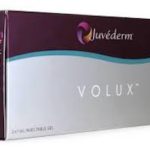
One of the major player’s in the hyaluronic acid-based filler market is Juvederm and is one of the most recognized brand names in the U.S. market. It has developed into a line of different products for injection into various levels of the skin. Once of its newer products is it Voluma injectable filler. Juvederm Voluma XC is composed of 20mg/ml and 3mgs of lidocaine. It is intended to restore lost volume to the face, also known as a facial volumizer for such areas as the cheeks and chin. While its predecessor Juvederm product lines offer excellent results when used for fine lines around the nose (nasolabial folds), mouth (marionette lines) and eyes (tear troughs), Juvederm Voluma XC is better suited for larger scale facial volumizing. The lidocaine is incorporated to reduce the pain of the injections.

While not yet FDA-approved in the U.S., it is widely used around the world in various countries. It is awaiting FDA evaluation for eventual clearance to be used in the U.S. which has not yet occurred. An FDA panel today has recommended Juvederm Voluma XC as safe and effective to treat age-related volume loss in the midface. This suggests that clearance is likely to occur most likely later this year. If the FDA approves Voluma XC for cheek augmentation, it would be the first injectable filler approved for this indication in the U.S. Being able to be injected deep down to the bone in the cheek also suggest that it could be similarly used for chin augmentation as well.

Dr. Barry Eppley

Indianapolis, Indiana

Plastic Surgery Product Review: GalaFLEX Mesh

Saturday, April 27th, 2013


Numerous plastic surgery procedures involve tucks and lifts to achieve their effects. While many intraoperative techniques are done to tighten and support lifted tissues, no such result is permanent. Tissue relaxation and stretching and the effects of gravity work almost from the first day after surgery to undue some of the achieved result.

While tissues may be tightened and reinforced, their inherent lack of thickness or structural weakness may not provide optimal support. This is where the role of an implantable mesh material has always been appealing. But the use of traditional polymer meshes when placed right under the skin have a long history of potential complications, most notably palpability, thinning of the overlying tissues and even extrusions.

An appealing reinforcing mesh would be one composed of a resorbable material. This is the role that allogeneic meshes have filled, such as Alloderm and Strattice, which provide a dense collagen material which is fabricated from donor tissues. While very effective, its costs are considerable particularly in bigger pieces.

GalaFLEX mesh composed of a resorbable material that has FDA approval to reinforce soft tissue where weaknesses exist or for use in procedures involving soft tissue repair or other fascial defects that require the addition of a material support to obtain the desired result. Uses in aesthetic plastic surgery could include facelifts, necklifts, browlifts, breast lifts and breast reductions.

GalaFLEX is a flat knitted elastic mesh composed of poly-4-hydroxybutyrate (P4HB) which is from a class of materials known as poly-4-hydroxybutyrate that are produced naturally by bacteria in a recombinant fermentation process. It is a resorbable material that is broken down by water absorption and eliminated from the body as carbon dioxide and water in 12 to 18 months after implantation.

GalaFLEX mesh is of particular interest to plastic surgeons in breast surgery as an inferior pole sling support. Bottoming out of the breasts after breast lifts and reductions is a common aesthetic problem after these surgeries.

Dr. Barry Eppley

Product Review – Insorb Absorbable Skin Stapler

Tuesday, April 23rd, 2013


Closing incisions is an inherent part of every surgery and a well healed and good looking scar is a desireable goal. But for plastic surgeons the appearance of the incisional closure and the resultant scar takes on even greater significance. For operations that are done for cosmetic change only, a good looking scar is an essential part of how the result will be perceived.

To get the best scar outcomes from incisional closures, plastic surgeons pay great attention to the relief of underlying wound tension and the meticulous approximation of the skin. For these reasons either very small sutures are used in many facial areas and a subcuticular (under the skin) technique is used for large body areas under the skin. While most only see what is placed at the skin level, what is buried underneath the skin in the dermis is of equal importance. This requires the placement of many intradermal buried sutures, usually of a resorbable material.

This intradermal suture placement is essential but tedious and certainly adds to intraoperative time. To simplify this level of suturing, an absorbable stapling device (Insorb) was introduced several years ago. This device places small staples made of resorbable polymers (polylactide-polyglycolide) that have a long history of use as resorbable sutures and plates and screws. The minute staples are placed in a horizontal orientation by a patented stapling device that can deploy up to 30 staples. The staples are placed right under the skin in the thick dermis to approximate the skin. They will resorb completely by a natural hydrolysis process over 6 to 9 months.

The Insorb device is intended to replace the need for external skin staples and/or the need for subcuticular skin sutures. For some body plastic surgery procedures, such as tummy tucks and breast reductions, this device can have a useful role. While not eliminating the need for a subcuticular skin closure, it can alleviate the need for intradermal suturing. In the face, however, the skin is too thin to permit even this very small size of the staple to be useful.

Dr. Barry Eppley

Plastic Surgery Product Review: Keller Funnel for Silicone Breast Augmentation

Friday, April 19th, 2013


Despite the different types and sizes of breast implants and the different incisions used to place them, all these breast augmentation issues share one factor…implant insertion. With a prefilled and fully inflated silicone breast implant, there is increased difficulty in getting the implant into place because of the mismatch between the diameter of the implant and the length of the incision. Historically silicone gel implant insertion has been done by the manual method. The plastic surgeon must physically handle the implant and push it through the incision into the created submuscular or subglandular pocket. The actual handling of the implant by the surgeon adds another source of potential infection as well as stresses the shell of the implant as it usually needs to be ‘forced’ through the incision.

A novel breast implant insertion device is available that overcomes all of the concerns about manually handling and manipulating the implant. Known as the Keller Funnel, it is a cone-shaped device with an internal silicone lining. This allows the breast implant to be opened and placed directly into the funnel right out of the sterile box. Then by twisting the backside or larger end of the funnel, the silicone implant can be squeezed out of the end of the smaller end of the implant and through the incision right into the created breast pocket. The implant shell is less stressed as the forces of distortion or pressure on it are more evenly distributed throughout the entire implant shell. The silicone lining allows the implant to be lubricated so it can flow smoothly out of the funnel when under manual compression.

The Keller funnel is a significant advance for silicone breast augmentation. While it does add a very small cost to the procedure, it reduces the risk of infection and potentially even adds to the longevity of the implant’s durability.

Dr. Barry Eppley

Plastic Surgery Product Review: Exparel Local Anesthetic

Sunday, February 10th, 2013


The use of local anesthetics is commonly done in numerous plastic surgery procedures for both immediate and prolonged pain relief. One such operation would be a tummy tuck where the rectus muscles are sutured together. This is the most common source of significant pain after the procedure. Indwelling pain pumps or the injection of long-acting Marcaine (bupivacaine which lasts up to 24 hours) into the muscle is commonly used to help control the patient’s pain after surgery. While pain pumps can work up to 48 hours after surgery they are an additional tube(s) that exits the body and adds hundreds of dollars to the cost of surgery. Injected marcaine with epinephrine will last somewhere in the range of 18 to 24 hours but no longer.

Exparel is a newer local analgesic agent that combines bupivacaine with a unique liposome delivery vehicle known as DepoFoam. This is a multivesicular liposome that entraps the local anesthetic agent and slowly releases it as it breaks down over a few days after injection. This is why the solution looks white and flows like low fat milk due to the suspended liposome particles. This allows a single dose to have a duration of effect of around 72 hours or 3 days. A large number of clinical trials (21) evaluating over 1300 patients who had various surgical procedures were tested for both safety and effectiveness.

Exparel (bupivacaine liposomal injection suspension, 1.3%) has the potential to simplify postsurgical pain management by reducing the need for oral narcotics and/or pain pumps by delivering bupivacaine with a single injection. Better postsurgical pain management may potentially result in less discomfort and earlier mobility in the first few days after a tummy tuck which is the most difficult phase of the recovery. There are other potential applications in plastic surgery where such pain control could be beneficial as well such as breast augmentation.

Dr. Barry Eppley

Plastic Surgery Product Review: Egrifta for HIV-Related Abdominal Fat Reduction

Monday, December 31st, 2012


HIV-positive people are well known to develop unusual increases of fat in very specific areas of their bodies. The abdomen and neck are the two most common areas of this  unique form of lipohypertrophy. While some plastic surgery fat reduction procedures can be done in the neck, the intraperitoneal location of the abdominal fat makes it impossible to treat with surgery.

In 2010 an injectable medication Egrifta (tesamorelin, Theratechnologies) was approved for specific use in HIV-positive patients with lipohypertrophy. Egrifta is a growth hormone-releasing factor medication that has been studied for the reduction of visceral (intraperitoneal) fat accumulations. This could be helpful for many patients who are on antiretroviral medications in which it is estimated that up to 1/3 of them will develop abdominal fat accumulation. Studies show that HIV-positive patients taking Egrifta had a near 20% reduction in visceral fat. While 20% may not sound that impressive, it translates into a very visible and satisfying external change in appearance. The visceral fat loss was maintained as long as Egrifta was taken but tended to show a reversal of the improvement when taken off the medication.

Egrifta is an injectable drug taken in a single subcutaneous injection per day that is self-administered. The injection is given into the abdominal area just like an insulin shot. It works by being an insulin-like growth factor (IGF-1) which does not interact or reduce the effectiveness of concurrently taken antiretroviral medications. While it was specifically studied for abdominal fat reduction, it is not known if it would be effective for the classic buffalo neck lipohypertrophy which is also known to develop from antiretroviral medication therapies.

Dr. Barry Eppley

Plastic Surgery Product Review: Pliaglis Topical Anesthetic Cream

Monday, December 17th, 2012


Pain from an injection, laser procedure or minor surgery in plastic surgery is a common concern for many patients. While numbing of areas to be treated can be done by the injection of local anesthestics, this is often impractical due to the size of the surface area or represents another painful and feared experience. This has led to the use of topical forms of local anesthesia to create enough of a numbing effect to lessen the procedural discomfort.

Over the years various concentrations of lidocaine and tetracaine, the most commonly used local anesthetics, have been used in various topical preparations with up to 4% concentrations being commercially available. They are applied topically, covered with a clear dressing to prevent being wiped away, and take up to 45 to 60 minutes to achieve optimal penetration into the dermis of the skin to be effective.

In October 2012, the FDA approved a new topical anesthetic cream known as Pliaglis. (Galderma) Pliaglis contains a 7% concentration of lidocaine and tetracaine, the highest concentration ever approved for an anesthetic cream. It is intended for use in adults for superficial cosmetic and dermatologic treatments such as injectable fillers and laser procedures. It is to be applied 20 to 30 minutes for most procedures and for up to one hour prior to procedures that cause the most pain. Pliaglis uses a proprietary phase-changing technology that allows the cream to form a pliable peel on the skin when exposed to air.

It is logical to assume that a concentration of 7% topical anesthetics would be more effective than the traditional use of 4% concentrations. Higher local anesthetic concentrations may not only provide more profound anesthesia but maybe in a shorter time after application also. There are a wide variety of cosmetic procedures in which Pliaglis could be used including Botox, injectable fillers, facial laser resurfacing, high-intensity pulsed light treatments, laser hair removal and laser-assisted tattoo clearance

While recently approved, Pliaglis will not be available for commercial use until early 2013.

Dr. Barry Eppley

Plastic Surgery Product Review: Expression Injectable Filler

Wednesday, November 28th, 2012


Injectable fillers for aesthetic facial use continues to expand in popularity as well as in the number of available products to do it. The most commonly used injectable fillers with the lowest rate of any adverse effects are hyaluron or hyaluronic-acid based. More than two-thirds of available injectable fillers used around the world are composed of HA in varying concentrations.

Expression, manufactured by Enhancement Medical out of Wisconsin, is one of the newest HA fillers to become commercially available. It has multiple features that make it unique. It is the first HA filler to be made from a pathogen-free bacterial fermentation process using strains of Bacillus. (every other manufacturer uses Streptococcus) It is manufactured using a water-based process that is free of solvents or animal-derived products.  It is a cross-linked HA filler that uses a proprietary technology of Divinyl Sulfone. It has a concentration of 24mg/ml and a gel to fluid ratio of 80:20  which makes it similar to such fillers as Juvederm. In addition, it has a two year shelf life that is stable at room temperature. Its persistence is assumed to be similar to other HA fillers that have 24mg/ml concentrations of around 6 to 9 months.

One of its most unique features is that it comes in 1.5cc syringes, offering 50% more material per syringe than most other available injectable fillers. Expression is currently marketed and sold for use as an intranasal splint. Its application for FDA approval for aesthetic facial augmentation is pending.

Dr. Barry Eppley

Plastic Surgery Product Review – LaViv Injectable Filler

Tuesday, October 23rd, 2012


Other than Botox, injectable fillers are the most common minimally-invasive procedure performed for the treatment of facial aging concerns. But almost all commercially-available injectable fillers are synthetically-derived and their effects disappear as the material absorbs. But a few contemporary fillers take a different approach, using natural materials whose intent is to stimulate local cellular and tissue growth which then creates the volumetric effect.

One such recent natural product is LaViv, also known as azficel-T, manufactured by the Fibrocell Science company. This is a natural fibroblast cellular product derived from a patient’s own skin cells. It is an FDA-approved treatment to be used for the reduction of nasolabial folds (smile lines) in adults. The duration of LaViv’s effects have not been evaluated beyond six months.

LaViv is based on the concept of patient’s producing their own collagen filler from fibroblasts grown from their own cells. A skin biopsy is first obtained from the backside of the ear. It is then sent to Fibrocell where fibroblasts are grown from the tissue sample. To obtain adequate fibroblast cells, it takes three months from the time of the skin biopsy. The final solution is composed of 98% fibroblasts (tens of millions of cells) in a solution of water, sugar, vitamins, amino acids and antibiotics. The injections are performed in the office just like any other synthetic injectable filler. Three injection sessions are needed spaced 3 to 6 weeks apart to get the maximal effect.

Due to the use of bovine collagen and antibiotics in the final solution, skin reactions are possible even though it is the patient’s own cells. But clinical trials showed only a 1% incidence and the reactions were temporary and self-resolving.

For those patients interested in the most natural injectable facial filler, the use of one’s own fibroblasts grown in cell culture is now both possible and FDA-approved. It requires a committed patient who is willing to wait six months to get the final effect. It is also unknown as to the duration of LaViv’s effects which is undoubtably under study by the Fibrocell company.

Dr. Barry Eppley


Dr. Barry EppleyDr. Barry Eppley

Dr. Barry Eppley is an extensively trained plastic and cosmetic surgeon with more than 20 years of surgical experience. He is both a licensed physician and dentist as well as double board-certified in both Plastic and Reconstructive Surgery and Oral and Maxillofacial Surgery. This training allows him to perform the most complex surgical procedures from cosmetic changes to the face and body to craniofacial surgery. Dr. Eppley has made extensive contributions to plastic surgery starting with the development of several advanced surgical techniques. He is a revered author, lecturer and educator in the field of plastic and cosmetic surgery.

Read More


Free Plastic Surgery Consultation

*required fields


Pricing

The cost of any type of elective plastic surgery plays a major role in the decision to undergo the procedure(s).

Get Your Quote Here


My Plastic Surgery Story

Military Discount

We offer discounts on plastic surgery to our United States Armed Forces.

Find Out Your Benefits


Categories