EXPLORE
Plastic Surgery
Dr. Barry Eppley

Explore the worlds of cosmetic
and plastic surgery with Indianapolis
Double Board-Certified Plastic
Surgeon Dr. Barry Eppley

Archive for the ‘postoperative instructions’ Category

Postoperative Instructions for Brow Bone Reduction Surgery

Tuesday, April 9th, 2013

Most brow bone reductions need to be done through an open scalp incision. Unless the amount of brow bone reduction is very minimal (a few millimeters) the underlying frontal sinus must be factored into the operative technique. Brow bone reductioin can be done by burring, burring and infracture and removal of the brow bone with reshaping and replacement.

The following are the typical instructions for brow bone reduction:

1. Brow bone reduction is associated with a only a very moderate amount of pain in the first few days after surgery.  Narcotic pain medications are prescribed and use them if you need them. In a few days, you may switch to Tylenol or Ibuprofen or alternate between doses with the narcotic medication.

2.  There will be a circumferential head wrap placed right after surgery. This is in place to control extreme swelling and does not play a role in maintaining the new position/shape of the brow bones. You may take it on the next day after surgery. If it should get loose or come off during the night, just leave it off. It is not a critical part of brow bone reduction surgery.

3.  The sutures in the scalp incision are dissolveable and do not need to be removed. There is no need to apply antibiotic ointment to the incisions as all it will do is make your hair greasy and be hard to shampoo out.

4. Bruising and swelling will develop around the eyes after surgery which is perfectly normal. In some patients the eyes may almost swell shut by the second day after surgery.

5. You may shower and wash your hair 48 hours after surgery. There is no harm in getting your sutures wet with soap and water.

6. Your forehead will feel stiff and may not move normally for up to a month after surgery. It will also feel numb for even longer. This is all normal and as the feeling comes back in the forehead you will experience strange sensations such as shooting pains or itching as the nerves recover.

7. You may wear any type of hat around your forehead whenever you feel comfortable doing so.

8. There are no restrictions on normal daily activities after the surgery. You may do light exercise anytime afterwards that you feel comfortable. But no strenuous exercise that involves bending over for three weeks after surgery.

9.   You may drive within several days after the procedure, provided you are off pain medication and can react normally to driving conditions.

10.  If any redness, tenderness, or increased swelling develops on the forehead or around the eyes after the first week of surgery, call Dr. Eppley and have your pharmacy number ready.

Postoperative Instructions for Pectoral Implants

Monday, April 1st, 2013

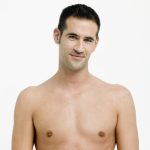
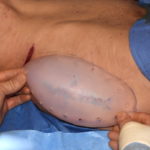
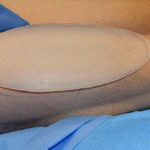
Male chest enlargement by soft solid pectoral implants is done by placing them under the pectoralis major muscle. The implant is placed so that it stays above the lower muscle border, creating a larger pectoralis muscle bulge.

These are the typical postoperative instructions to follow after having had pectoral implant surgery.

1. Pectoral implants in men, similarly to breast implants in women, are associated with a moderate amount of pain in the first few days after surgery.  Usually narcotic pain medications are needed and you should them as prescribed. In a few days, you may switch to Tylenol or Ibuprofen or alternate between doses with the narcotic medication.

2.  There will be a circumferential chest wrap placed right after surgery. This is in place for comfort only and does not play a role in maintaining the position of the implants. You may take it on and off based on your comfort. Most patients feel more comfortable wearing fairly continuously for the first week after surgery.

3.  The sutures in the armpit incisions are dissolveable and do not need to be removed. You may apply antibiotic ointment to the armpit incisions twice a day for the first week after surgery.

4. Bruising may develop on the chest a few days after surgery which is perfectly normal.

5. You may shower and get your chest and armpits wet. There is no harm in cleaning them with soap and water.

6. Your armpits will feel stiff and sore after surgery and your arms more so on raising them. A faster recovery will occur if you begin raising your arms up to the level of your shoulders in the first day or two after surgery. Thereafter, practice raising your arms above your head. These arm range of motion exercises will help the injured pectoralis muscle feel less stiff sooner.

7. You may wear any type of shirt or garment, including one that has to pull over your head to get it on or off.

8. There are no restrictions on normal daily activities after the surgery. You may do light exercise anytime afterwards that you feel comfortable. But no strenuous exercise of the chest muscles for three weeks after surgery.

9.   You may drive within several days after the procedure, provided you are off pain medication and can react normally to driving conditions.

10.  If any redness, tenderness, or drainage develops on the chest or from the armpit incisions after the first week of surgery, call Dr. Eppley and have your pharmacy number ready.

Postoperative Instructions for Earlobe Repair and Reconstruction

Sunday, March 17th, 2013


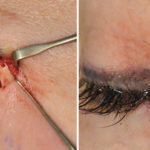
Repair of the earlobe is done for a range of conditions from a tear caused by an ear ring, stretching of the earlobe from gauging to traumatic injuries. The small size of the earlobe allows even complex repairs to be done under local anesthesia as an office procedure in most cases.

The after care instructions for earlobe repairs and reconstructions are as follows:

1. Earlobe repairs, whether a simple split repair or a more complete reconstruction, are associated with a minimal amount of pain in the first few days after surgery.  Usually narcotic pain medications are not needed and Tylenol or Ibuprofen are sufficient.

2.  There may be a small dressing (tape or bandaid) placed over the earlobes for the first 12 to 24 hours if the earlobe has significant reconstruction. Its purpose is to catch any oozing that may occur right after surgery. (usually there isn’t but as a precaution) It may be removed the next day. In smaller earlobe repairs there is no dressing used over the sutures.

3.  A light layer of antibiotic ointment needs to be applied to the sutures on the earlobes three times per day to keep them moisturized. This is done whether removeable or dissolveable sutures are used.

4. If permanent sutures are used, they will be removed by Dr. Eppley in 10 to 14 days after surgery.

5. You may shower, wash your face and shave (men) the next day. There is no harm is getting them wet with soap and water.

6. Do not pull on your earlobes or wear clip-on ear rings for up to one month after the procedure. Re-piercing your ears should wait at least 6 to 8 weeks after the earlobe repair.

7. You may wear eyeglasses or sunglasses after the procedure.

8. There are no activity restrictions after the surgery. You may exercise at any level at which you feel comfortable.

9.   You may drive right after the procedure. Since most earlobe repairs are performed under local anesthesia, many patients drive themselves to and from the facility.

10.  If any redness, tenderness, or drainage develops from the earlobe after the first week of surgery, call Dr. Eppley and have your pharmacy number ready.

Postoperative Instructions: Buttock Implants

Monday, March 11th, 2013


1. Buttock implants are associated with a significant amount of pain in the first few days after surgery. Take your pain medications (narcotics) as needed. That would be 2 to 3 tablets every 3 to 4 hours as needed.

2.  You will have an above the knee compression girdle placed on right after the surgery that you will wear home. The garment is there for comfort so wear it afterwards every day if it feels better on. You may remove the garment and shower the next day after surgery.

3.  The incision between your buttocks will be covered with glued on tapes. There is no care needed for it. It is ok to get it wet and it will likely get loose in the first week after surgery.

4. The tapes on your incisions will be removed by Dr. Eppley at your first follow-up visit. Most of the sutures will be dissolvable and underneath the skin. There will be several support sutures on the outside which will be removed two or three weeks after surgery.

5. Sitting on your buttocks will be uncomfortable and should be avoided for the first few days after surgery. It will likely be more comfortable initially to lay on your stomach or back. While you can’t hurt the implants by sitting on them, it will be a few days until that feels more comfortable.

6. Wear whatever clothes feel comfortable. Initially loose clothing like sweatpants is best.

7. Numbness of the skin around the buttocks is normal after this kind of surgery. Normal feeling will return in a few weeks after surgery.

8. Avoid exercise of any kind for four weeks after surgery so breakdown (opening) of the incisions can be prevented. Too much activity too soon is the main reason why problems with healing of the incisions occurs.

9.   You may drive when you feel comfortable and can react normally and are off pain medication. It is all about how comfortable sitting on your buttocks is before you can drive.

10.  If any redness, tenderness, or drainage develops after the first week of surgery, call

Dr. Eppley and have your pharmacy number ready

Postoperative Instructions: Inner Thigh Lifts

Tuesday, March 5th, 2013


Inner thigh lifts are done to recontour the bulging or full area between the inside of the upper legs. In some cases, it is done to correct sagging inner thigh skin after a large amount of weight loss. Through a crecent removal of skin of varying widths with the upper end in the groin crease, the sagging thigh is lifted and tightened. Liposuction of the fat in the thigh skin below the excision is often done to debulk the inner thigh area as well. The location of the incisional closure/scar is hidden as much as possible in the groin crease.

The postoperative instructions for inner thigh lifts are as follows:

1.  Thigh lifts usually have a minimal amount of postoperative discomfort but they will feel very tight. There will be some swelling of the thighs and groins after this kind of surgery. This will go away within a few weeks.

2.  There are no dressings or garments to cover the incisions but they will be heavily taped. The tapes are to be left in place to serve both as a dressing and reinforcement of the incisions.

3.  After 48 hours, take a shower and do not worry about getting the tapes wet.  Do not take a bath or submerge the incisions under water for three weeks after surgery.

4.   The tapes on your incisions will be removed by Dr. Eppley at your first follow-up visit. Most of the sutures will be dissolvable and underneath the skin. There may be several support sutures on the outside which will be removed two weeks after surgery.

5.   Numbness of the skin around the groin and inner thigh is normal after this kind of surgery. Normal feeling will return but it may take up to three months after surgery for that to occur.

6.   Avoid exercise of any kind for four weeks after surgery so breakdown (opening) of the incisions can be prevented. Too much activity too soon is the main reason why problems with healing of the incisions occurs.

7. Squatting places the greatest stress on the inner thigh incisions and should be avoided as much as possible until the incisions are well healed.

8. You may drive when you feel comfortable and can react normally and are off pain medication.

9. The inner thigh scars will initially be red and ropey feeling. This will take months to settle down.

10.   If any redness, tenderness, or drainage develops after the first week of surgery, call Dr. Eppley and have your pharmacy number ready.

Postoperative Instructions: Migraine Surgery

Sunday, March 3rd, 2013


Migraine surgery can be done in the properly selected patient through decompression of what is known as peripheral triggers. These are various locations of large sensory nerves that may be entrapped by muscle and other tissues as they exit the skull bone. Three such peripheral triggers have been identified including the supraorbital nerves for forehead or frontal migraines, the zygomaticotemporal nerve for temporal migraines and the greater occipital nerve for back of the head migraines. Through small scalp incisions the tissue around the nerve is cleared (decompression) removing any pinching effect on it.

The typical postoperative instructions for migraine surgery are as follows:

1. Most cranial nerve decompression procedures have only modest pain after surgery. Patients usually only feel the need to use Tylenol or Ibuprofen for just a few days after the procedure, some patients may need stronger pain medication for a few days. In rare cases the surgery may actually trigger a migraine and you may use your regular migraine medications as needed.

2. You may sleep in any position that feels comfortable. Most find the best comfort to sleep sitting up for the first few days after surgery.

3. There may be a circumferential wrap placed around the head right after surgery. This will be worn overnight and you may remove it the next morning. It does not need to be replaced.

4. You may shower and wash your hair the next day. There is no harm in getting the scalp sutures wet.

5. The sutures used in the scalp incisions will dissolve on their own. There is NO need for suture removal.

6. You may treat any eye bruising with ice or neck stiffness with a warm pad in the first few days after surgery.

7. There will usually be some temporary scalp numbness or periodic itching in the first few weeks after surgery. This is due to the scalp manipulation and will resolve on its own with healing.

8. There are no limitations to any physical activities after migraine surgery. You may feel free to run, workout and do any non-contact sporting activity as soon as you feel comfortable. Wearing of hats or head bands is based on scalp tenderness.

9.There are no restrictions on what you can eat or drink after surgery.

10. If any incisional or scalp redness, increased tenderness or swelling, or drainage develops after the first week of surgery, call Dr. Eppley and have your pharmacy number ready.

Postoperative Instructions for Tracheal Shave (Adam’s Apple Reduction) Surgery

Wednesday, February 20th, 2013


A tracheal shave or Adam’s Apple reduction is the removal of the protruding portions of the paired thyroid cartilages that cover the larynx. This is done through a small horizontal neck incision directly over them in a natural neck skin crease. The cartilages are reduced by shaving or burring them down but without making them unduly weak or disrupting the attachments of the underlying vocal cords. How much reduction of the neck bulge that can be achieved highly depends on the thickness of the cartilages.

The following are typical after surgery tracheal shave instructions:


1)  Most tracheal shave procedures have virtually no pain after surgery. Patients usually only feel the need to use Tylenol or Ibuprofen for just a few days after the procedure, if any medication at all.

2) There  will be a flesh-colored tapes glued on over the incision. That will stay on for a week or so. It will either be removed by Dr. Eppley at the first postoperative follow-up (in town patients) or you may peel it off after a week for out-of-town patients.

3) There may or may be some spotting of blood on the tapes. This is normal and not a cause for concern.

4. The sutures used in the small neck incision are all under the skin and will dissolve on their own. There is NO need for suture removal.

5. You may shower and wash your hair as normal the following day. There is no harm in getting the  neck tapes wet.

6) There may be some mild neck stiffness and soreness when you extend your neck backwards after surgery. Avoid excessively stretching your neck backwards for a few weeks after surgery once the tapes are removed.

7) Once the neck tapes are removed, you may begin to apply any topical scar treatments if you desire.

8) There are no limitations to any physical activities after tracheal shave surgery. You may feel free to run, workout and do any non-contact sporting activity as soon as you feel comfortable.

9) There are no restrictions on what you can eat or drink after surgery. Swallowing has no adverse effects on neck healing.

10. If any neck redness, increased tenderness or swelling, or drainage develops after the first week of surgery, call Dr. Eppley and have your pharmacy number ready.

Postoperative Instructions for Eyebrow Hair Transplants

Thursday, February 14th, 2013


The creation of a fuller and more hair dense eyebrow is done by single follicular transplants from the scalp. The grafts are usually harvested from the scalp hair above the ear. The single grafts are placed in a flush radiating pattern along the thin or deficient eyebrow from the inner aspect near the nose to the tail of the brow bone.

The following are the typical postoperative instructions after the procedure:

1.  Most eyebrow hair transplant procedures have virtually no discomfort from either the donor (scalp) or the recipient (eyebrow) site. Patients usually only feel the need to use Tylenol or Ibuprofen for just a few days after the procedure, if any medication at all.

2. There are no dressing used on the eyebrows after the procedure. One should sleep with their head elevated for a few days and be careful to not sleep on your sides, so as to not rub out any hair transplants.

3. There often is some bruising around the eyebrows which will take up to one week to

clear. One may take ArnicaMontanatablets (30x or 30c) one week before and after the procedure to help with bruising prevention and clearance.

4. The sutures used in the scalp donor site above the ears are not dissolveable. They will be removed in the office 10 to 14 days after the procedure. They require no topical care.

5. You may shower and wash your hair as normal the following day. There is no harm in getting the scalp suture lines wet.

6. For the first 24 hours after the procedure, leave the eyebrows and their crusts alone. On the second day after the procedure, you may gently irrigate the transplanted area to remove any dried crusts. (you will be supplied with a syringe) This can be done in the shower every day for a week after the procedure.

7. After each syringe washing, gently apply antibiotic ointment to the brows to help soften any crusts so they are more easily removed with the next washing.

8. There are no limitations to any physical activities after eyebrow hair transplantation surgery. You may feel free to run, workout and do any non-contact sporting activity as soon as you feel comfortable.

9.  You may wear regular glasses or sunglasses right after the procedure but be careful that they do not rub on the eyebrows.

10. If any eyebrow or scalp redness, increased tenderness or swelling, or drainage develops after the first week of surgery, call Dr. Eppley and have your pharmacy number ready.

Postoperative Instructions for Braline Backlifts

Tuesday, February 12th, 2013


Braline backlifts eliminate back rolls that at or below the braline. The back roll is cut out, including skin and fat, and replaced with a horizontal scar that is designed to lay along or within the braline. This creates a flattening of the back for the trade-off of a scar.

The following are the typical postoperative instructions after the procedure:

1.  Most backlift procedures have  surprisingly little discomfort. The back may feel tight but not particularly painful. Patients usually only feel the need to use pain medication for just a few days after the procedure.

2. In all cases of backlifts, there will be a circumferential wrap around the area for the first night after surgery. You may remove this wrap the day after surgery. It does not need to be used thereafter unless it feels more comfortable to do so. You may wear a bra anytime after 48 hours.

3. The sutures used in the incisions of a backlift are all under the skin and will be dissolveable. The incisions will have glued on tapes that will stay in place until Dr. Eppley removes them. They require no topical care.

4. You may shower as normal within 48 hours of surgery. There is no harm in getting the back tapes wet.

5. Backlifts will cause some swelling and bruising around the incisions and usually lower in the back in most cases. This is normal. It is ok to lay on your back or on your sides.

6. In some cases, drains may be used in backlifts. They are usually removed in 1 to 2 days after surgery. Empty them directed. There is no need to record their output.

7. There are no limitations to normal everyday physical activities after backlift surgery. You may feel do what feels comfortable. You should not do any strenuous or exertional activities until three weeks after surgery.

8. You may eat and drink whatever you like right after surgery.

9.  You may drive the next day after surgery when you feel comfortable and are not on any pain medication.

10. If any incisional redness, increased tenderness or swelling, or drainage develops after the first week of surgery, call Dr. Eppley and have your pharmacy number ready.

Postoperative Instructions for Temporal Implants

Thursday, February 7th, 2013


Temporal augmentation with implants is done by inserting them through a small vertical incision in the temporal hairline. They are placed on top of the muscle but below the overlying fascia. They are composed of a very soft and flexible silicone material that feels like soft tissue (muscle or fat) and not hard like bone. Different shapes and thicknesses of implants are available to best fill out esch patient’s temporal defects.

The following postoperative instructions for temporal implants are as follows:

1.  Most temporal implant procedures have no discomfort. Patients usually only feel the need to use Tylenol or Ibuprofen for just a few days after the procedure, if any medication at all. You may also feel free to use ice packs on the temples for discomfort relief and swelling reduction the first night after surgery if you desire.

2. In all cases of temporal implants, there will be a circumferential wrap around the head for the first night after surgery. You may remove this wrap the day after surgery. It does not need to be used thereafter.

3. The sutures used in the incision in the temporal hairline will be dissolveable. There is NO need to apply antibiotic ointment on them. They require no topical care.

4. You may shower as normal the following day and you may wash your hair as normal 48 hours after surgery. There is no harm in getting the temporal suture lines wet.

5. Temporal implants may cause some swelling and bruising the eyelids or cheeks in some patients. You may was your face and apply make-up over any bruised areas the following day.

6. There are no limitations to any physical activities after temporal implant surgery. You may feel free to run, workout and do any non-contact sporting activity as soon as you feel comfortable.

7. You may eat and drink whatever you like right after surgery.

8.  You may drive the next day after surgery when you feel comfortable and are not on any pain medication.

9.  You may wear regular or sunglasses when the temporal swelling permits and it feels comfortable to do so.

10. If any temporal redness, increased tenderness or swelling, or incisional drainage develops after the first week of surgery, call Dr. Eppley and have your pharmacy number ready.


Dr. Barry EppleyDr. Barry Eppley

Dr. Barry Eppley is an extensively trained plastic and cosmetic surgeon with more than 20 years of surgical experience. He is both a licensed physician and dentist as well as double board-certified in both Plastic and Reconstructive Surgery and Oral and Maxillofacial Surgery. This training allows him to perform the most complex surgical procedures from cosmetic changes to the face and body to craniofacial surgery. Dr. Eppley has made extensive contributions to plastic surgery starting with the development of several advanced surgical techniques. He is a revered author, lecturer and educator in the field of plastic and cosmetic surgery.

Read More


Free Plastic Surgery Consultation

*required fields


Pricing

The cost of any type of elective plastic surgery plays a major role in the decision to undergo the procedure(s).

Get Your Quote Here


My Plastic Surgery Story

Military Discount

We offer discounts on plastic surgery to our United States Armed Forces.

Find Out Your Benefits


Categories