EXPLORE
Plastic Surgery
Dr. Barry Eppley

Explore the worlds of cosmetic
and plastic surgery with Indianapolis
Double Board-Certified Plastic
Surgeon Dr. Barry Eppley

Archive for the ‘injectable fillers’ Category

Mini-Mommy Makeover Procedures

Sunday, May 19th, 2013

The concept of a Mommy Makeover plastic surgery procedure is about combining abdominal and breast reshaping in one operation. The breast and abdominal components are not new and include many well known procedures such as tummy tucks, breast implants, liposuction and breast lifts in whatever combination each individual women needs. While the effects of a Mommy Makeover can be dramatic, breast and abdominal procedures are major surgery with significant recovery as well.

But there are numerous other procedures of lesser magnitude that could also be lumped into the Mommy Makeover category and consist of a variety of ‘nips, tucks and sticks’ that create effects that mothers would also like. Here are some of the most noteworthy.

BOTOX  For reduction of those facial expression lines that come from the stress of balancing mother and wife roles, Botox injections are probably the most common injectable Mommy procedure.

Vi/PERFECT PEELS With only a few days of redness and flaking, these medium-depth facial peels are essentially painless to go through and provide a real boost to one’s complexion. A few of these a year will keep a mother’s skin radiant and glowing.

C-SECTION SCAR REVISION For those women that don’t need a tummy tuck and have a noticeable c-section scar with just a little pooch above it, widely cutting out the scar can produce a flatter upper pubic area. This scar revision can be combined with some lower abdominal liposuction for an additional and wider flattening effect.

UPPER LIP PLUMPING Some well placed Restylane or Juvederm injections into the upper lip has an instant youthful volumizing effect. This is particularly evident if the cupid’s bow and philtral columns are accentuated.

NIPPLE REDUCTION Breast feeding can elongate the nipple which can be a source of embarrassment and out of proportion to the size of the areola. Under local anesthesia, the nipple length can be reduced by half or more.

EARLOBE REPAIR Fixing stretched out ear ring holes or complete tears through the lobe can allow old or new ear rings to be comfortably worn again.

BELLY BUTTON REPAIR (Umbilicoplasty) Pregnancies can change an innie belly button to an outie due to a small hernia through the umbilical stalk attachment. Tucking the peritoneal fat back through the hole and reattaching the stalk of the belly button back down to the abdominal wall will recreate that an old inne look again.

EXILIS For those stubborn fat areas that just won’t go away despite some diet and exercise, this non-surgical fat treatment can easily fit into a busy mom’s schedule. It takes a series of treatments to see the effects but there is no downtime with 30 minute in-office treatment sessions.

These mini-Mommy Makeovers provide changes that do not require major surgery or recovery and can fit into anyone’s hectic schedule.

Dr. Barry Eppley

Indianapolis, Indiana

Product Review: Juvederm Voluma XC

Thursday, May 9th, 2013


The range of injectable fillers is astonishing today compared to what is was just ten years ago. But the majority of the commercially available fillers are composed of hyaluronic acid which has been proven to have a very low rate of complications and assured resorption over a predictable time period. The degree of cross-linking of the hyaluron molecules and its concentration (mg/ml) has a major influence on the duration of the filler’s effect.

Hyaluronic acid-based fillers is the most ‘natural’ of substances to inject into the skin as young healthy skin contains an abundance of it. As one ages, sunlight and other factors can reduce the amount of hyaluronic acid in the skin. The loss of hyaluronic acid causes the skin to lose structure and volume creating unwanted wrinkles and folds in the skin. Placing synthetic hyaluronic acid back into the skin is a proven safe and effective method to replace the lost volume and reduce these wrinkles and folds.

One of the major player’s in the hyaluronic acid-based filler market is Juvederm and is one of the most recognized brand names in the U.S. market. It has developed into a line of different products for injection into various levels of the skin. Once of its newer products is it Voluma injectable filler. Juvederm Voluma XC is composed of 20mg/ml and 3mgs of lidocaine. It is intended to restore lost volume to the face, also known as a facial volumizer for such areas as the cheeks and chin. While its predecessor Juvederm product lines offer excellent results when used for fine lines around the nose (nasolabial folds), mouth (marionette lines) and eyes (tear troughs), Juvederm Voluma XC is better suited for larger scale facial volumizing. The lidocaine is incorporated to reduce the pain of the injections.

While not yet FDA-approved in the U.S., it is widely used around the world in various countries. It is awaiting FDA evaluation for eventual clearance to be used in the U.S. which has not yet occurred. An FDA panel today has recommended Juvederm Voluma XC as safe and effective to treat age-related volume loss in the midface. This suggests that clearance is likely to occur most likely later this year. If the FDA approves Voluma XC for cheek augmentation, it would be the first injectable filler approved for this indication in the U.S. Being able to be injected deep down to the bone in the cheek also suggest that it could be similarly used for chin augmentation as well.

Dr. Barry Eppley

Indianapolis, Indiana

Hyaluronidase for the Treatment of Injectable Filler Problems

Saturday, April 20th, 2013


Injectable fillers such as Juvederm and Restylane are used to help smooth wrinkles and fill in folds that occur from aging. They are injected into the nasolabial folds, upper and lower lips and marionette lines as the most common treated areas. Newer applications are for such areas as tear troughs, undereye hollows, temples, cheeks and as an overall facial volumizer.

While a wide variety of injectable fillers exist, the majority are composed of synthetic-derived hyaluronic acid, which is naturally found in the body around joints and in the eyes. Because of its hyaluron composition it can be used with the greatest versatility and has the lowest risk of complications. While the differing concentrations of hyaluron fillers create variable lengths of material duration, this does not seem to have any effect on the very low occurrence of skin reactions or adverse aesthetic results.

While inflammatory reactions are always a risk with any injectable filler, the most common side effects are aesthetic in nature, that being under correction or overcorrection of the treated area. Overcorrection, or too much of a good thing, is when too much filler material is injected into any area or when there are complaints of material irregularities such as lumps and bump. Either way there are material excesses that must be removed or reduced to create a better aesthetic effect.

Uncorrection is an easy filler problem to solve by the addition of more material. Overcorrection is potentially more problematic as making the material dissolve is not quite as simple. But injecting the excess is the correct approach but not just with more filler material.

Hyaluronidase, an enzyme that is also found naturally in the body, degrades (breaks down) hyaluronic acid. Hyaluronidase is used in medicine along with other drugs to increase the dispersion and delivery of various drugs. For example, it is used often in ophthalmic surgery to increase the delivery of local anesthetic. It is the cure to overcorrection with hyaluron-based injectable fillers because it breaks down the molecular chains of the material causing it to become quickly absorbed.

The first brand drug name of hyaluronidase was Wydase, which is no longer produced. However, there are other options now including Amphadase and Vitrase. It is available in 1ml vials which contain 150 units of hyaluronidase. One treatment to correct or remove filler can take as little as 0.2ml of solution. It is recommended by the manufacturers that a skin test be done prior to injecting hyaluronidase to check for any adverse reactions. The most common reactions are typically allergic reactions such as itching, redness or pain at the injection site. Anaphylactic reactions are very rare and have been found in less than 0.1% of patients. Due to the ‘urgency’ of most patients with their filler concerns, it is not usually performed and treatment is done immediately.

Overall, hyaluronidase has been found to decrease injectable hyaluronic acid-based fillers with little to no side effects. Its effects are quite rapid and a noticeable decrease in the filler material can be seen within a few days.

Lora Dillman, RN

Dr. Barry Eppley

Indianapolis, Indiana

The Expanding Role of Injectable Facial Fillers

Wednesday, April 17th, 2013


Injectable fillers have come a long way in the past decade. While once viewed solely as a wrinkle treatment, fillers now have an expanded role to help add facial volume. A host of injectable compositions are now available to help lift, mold and contour almost any facial area.

The use of injectable fillers has spurned what some call a reinflation revolution. Recognizing that facial fat resorbs in most people as we age, the face becomes more shrunked in and in some people even gaunt in appearance. Fillers can be used either right under the skin and even down to the bone. Cheeks, around the eyes, nasolabial folds and the temples are commonly treated areas. A variety of injectable fillers are available to add this degree of facial volume from the more commonly used hyaluron-based types to Radiesse and Sculptra.

Even the nose changes as we age. The tip can droop and get flatter and the skin over the bone and cartilage in the upper nose gets thinner. Injectable fillers can be placed on top of the bone and cartilage to give the nose a more youthful look by filling in a low bridge and helping to push up the tip a bit. While a far cry from the results of a formal rhinoplasty, it can be very useful in the properly selected patient. In the unforegiving and relatively thinner tissues of the nose only the hyaluronic-based fillers should be used.

The lips are well known to age as well with thinning of the vermilion and the development of vertical lip lines. While injectable fillers are more commonly put into the pink part of the lips, there is always the risk if placing too much and creating the dreaded ‘duck look’. One filler technique to precent this problem is too fill in the skin around the lips, creating a shadowbox look that makes them look fuller but not ducky.

One issue that would expand the use of facial volumizing fillers even further would be a filler that not only lasts longer but is more malleable and can be shaped under the skin like putty. One such promising filler is Voluma, a spin-off of the Juvederm filler line. Not yet FDA-approved, it is thicker than any other hyaluron-based material. It can be injected against the bone and into the muscle to create an almost implant-like effect.

Dr. Barry Eppley

Indianapolis, Indiana

Injectable Fillers and Their Incidence of Complications

Sunday, April 7th, 2013


Besides Botox, injectable fillers are the most popular form of non-surgical facial rejuvenation. While they have undergone major compositional changes since bovine collagen was initially introduced in 1981, their growing popularity is because they have an instant effect, are largely effective for the right indications and it is generally perceived that they have few complications.

With well over a dozen injectable filler options of different chemical compositions, complications can occur and the occurrence does differ based on the injectable filler type. The hyaluronic-acid based fillers occupy the largest number of available inbjectable filler materials because it has proved to be far superior to any collagen-based material in terms of its duration of effects and low incidence of inflammatory and aesthetic problems. Particulated fillers, that contain resorbable nor non-resorbable materials, do have a slightly higher risks of complications but it is generally believed to be only marginally higher.

In the online March 2013 issue of the Facial Plastic Surgery journal, a study was published that evaluated the incidence of complications from injectable soft tissue filler treatments. The study results were based on over 2,000 injected patients over a five year period, half of which were done with hyaluronic acid-baed fillers. The other half consisted of a mixture of Radiesse and Sculptra. Typical and self-limiting problems such as swelling and bruising were not counted as complications. Complications consisted of nodules or granulomas, cellulitis (infection) and skin necrosis. The total number of injectable complications were 14 or 0.7%.

Based on the material composition of the injectable filler, complication rates differed. Hyaluronic-acid based fillers had the lowest (0.2%), a slightly higher rate with Sculptra (0.7%) and Radiesse with the highest. (2.6%) While the authors admitted that patients with injected complications may have been missed, my experience is that patients who developed any of these skin complications would be highly unlikely to not let their injector know.

Injectable fillers offer a very valuable and versatile option for facial rejuvenation. Of their many benefits is that few significant complications occur with their use and this current study supports that well known perception. But in the search for longer-lasting results, the particulated fillers are associated with a significantly higher number of serious complications because they leave behind more reactive substances. Keeping these complications low undoubtably requires a more skilled and experienced injector.

Dr. Barry Eppley

Indianapolis, Indiana

The Use of Microcannulas for Injecting Local Anesthetics in Plastic Surgery

Friday, April 5th, 2013


The use microcannulas has been a major advance in the delivery of injectable fillers. Besides a dramatic decrease in discomfort they result in no risk of bruising…two major improvements over that of traditional needlle delivery approaches. Despite these very obvious benefits, which are apparent in one’s very first use of them, I observe very little awareness amongst physician’s and patient alike. Talking about it with my colleagues or patients makes it seem like it is a completely foreign concept even though microcannulas have been around now for a few years.

One area that microcannulas really excel is in the treatment of facial areas which are most concerning for pain and bruising. Injecting fillers into the tear troughs, lower eyelids and the lips with the use of microcannulas has become much more comfortable knowing the wide safety margin with a blunt-tipped device. While there is a very minor learning curve to their use, blunt tips allow one to ‘learn’ as much as needed in a patient without inflicting pain on them. While the skin still has to be penetrated by a needle to make an entry site through the skin  for the microcannula to pass through, this is a very small scarifice to gain their benefits.

But microcannulas can be used for more than just injecting synthetic fillers. They can be equally useful for injecting local anesthestics in the office or for fully awake procedures, either in broad areas like for facial laser resurfacing or for lip or eyelid surgery. This makes the most difficult part of the procedure for the patient infinitely easier as well as virtually bruise-free. I just did a patient today who came in from out of town for a lip reduction and wanted to have it done under a local anesthestic. Injecting his upper and lower lips with a microcannula took away the most challenging part of the procedure both for him and for me!

The most interesting part of microcannulas to me is what took so long for the concept to be come clinically available. Fat has been extracted for decades by the use of large cannulas and the numbing and hemostatic solution to make it possible is infused with a much smaller cannula. I suspect this was an issue of the technology and machinery to do it. It is incredible that even done at the very small 30 gauge level a microcannula is available for use.

Dr. Barry Eppley

Indianapolis, Indiana

Microcannula Injectable Filler Lip Treatments

Tuesday, March 26th, 2013


While many patients enjoy the benefits of injectable fillers into the lips, they do not look forward to the experience of getting it. No matter how it is conventionally done, there is going to be pain involved. While I have a few patients who prefer to take it ‘straight’ (no form of anesthesia), they are the exception. Most of the time I use dental injections, which if skillfully placed, can make the lip injection experience near painless. (other than the intraoral blocks)

But the use of dental blocks does not decrease the risk of bruising from lip injections as a sharp needle, small as it may be, can still cut blood vessels. And a bruise in the lips, even though it is innocuous and will eventually go away, is a visible reminder for a week or so that one has had lip injections.

The use of microcannulas has changed all of these lip injection issues and risks. With a blunt-tipped introducer rather than a sharp needle, the risk of bruising is virtually eliminated and pain is dramatically reduced. In addition, by using a single pass on microcannula withdrawal the issue of lumpiness and asymmetry is much less likely with a more even linear deposition of the filler material across the lip.

But the use of microcannulas in the lips is not perfectly pain-free. A small needle stick must be done to allow the microcannula to pass into the lip. I prefer to put a small drop of local anesthetic into the skin just outside the corner of the mouth or  directly into the corner itself. This will then allow for comfortable making the needle stick and passing the microcannula in and out as much as one needs. Almost all patients will feel the pressure of the microcannula as it passes through the lip but this is not usually reported as pain.

Injectable filler treatment of the lips will never be a completely pain-free experience. But the use of microcannulas make it about as close as it can be.

Dr. Barry Eppley

Indianapolis, Indiana

Options for Natural Cheek Augmentation

Tuesday, March 19th, 2013


One of the key features of an attractive and youthful face is the cheek area. The desire for fuller cheeks, however, is driven more than just by that of model and celebrity faces. Part of the aging process is losing volume (fat) in the cheeks and temple areas, creating more hollowed or gaunt type look. For those that start out with thinner faces, this process is more accentuated even earlier in the aging process. This form of facial aging can not be treated by any form of a facelift or tissue shifting approach. It requires restoration of facial volume.

So it is no surprise that plastic surgeons over the years have used every available option in their armamentarium to reshape and lift the cheek area. While once only able to be treated by synthetic implants up to the early 1990s, injectable fillers of differing compositions for cheek enhancement became a dominant force over the past two decades as they have surged in popularity. The use of autologous fat in just a few short years has also become now a major tool for use in the cheek.

The single greatest advantage to synthetic injectable fillers for cheek enhancement is its immediate result. The hyaluronic acid-based fillers, such as Restylane or Juvederm, offer the greatest margin of safety because of their lack of inflammatory response and assured resorption profiles. Other fillers such as Radiesse and Sculptra offer longer results but a somewhat higher risk of soft tissue reactions to their particulated content. Composition aside, the biggest disadvantage to fillers is that they are temporary. (which is also their advantage) This makes them expensive to maintain over time if one likes the result. But they are actually a low cost approach to doing a trial cheek enhancement that is completely reversal. Using a microcannula delivery technique, injectable fillers can now be delivered painlessly and without bruising.

On the surface, fat carries with it many of the same features as synthetic materials because it is injected. But beyond being injectable, it is a very different filler material. Because it is harvested from each individual patient, there is no chance of any inflammatory reaction and a very low risk of infection. It’s other tremendous advantage is that there is no limit on the volume that can be injected (in the small face) and its inherent composition of stem cells has its own list of theoretical advantages. In addition, it is done for a set procedure price rather than by a cc cost for synthetic fillers. It is similarly injected by small cannulas so placement can be very exact without bruising. The best fat placement is down at the bone level and in the muscle, where survival is better. But with all these advantages comes two distinct disadvantages…it is a minor surgical procedure and there is no assurance as to how much fat will survive. For these reasons, fat grafting is often advocated when the patient is in surgery for other procedures (e.g., facelift, lkipsouction etc) or the patient has been previously qualified by having had successful cheek augmentation with synthetic fillers.

Implants offer the one permanent method of cheek enhancement. With no external scarring as a result of being placed from inside the mouth, implants are not only permanent but can provide the most dramatic of cheek augmentation effects. The most difficult aspect of using cheek implants is selecting the proper style and size. With dozens of implant options the choices can be overwhelming and there is no clear-cut quantitative way to know what effect the implant will create in any particular patient. It can also be surprising how much change can occur in the cheeks from what appears to be a relatively small implant.The cheek is a very volume-sensitive area. So it is always better to ‘undersize’ or choose a size below what you think you should use in many cases. The disadvantages to cheek implants are infection, displacement and asymmetry. Fortunately infections are very uncommon and displacement can be circumvented by securing the implant position with small self-tapping screw fixation. Avoiding asymmetry is a matter of experience and matching carefully the position of the implant in reference to various bony landmarks.

With three cheek augmentation options available, how does any patient know what is best for them? Cheek augmentation is a lot more art than it is science and appreciating the underlying bony anatomy, the overall facial shape and what look the patient is after is key. But you have to take the whole patient into analysis not just the cheeks. Thin people with low body fat may do poorly with fat grafting, the devout non-surgery patient can only have synthetic fillers, or those seeking the most efficient and long-term method may opt for implants. Good cheek results defy a cookie-cutter approach and the most natural outcomes come from knowing how to use all three…occasionally even blending two of the techniques together.

Dr. Barry Eppley

Indianapolis, Indiana

Plastic Surgery’s Did You Know: Lip Vermilion and Bigger Lips

Sunday, January 13th, 2013


The visible lip is composed of a special tissue known as vermilion. It is the pink or red part of the lip. Its vertical height determines the size of the lip that is seen. Vermilion is uniquely different than the surrounding skin being thinner, much more pliable and capable of substantial stretch. This is a valuable property when it comes to opening one’s mouth and allowing food to pass through. Its elasticity is also why injectable fillers work so well to make the lip bigger, they push the flexible vermilion up and outward creating a fuller lip. But there is a limit as to how much the vermilion can stretch and without adequate vermilion height the push of an injectable filler can only make the vermilion come forward rather than up. This is why women with very thin lips that receive injectable fillers can have the ‘duck lip’ look, too much vermilion movement forward and not enough upward. With thin lips more natural vermilion show may be achieved by actually moving its location. This is known as a vermilion or lip advancement procedure that changes the location of the vermilion-cutaneous border by removing skin and advancing the vermilion border outward. This is a powerful procedure that creates a dramatic change in lip size and is permanent.

Plastic Surgery Product Review: Microcannulas for Injectable Filler Treatments

Tuesday, January 1st, 2013


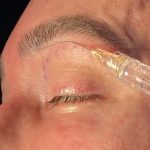
While injectable fillers are highly popular and one of the top non-surgical aesthetic treatments, it does involve the use of a needle and is not pain-free. Placing injectable fillers is more difficult and can be more uncomfortable than a ‘simpler’ Botox injection session. The use of sharp needles for placing injectable fillers has been improved upon by the use of blunt microcannulas.

Made now by several different manufacturers, a blunt microcannula has a rounded tip with a side port for the extrusion of the injectable material. While requiring a needle stick for passing the microcannula under the skin, the blunt tip allows it to be slide around under the skin without discomfort. Since the blunt tip does not cut tissues, there is no discomfort and no risk to create bleeding and bruising.

My patient experience with the microcannula technique for injectable fillers has been exceedingly positive. Any patient that has had filler injections in the past with needles becomes their biggest advocate. They consistently comment on how much more pleasant it is to receive the injections without any topical anesthetics or nerve blocks even in the very sensitive lips. No patient has experienced any bruising.

This raises the question of why is not the microcannula the standard method that everyone uses for injectable fillers? Incredibly its extra added cost of $5 per treatment is likely the limited issue. But the peace of mind to the patient is well worth the cost of using the microcannula. There is also the unfamiliarity of  how to use the microcannula and the need for a needle entrance site.

Besides avoiding discomfort and bruising, microcannulas have the advantage of being to be maintained in place as the filler in injected and moving back and forth as necessary. This is different than when using needles, trying to get the needle out as soon as possible and then trying to massage the material into place. The only real limitation of the microcannula is that it can not be used to inject intradermally when treating superficial wrinkles, but this is a minor drawback and one can still use conventional sharp needles to treat them.

Dr. Barry Eppley


Dr. Barry EppleyDr. Barry Eppley

Dr. Barry Eppley is an extensively trained plastic and cosmetic surgeon with more than 20 years of surgical experience. He is both a licensed physician and dentist as well as double board-certified in both Plastic and Reconstructive Surgery and Oral and Maxillofacial Surgery. This training allows him to perform the most complex surgical procedures from cosmetic changes to the face and body to craniofacial surgery. Dr. Eppley has made extensive contributions to plastic surgery starting with the development of several advanced surgical techniques. He is a revered author, lecturer and educator in the field of plastic and cosmetic surgery.

Read More


Free Plastic Surgery Consultation

*required fields


Pricing

The cost of any type of elective plastic surgery plays a major role in the decision to undergo the procedure(s).

Get Your Quote Here


My Plastic Surgery Story

Military Discount

We offer discounts on plastic surgery to our United States Armed Forces.

Find Out Your Benefits


Categories