EXPLORE
Plastic Surgery
Dr. Barry Eppley

Explore the worlds of cosmetic
and plastic surgery with Indianapolis
Double Board-Certified Plastic
Surgeon Dr. Barry Eppley

Archive for the ‘cheek augmentation’ Category

Options for Natural Cheek Augmentation

Tuesday, March 19th, 2013


One of the key features of an attractive and youthful face is the cheek area. The desire for fuller cheeks, however, is driven more than just by that of model and celebrity faces. Part of the aging process is losing volume (fat) in the cheeks and temple areas, creating more hollowed or gaunt type look. For those that start out with thinner faces, this process is more accentuated even earlier in the aging process. This form of facial aging can not be treated by any form of a facelift or tissue shifting approach. It requires restoration of facial volume.

So it is no surprise that plastic surgeons over the years have used every available option in their armamentarium to reshape and lift the cheek area. While once only able to be treated by synthetic implants up to the early 1990s, injectable fillers of differing compositions for cheek enhancement became a dominant force over the past two decades as they have surged in popularity. The use of autologous fat in just a few short years has also become now a major tool for use in the cheek.

The single greatest advantage to synthetic injectable fillers for cheek enhancement is its immediate result. The hyaluronic acid-based fillers, such as Restylane or Juvederm, offer the greatest margin of safety because of their lack of inflammatory response and assured resorption profiles. Other fillers such as Radiesse and Sculptra offer longer results but a somewhat higher risk of soft tissue reactions to their particulated content. Composition aside, the biggest disadvantage to fillers is that they are temporary. (which is also their advantage) This makes them expensive to maintain over time if one likes the result. But they are actually a low cost approach to doing a trial cheek enhancement that is completely reversal. Using a microcannula delivery technique, injectable fillers can now be delivered painlessly and without bruising.

On the surface, fat carries with it many of the same features as synthetic materials because it is injected. But beyond being injectable, it is a very different filler material. Because it is harvested from each individual patient, there is no chance of any inflammatory reaction and a very low risk of infection. It’s other tremendous advantage is that there is no limit on the volume that can be injected (in the small face) and its inherent composition of stem cells has its own list of theoretical advantages. In addition, it is done for a set procedure price rather than by a cc cost for synthetic fillers. It is similarly injected by small cannulas so placement can be very exact without bruising. The best fat placement is down at the bone level and in the muscle, where survival is better. But with all these advantages comes two distinct disadvantages…it is a minor surgical procedure and there is no assurance as to how much fat will survive. For these reasons, fat grafting is often advocated when the patient is in surgery for other procedures (e.g., facelift, lkipsouction etc) or the patient has been previously qualified by having had successful cheek augmentation with synthetic fillers.

Implants offer the one permanent method of cheek enhancement. With no external scarring as a result of being placed from inside the mouth, implants are not only permanent but can provide the most dramatic of cheek augmentation effects. The most difficult aspect of using cheek implants is selecting the proper style and size. With dozens of implant options the choices can be overwhelming and there is no clear-cut quantitative way to know what effect the implant will create in any particular patient. It can also be surprising how much change can occur in the cheeks from what appears to be a relatively small implant.The cheek is a very volume-sensitive area. So it is always better to ‘undersize’ or choose a size below what you think you should use in many cases. The disadvantages to cheek implants are infection, displacement and asymmetry. Fortunately infections are very uncommon and displacement can be circumvented by securing the implant position with small self-tapping screw fixation. Avoiding asymmetry is a matter of experience and matching carefully the position of the implant in reference to various bony landmarks.

With three cheek augmentation options available, how does any patient know what is best for them? Cheek augmentation is a lot more art than it is science and appreciating the underlying bony anatomy, the overall facial shape and what look the patient is after is key. But you have to take the whole patient into analysis not just the cheeks. Thin people with low body fat may do poorly with fat grafting, the devout non-surgery patient can only have synthetic fillers, or those seeking the most efficient and long-term method may opt for implants. Good cheek results defy a cookie-cutter approach and the most natural outcomes come from knowing how to use all three…occasionally even blending two of the techniques together.

Dr. Barry Eppley

Indianapolis, Indiana

Surgical Facial Changes for the Male Model Look

Wednesday, August 3rd, 2011

Almost anyone in the world is aware of the recent tragedy in Norway with the mass killings of an incomprehensible number of Norwegian teens and young adults. The murderer Anders Breivik appears to have acted alone, driven by his white supremacist and anti-Muslin views. What has caught my attention as a plastic surgeon, however, is comments that have been written about his facial appearance.


According to the head of Norway’s intelligence agency, it is believed that he had undergone plastic surgery in the past to look more “Aryan.” The agency’s head has stated that “You do not have that Aryan look naturally in Norway”…”Hitler would have had him on posters. He has the perfect, classic Aryan face. He must have had a facelift.”


While I am not an expert on Norwegian facial structure, I do know that he would not have had a facelift to change his facial appearance. That is not what a facelift does. A facelift is what I call ‘anti-aging facial surgery’, where one is trying to return to one’s prior appearance. This does not change your face but rather makes it look rejuvenated and less tired like it did 10 or 15 years ago. But you still look like you, just a better you.


Rather he would have undergone ‘structural facial surgery’, where the foundational components of the face are altered. That can and often does change one’s appearance. Foundational facial procedures are done at the bone or cartilage level, not just the skin and soft tissues. This includes plastic surgery procedures such as rhinoplasty and facial bone augmentations. (forehead, brow, cheek, chins and jaw angles) According to reports, he supposedly underwent nose and chin surgery at age 21. This would make more sense as these can change the structure of the face and definitely can make one more Aryan in facial appearance, particularly if certain elements of the face are already there.


This raises the question of what is an Aryan facial appearance and why does it look so? The word Aryan, at least as it was perceived and used in Nazi Germany, specifically refers to being white, blond-haired and blue-eyed. But there is not necessarily a specific set or arrangement of facial features that are ascribed to an Aryan face. People talk about it and one would know if they saw it but may not be able to describe the details of it.  But what it undoubtably refers to is a strong and well-chiseled face. For a male this would be highlighted by well-defined facial bony prominences of the brows, cheeks, chin and jaw angles. The nose would have a strong and high dorsal line with a balanced ratio between the three nasal thirds.


The concept of an Aryan face continues to exist today but it is better known as the ‘Male Model Face’. Most young male models in any advertisement today almost all have this type of facial appearance. Whether they have it by genetics, plastic surgery or the use of good lighting and/or Photoshop, the strong and desireable male face has these consistent features.


Plastic surgery techniques today can help many men undergo these type of structural facial changes. Rhinoplasty, anatomical cheek implants, square chin implants, vertical lengthening jaw angle implants and occasionally select fat removal below the cheeks and in the neck can create a face that has more well-defined angles and is more masculine in appearance. For some men, this ‘Male Model Surgery’ can be very effective provided they don’t have a lot of facial fat and not an overly round face.  

Dr. Barry Eppley

Indianapolis, Indiana

Cheek Augmentation and Facial Attractiveness in Men and Women

Saturday, July 23rd, 2011

It is well known that one of the major contributors towards the perception of an attractive face, albeit a man or a woman, is the proportion of certain features. Known as indicators of facial beauty, disproportionate and asymmetric features are the main reasons many patients seek plastic surgery procedures. One can debate endlessly why this is so, but we are fundamentally driven to an attractive face from an innate drive of evolution and the desire to procreate. Attractiveness is desireable because it is perceived, right or wrong, to be associated with better genes.

But what are some of these features and can they really be changed by plastic surgery? For women it is bigger eyes, a rounder forehead, a smaller nose, well defined cheeks, larger lips and a chin that is not too prominent. For men, slightly prominent brows, a nose with a high dorsal line, well-defined cheeks, and a strong chin and jaw angles are associated with more masculinity. Short of the size of the eyes, all of these facial features can be modified by differing plastic surgery techniques.

The one desireable facial feature that both men and women share is the value of high and well-defined cheek bones. It is probably the only facial feature whose size and prominence is considered attractive for both sexes. It is also the one facial feature that I never receive requests to be reduced. (short of Asian patients and this more about the zygomatic arch width not anterior cheek projection) Few patients, if any, really want smaller cheeks.

What is it about high cheekbones that makes them some desireable? Many say that they feminize a face. If high cheek bones contribute to greater femininity, then why would it be attractive on men? The caveat is that it is only an aesthetically desireable facial feature in a man when it coexists with a stronger jawline as well. Strong cheekbones on a man with a small jaw or chin does not make for an attractive face. It is the angularity of the three defining points of a male face, the cheeks, chin and jaw angles, that makes for its aesthetic desireability. Such well-defined facial skeletal highlights equates with a strong and virile personal character. (and maybe the chance to pass along some good genes)

The benefits of cheek augmentation in either a man or a woman must take into consideration these aesthetic and gender differences. While cheek enhancement can be done with injectable fillers, I am reserving my comments here to the insertion of implants. Injectable fillers are largely a good trial method to determine the merits of proceeding to a permanent cheek augmentation in my opinion. Cheek implants in women should be softer and more round to provide volume but they usually don’t need to be angular or cross onto the zygomatic arch or encroach upon the lateral orbital rim area. This can add too much width which is not usually feminizing. Cheek implants in men often need to be more angular and add more height. They are beneficial to help balance out a strong jawline or should be done in conjunction with chin and jaw angle augmentation.

The cheeks can contribute significantly to one’s facial attractiveness. But it needs to be considered within the context of the whole face. The balance of one’s facial features is what makes for gender-specific facial beauty.

Dr. Barry Eppley

Indianapolis, Indiana

Common Questions about Cheek Augmentation (Implants)

Saturday, January 16th, 2010

The appearance of a well-defined cheekbone helps provide a sculpted and youthful look as it provides midfacial prominence and give the appearance of a thinner lower face. Flat cheekbones can make a large nose look larger and a receding chin smaller. The cheekbones are one of the three convex prominences that help define your face, highlighting the eyes and adding balance to your features.

Cheek augmentation (also known as malar augmentation or malar implants) is a surgical method to bring the cheeks into better balance with your other facial features.

  1. How do I know I am a good candidate for cheek augmentation?

People who benefit by cheek implants have smaller or flatter cheek bones naturally and/or have sagging of the cheek soft tissues due to normal aging. With aging can also come deflation, or loss of healthy fat which normally lies just under the cheek bones. This can give a gaunt look to one’s face.

A cheek implant can build out the flat cheek bone, provided a lifting effect to sagging cheek skin, and can partially fill out a sunken in look. Think of it as adding substance which may just make the cheekbone bigger or help hold up sagging or collapsed tissues.

That being said, whether anyone would benefit by a cheek implant is as much an  artistic feel as a facial feature that can be precisely defined. Unlike other facial implants, such as chins or jaw angles which can be measured and morphed with computer imaging, cheek implants defy such analytical evaluation as the area is not a clean profile or silhouette. This is an area that requires a good evaluation and discussion with your plastic surgeon using a mirror and finger technique.

2. What are cheek implants made of?

The vast majority of cheek implants are made of solid silicone rubber that is very flexible. While there are a few other materials of which they are made, they are not very popular. What material they are made of is not as important as two other critical issues; what styles and sizes are available and how easy are they to insert. This is where silicone rubber has a huge advantage over other materials.

One type or style of cheek implant is not right for everyone. The cheek bone shape and geometry and the soft tissue overlying them is different for each patient. Just like the obvious benefits of different sizes, style or shape of the implant needs to be individualized. That is why there are nearly a half-dozen different cheek implant styles. Only a silicone rubber material can offer this diversity of selection.

The flexibility of silicone rubber and the ability to have feathered edges allows it to be the easiest material to position on the bone without having an edge that can be felt or seen.

3. How is cheek augmentation surgery done?

There are two approachs to placing the implant, from inside the mouth and through the lower eyelid. By far, the intraoral method from a small incision up high under the lip is preferred. The only reason to use the eyelid approach is if a midface lift or suspension is being done at the same time.

From inside the mouth, a path is made up onto the cheek bone. It can be extended out onto the zygomatic arch if necessary. Sizers are used to determine what will look the best. The final implant is then inserted. Some plastic surgeons secure the implant in place with a small titanium screw, others do not. Closure of the incision is done with dissolveable sutures.

4. Is cheek implant surgery painful? How long does the swelling last?

I would not call it painful, rather it is more uncomfortable due to the swelling. Often there is some numbness of the cheek skin  which goes away in the first month after surgery. There rarely is any bruising because the surgery is very deep on the surface of the bone. Any bruising that occurs will not be seen on the skin but will present only as swelling. While remnants of swelling take six to eight weeks to completely go away, you will look fairly normal within two to three weeks. The initial abnormal fullness will have go away by then.

5. What are the risks and complications that can occur?

The standard surgical risks of bleeding and infection apply but they are very uncommon. The risk that is more significant and probably accounts for most instances of revision or secondary surgery is implant asymmetry or sizing issues. Because the cheeks have two sides, the placement of the implants must be perfectly symmetrical. That may seem easy but even slight changes in orientation of the implant may be able to be seen. Implants can also shift or slide downward towards the direction in which they were placed. Oversized cheek implants are especially noticeable because they can make the face look very unnatural. Cheek implants are always best done smaller than bigger.

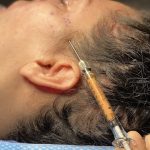
One risk of having cheek implants is delayed infection, even many years later. This is caused by one specific event…dental injections. This can happen when your dentist is numbing your upper teeth. The needle can tract bacteria near or onto the implant. Advise your dentist if you have cheek implants.

6. I’d like higher cheekbones but I don’t want them to look fake. How can this be avoided?

There are many well known examples of famous people that look strange and overdone after facial rejuvenation surgery. In some of these cases, it is obvious they had cheek implants and it is because they are too big. This ‘error’ is most likely to occur when cheek augmentation for anti-aging purposes and are being used to fill out sagging cheek tissues. A cheek implant is not the same as a breast implant…its size should not be pushed to do too much.

7. I have very flat cheeks that extend down below my eyes. It makes me look sad. Will cheek implants help?

Having flat cheekbones can give the face a long drawn look that many may describe as sad. In the facial expression of smiling, we naturally see more prominence in the cheek area. When it is flatter it adversely affects how one’s smile looks. More fullness in the cheek allows a more  youthful look, whether one is smiling or not.

Dr. Barry Eppley

Indianapolis, Indiana 

Common Concerns about Cheek Implant Surgery

Sunday, December 20th, 2009

A face that has good skeletal contours, which some would call sculpted, is desired by many young men and women. The appearance of high cheekbones is one important element of achieving such a look. Cheekbones create a well-defined face by creating an upper facial prominence which makes the lower face look thinner. Such a facial look is seen as ‘model-like’ as is reflected in much of our society’s advertising.

In performing cheek augmentation, there are numerous typical questions that prospective patients may have about the procedure. In my Indianapolis plastic surgery practice, here are some of the most common.

Q: I am afraid if I get cheek implants that it may look unnatural. I have seen some Hollywood people that supposedly have them and they look fake. Will this happen to me?

A: That is an avoidable result. In choosing the right cheek implant for any patient, three factors are considered…the selection of the patient, the size and shape of the implant, and properly positioning them  during surgery. Not every person will benefit from cheek implants, the whole face must be considered. Rounder and fuller faces are not usually good candidates. There are different styles and sizes of implants available. As a general rule, it is always best to not overdo them. A subtle enhancement is more aesthetically pleasing than being too big. The implant must be positioned and secured over the curve of the cheekbone that is most deficient.

Q:  I want higher cheekbones but do I need to have a scar to get that look?

A:  All facial implants need an incision to be placed into the bone site. Surgical access to the cheek is done from inside the mouth high up under the upper lip so there is no visible scar.

Q: My face looks very flat. Do I need more than just cheek augmentation?

A: Some patients have more significant flattening of the middle part of their face that involves the upper jaw (maxilla) as well. While increasing cheek projection is helpful, that alone may not be enough. In this case, another set of implants can be placed along the paranasal area. (base of the nose) These two sets of implants can help bring out the entire middle part of the face into better balance with the lower jawline.

Q: What is the most common complication that occurs with this type of cheek surgery?

A: Implant asymmetry. Because cheek augmentation is a ‘paired’ surgery, both implants must be placed exactly the same. That sounds simple but slight differences in angulation and orientation of the implant may be able to be seen when the swelling subsides after surgery. This may require adjustment secondarily.

Q: How much time will I need off work to recover from cheek enhancement surgery?

A: Cheek implants will cause some obvious swelling but it is not significantly painful. Once can return to any type of work in one week but the cheeks will still be noticeably swollen. It will take at least two weeks before the cheeks will not temporarily unnatural.

Dr. Barry Eppley

Indianapolis, Indiana

Cheek Augmentation – Preventing Complications and Improving Outcomes

Thursday, November 19th, 2009

Cheek augmentation is done for a variety of different aesthetic reasons. Besides the obvious need to fill out a sunken in cheek appearance and improve facial balance, they are just as commonly used for an anti-aging effect. By augmenting the soft submalar tissue to fill midfacial hollows, the lifting of this tissue provides a facial rejuvenating effect and may even soften the depth of the nasolabial fold beneath it. This tissue lifting or anti-aging effect is unique amongst facial implants.

The shape of the cheekbone and its location between the convex orbital rim and the concave maxillary wall make it the most complex facial area to augment from an aesthetic standpoint. Where along the cheekbone should the implant be positioned and what shape and size of implant should be used are what the plastic surgeon ponders. There really are no guidelines as to how to exactly to make these selections. Artistic technique is as important as any type of scientific approach. This high degree of variability lends to revision rates that are higher than any other facial implant currently used.

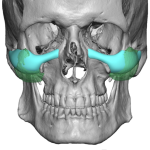
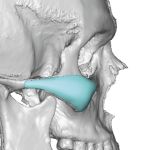
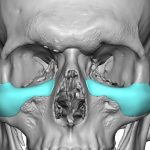
Cheek implant complications usually are of two types, undesired aesthetic outcome and implant shifting or migration. Unhappy outcomes come from either an implant that is too big or positioned in the wrong location. Either way, an unnatural appearance often results. Because of where cheek implants are located, they catch attention almost as much as one’s nose or eyes. Cheek implants come in a variety of sizes and shapes but can fundamentally be divided into malar and submalar implants. Malar implants being placed on top of the zygomatic bone and submalar implant highlighting the underside of the bone. (submalar hollow or buccal space) Malar implants have different extension that either go back further onto the zygomatic arch, up around the lateral orbital wall , or anteriorly along the underside of the orbital rim. Because of these variable implant shapes, it takes a good aesthetic eye and communication with a patient beforehand to get a good result.

Cheek implants are also unique because of where they are positioned on the zygomatic bone. They often are sort of hanging from the side of the cliff, which makes them prone to shifting. Shifting will usually occur in a downward direction from whence they were initially inserted, which is usually through the mouth. For this reason, it is possible for cheek implants to shift around and end up with asymmetry. This is particularly true if the implant is made from silicone which is very smooth and slippery. Other implant composition have a much greater frictional grip on the bone and will not move as easily.

One interesting silicone cheek implant design which can effectively address the shifting problem is that of the Conform midfacial implant. Its undersurface is not smooth silicone but rather a pebbly or nubbed surface. The many little ‘’fingers’ of silicone allow it to develop some degree of frictional gripping to the bone surface. Also when soft tissue grows around it, the capsule will absolutely lock it into place. This is very similar to the concept of placing a textured surface on a breast implant which was developed nearly twenty years ago. Its shape also allows it to be trimmed and used as either a malar or submalar implant. 

Dr. Barry Eppley

Indianapolis, Indiana


Cheek Implants in Patients with Dentures

Thursday, October 15th, 2009

Cheek implants are a fairly simple and effective method for adding projection of various areas of the zygomatic midface. Because they are various shapes of cheek implants that are available, there is a fair amount of art as opposed to science in selecting style and size of implant to get the patient’s desired effect. Because these implants are placed on the side or underside of a bony surface, they are also prone to postoperative migration in an inferior direction of they are not secured.

Cheek implants are typically shown in textbooks, journals, and patient results in patients who have teeth. By having teeth, the vertical distance from a positioned implant to the maxillary vestibule (highest area under the upper lip) is maximized. There will always be a good soft tissue buffer between the implant and the inside of the mouth. This lessens the long-term likelihood of implant exposure should it ever migrate downward. (if one secures the implant with screws, this will not happen)

In the patient without teeth, however, the use of cheek implants can be more problematic as the facial anatomy has changed…unfavorably. The loss of upper teeth changes the structural integrity of the face. The vertical dimension of one’s occlusion (bite), or the height of the bite formed by the contact of the upper and lower rows of teeth, determines the shape and length of the cheeks. When a patient becomes edentulous, the mouth closes too fully with no teeth to separate the jaws, thus contributing to a sunken in appearance of the cheeks. Without teeth, the cheeks tend to wrinkle, the angle between the nose and the lips changes, the ridges that hold the teeth flatten, and the tongue may splay out to fill the open mouth space. These changed features often make the edentulous patient seek midface volume replacement.

The fundamental concern in placing cheek implants in a patient who wears an upper denture is two-fold. First, the distance between the cheek bone and the maxillary vestibule has shortened considerably. There is less soft tissue coverage between the implant and the oral mucosa. This makes the use of certain types of cheek implants, the submalar implant specifically, more risky. Because it sits on the underside of the zygomatic bone, it is even closer to the lining of the mouth. Secondly, the flange of an upper denture can be an erosive source causing implant exposure. A high-riding denture flange may eventually cause pressure necrosis of the thin soft tissue between it and the implant. At the least, it can be a source of irritation and discomfort.

Cheek implant selection is critical in the edentulous maxilla. The implant should be placed on the zygomatic prominence and its maxillary extension trimmed if necessary to keep it from hanging too low. The implant should absolutely be secured in place by a screw. If the implant needs to be extended for midface volume, it should go as close to the infraorbital nerve (without compression) as possible. The canine fossa area should be avoided, as tempting as it is to help this volume deficient area. Lastly, the patient’s dentist should be consulted to shorten the posterior flange of the maxillary denture before surgery. The broad palatal surface provides enough surface area for retention that the flanges can be shortened without sacrificing denture stability.

Cheek implants can work effectively in the typical older edentulous patient who usually suffers midfacial volume depletion and sag. Several alterations in surgical technique are necessary to avoid the increased risk of eventual implant problems caused by vertical maxillary shortening.

Barry L. Eppley, M.D., D.M.D.

Indianapolis, Indiana

A New Technique for Reduction Malarplasty for Prominent Cheekbones

Friday, October 2nd, 2009

The cheekbone or zygoma is one of the highlights of the midface area. Most Caucasians prefer a well-defined and prominent cheekbone which can be weak from congenital development or an injury. This is why cheek implants are a common cosmetic procedure in this population. Conversely, by comparison, Orientals prefer a softer facial contour but usually have more prominent zygomas  by development. As a result, reduction of the cheekbone or malarplasty is a common cosmetic procedure for them.

Cheek bone reduction is a well described operation for which a variety of bone cutting and reducing approaches have been described. In my Indianapolis plastic surgery experience, an osteotomy at the front and back of the long zygomatic arch using a combined intraoral and perauricular incision has been a common successful approach.

To make the reduction malarplasty operation simpler but still effective, a variation of the osteotomy has been described. In the October 2009 issue of the journal Plastic and Reconstructive Surgery, a new L-shaped osteotomy through an intraoral approach is described. In an impressive 418 cases, the frontal L-shaped zygomatic body included two parallel vertical osteotomies (with bone removal) and one oblique osteotomy. This was then combined with a greenstick fracture at the root of the zygomatic arch from an inside approach. The vertical osteotomies allow good control of the reduction which is then secured with small plates and screws. It offers the advantages of being done completely inside the mouth with very controlled bone cuts and secure stabilization of the repositioned segments. They had a very high satisfaction rate of 96% with the potential for late complications of cheek asymmetry and soft tissue sagging (ptosis) due to over stripping of the attached soft tissues.

Reducing prominent cheekbones can and should be a fairly simple procedure with very predictable results.This new modified technique appears to offer advantages that make that a reality. White this technique may expose the maxillary sinus that is of no consequence as we know from a lot of experience in LeFort osteotomies and cheek bone fracture repair. The design of this new zygoma osteotomy even makes it theoretically possible to be used for lateral cheekbone expansion in cases of post traumatic infracture repair.  

Barry L. Eppley, M.D., D.M.D.

Indianapolis, Indiana

Zygomatic Osteotomies in Cheek Augmentation and Cheek Reduction

Thursday, August 27th, 2009

The cheek bone (zygoma) is a very valuable part of one’s appearance as it provides a prominent highlight and a width dimension to the face. It also provides support to the eyeball and serves as an attachment point to the tendons of the upper and lower eyelids.

Some people have naturally broad or narrow cheek widths, of which one component is caused by the development and shape of the dimensionally complex zygoma. The curvature of the zygomatic body and attached arch bone is responsible for some of this width.

The normal position of the zygoma cam also be altered through injury, with cheek or ‘tripod’ fractures being frequent. When the bone is fractured, it almost always is displaced downward and inward into the maxillary sinus cavity. As the pillar or support of it is lost, it can only fall in this direction. Technically, it rotates  (tilts, not just falls) and the cheek prominence is lost and the corner of the eye may be pulled down slightly also. While most of these zygoma fractures are repaired immediately, some never get fixed for a variety of reasons creating a secondary zygomatic deformity marked by a flatter cheek.

Zygomatic osteotomies are one potential method to improve these bone malpositions. Depending on the facial objective, the type of zygomatic osteotomy can differ which also influences the incisional approach.

In a purely cosmetic application, the zygomatic body (not arch) can have a wedge of bone removed for reduction or can be cut and expanded. (with or without grafting) By so doing, one can moderately help change the width of the face in this area. Because it is usually done on both sides of the face for cosmetic change, the total amount of change (by bone measurement) may be as much as 10 to 15 mms. Almost all cosmetic zygomatic osteotomies are done through an intraoral approach.

For reconstructive purposes, most zygomatic osteotomies are usually done on one side only. The objective being to match the opposite uninjured side. Deoending on how the bone must change position will determine what incisions are used. Usually the intraoral approach alone is not adequate as the zygomatic complex must be freed and rotated, not just changing one dimension of the zygomatic body. Thus two incisions are used, most commonly intraoral and lower eyelid. (blepharoplasty) Extensive three-dimensional complex movements may need a coronal (scalp) incision as well to fully mobilize the bone at each pillar of support. In my Indianapolis plastic surgery practice, I usually try to avoid the scalp approach as this is undesired by most patients and is reserved for those few patients who have had a more significant midface ‘crush-type- injury.

Zygomatic osteotomies will need bone fixation, using very small titanium plates and screws. These almost never need to be removed later and they rarely cause any problems.

When contemplating reconstructive zygomatic osteotmies, there is often an orbital component to the deformity that may require orbital floor reconstruction and repositioning of the lateral canthus to change the level of the corner of the eye as well.


Dr. Barry Eppley

Indianapolis, Indiana 

Cheek Implant Complications and Their Revisions

Sunday, December 14th, 2008

Cheek implants are one of the more common types of facial implants used for esthetic or reconstructive enhancement of the malar area. They are second in use only behind chin implants which are the most common implant placed on the facial bones. Like all implants, they have the potential for some complications such as infection, shifting and asymmetry, and poor sizing and positioning. Cheek implants also have a few unique complications as well.

Infection from any type of facial implant is possible but it is very uncommon. The extensive blood supply of the face and the implant’s position at the bone under a muscle layer make infection uncommon. In the very few that I have seen, reopening the implant pocket, cleaning off the implant thoroughly and immediately reinserting it has always worked with smooth silicone rubber implants. Porous type implants are another story because it is not possible to rid the bacteria which are embedded in the irregular deep channels of a porous surface. Cheek implants made of these materials should be removed and replaced at a later date.

Cheek implants are unique from many other facial implants because they are positioned ‘on the side of a cliff’ so to speak, with no natural resting place. Only the soft tissue pocket developed on the bone becomes their containment method. Because a pocket must be developed that is bigger than the implant to allow it to slide into place without folding or bending of its edges, it is possible for cheek implants to slip around and be different between the two facial sides. This is probably the number one complication related to them….asymmetry. Persistent asymmetry over time can also lead to eventual migration of the implant down to and through the mouth incision which is commonly used for their placement. To prevent shifting of the implant after surgery, I prefer to ‘nail’ the implants into place with a small screw through them into the underlying cheek bone once the position I want is assured.

Aesthetically, cheek implants are often oversized in my opinion. What makes a significant change on the operative table can often be too dramatic to the patient later. The cheek is a unique three-dimensional facial unit that defies a precise measurement or method of implant selection. (the chin is very straightforward in this way) Computer imaging of the cheek, unlike the chin or nose, is more artistic than scientific and does not help in selecting a size or shape of a cheek implant. A subtle augmentation or increase in cheek size is almost always better. Don’t try and make a cheek implant do too much. Fortunately, downsizing of a cheek implant is a simple replacement surgery that is much less traumatic than the original surgery. Re-entering the same pocket without extra dissection makes adjustment surgery usually easier.

Revisions of problematic cheek implants with a satisfactory outcome can usually be done by changing the size and shape of the implant or repositioning it with more secure fixation to the bone. Cheek implants, however, are highly critically assessed by most patients and meeting their aesthetic demands of size, shape, and symmetry make them one of the most challenging of all the facial implants for a satisfactory outcome.

Dr. Barry Eppley

Indianapolis, Indiana


Dr. Barry EppleyDr. Barry Eppley

Dr. Barry Eppley is an extensively trained plastic and cosmetic surgeon with more than 20 years of surgical experience. He is both a licensed physician and dentist as well as double board-certified in both Plastic and Reconstructive Surgery and Oral and Maxillofacial Surgery. This training allows him to perform the most complex surgical procedures from cosmetic changes to the face and body to craniofacial surgery. Dr. Eppley has made extensive contributions to plastic surgery starting with the development of several advanced surgical techniques. He is a revered author, lecturer and educator in the field of plastic and cosmetic surgery.

Read More


Free Plastic Surgery Consultation

*required fields


Pricing

The cost of any type of elective plastic surgery plays a major role in the decision to undergo the procedure(s).

Get Your Quote Here


My Plastic Surgery Story

Military Discount

We offer discounts on plastic surgery to our United States Armed Forces.

Find Out Your Benefits


Categories